
 Jane Edwards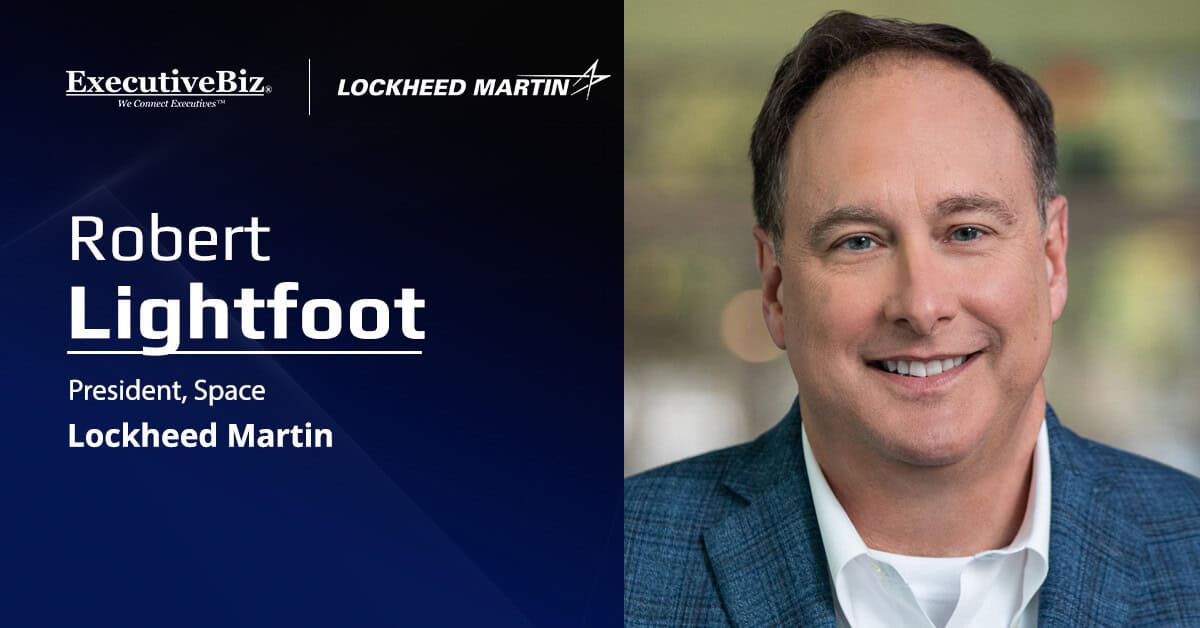
- Robert Lightfoot said Lockheed’s NGI program is part of the Golden Dome missile defense initiative
- Lightfoot discussed the company’s hypersonic weapon production across its Alabama facilities
- The 2026 Navy Summit will explore AI, digital engineering and more
Robert Lightfoot, president of Lockheed Martin Space, said the company’s Next Generation Interceptor program forms part of the Golden Dome missile defense initiative and is being built to replace an older interceptor system.

As the Department of War accelerates investment in missile defense, hypersonics and space security, government and industry leaders will gather at the Potomac Officers Club’s last DOW summit of 2026. Attend the 2026 Navy Summit on Aug. 27 to join discussions on artificial intelligence, digital engineering, autonomous systems, network modernization, shipbuilding and other priorities shaping the future maritime force. Sign up now!
In a video interview with Guy Taylor of The Washington Times’ Threat Status at a recent symposium in Huntsville, Alabama, Lightfoot discussed Lockheed’s space and missile defense investments in the North Alabama region.
What Investments Has Lockheed Made in the Next Generation Interceptor?
Lightfoot, a three-time Wash100 Award winner, noted that Lockheed has made investments across north Alabama, including new facilities and integration labs at its Huntsville campus and a production site in Courtland, to support the Next Generation Interceptor program.
Lightfoot said the system is based at Fort Greely, Alaska, and is designed to counter threats in space after a launch has occurred.
He explained that the Next Generation Interceptor program existed before the Golden Dome initiative and will replace an older system currently in place.
What Is Lockheed’s Role in Hypersonic Weapons Development?
Lightfoot said Lockheed has invested in hypersonic weapons production at its Courtland, Alabama facility, where the company builds a system used for both the Navy’s Conventional Prompt Strike program and the Army’s Long-Range Hypersonic Weapon program.
He added that the two programs use the same missile in different applications, with engineering work for the system based at the company’s Bradford Drive facility in Huntsville.
In December, the company unveiled a new 17,000-square-foot facility in Huntsville to support the development and integration of hypersonic capabilities.
How Does Lightfoot View Deterrence in the Space Domain?
Lightfoot said he expects the U.S. to sustain its technological advantage in space, citing historical parallels between exploration, commercial expansion and the eventual need for military presence, such as the Navy’s role in protecting maritime activity.
The head of Lockheed’s space business noted that the growth of the space economy has created a more contested environment, prompting the need for a Space Force to protect commercial and terrestrial uses of space.
“There’s no doubt that space has become a contested environment now. That’s a totally different thing than we dealt with 25 years ago,” Lightfoot said.
What Other Contracts & Investments Has Lockheed Recently Secured?
Lockheed has continued to build out the missile defense and space portfolio Lightfoot described, securing several new contracts in recent months.
In June, the company secured a potential $2.3 billion contract from the U.S. Navy to provide sustainment and support services for the F-35 Lightning II program, serving U.S. military branches, foreign military sales customers and international partner nations.
Lockheed received a potential $105 million firm-fixed-price task order from the Space Systems Command to support Global Positioning System IIIF launch and on-orbit testing. Space Systems Command selected the company to develop capabilities for the Space-Based Interceptor program as part of efforts to advance missile defense from orbit.
Outside the interview, Lightfoot has emphasized the need for rapid delivery and innovation in space systems to support Golden Dome for America.
“We have to deploy rapidly, manage the kit with smart risk posture, and focus on rapid and continuous improvement of our capabilities in operation,” he wrote in a LinkedIn post. “Shoulder-to-shoulder, agencies and industry can make Golden Dome for America a reality and create a more secure, resilient space domain that supports the defense of our homeland and national security interests.”