
 Miles Jamison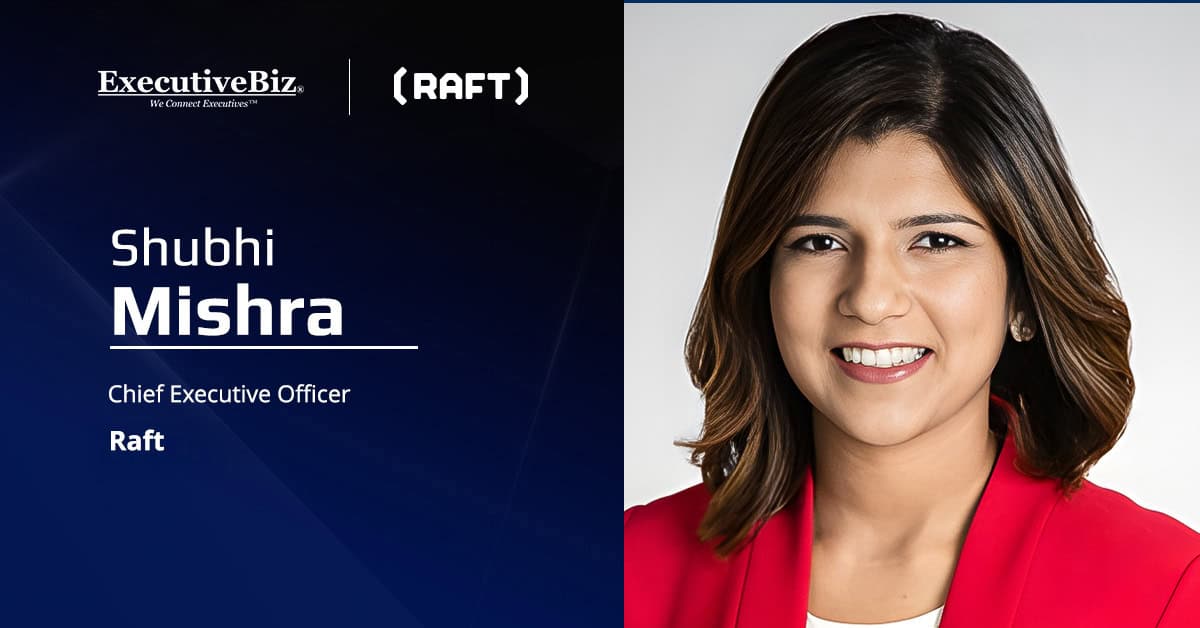
For Raft founder and CEO Shubhi Mishra, the decisive advantage in the modern, software-defined battlespace is data. The two-time Wash100 Award winner said in a recent column that data, when combined into a shared view, provides commanders the information they need to make decisions, and warfighters the information they need to move faster than the adversary.
“Data is the invisible force that makes everything possible,” Mishra said.

With cyberspace now the front line of global conflict, the Potomac Officers Club’s 2026 Cyber Summit will convene top government and industry leaders on May 21 to address evolving threats and cybersecurity priorities. Register now to join the mission-critical conversation.
What Role Does Data Play in Deterrence?
According to Mishra, data also plays an important role in deterrence, more so than weapon systems or platforms. It hastens operations, empowers small units on the edge and ensures mission success. Without it, sophisticated weapons or platforms are turned into what Mishra described as “expensive spectators.”
Raft’s chief executive observed that, despite its criticality, data — along with the software that works to turn it into operational, decision-quality information — continues to be treated as secondary to hardware when it comes to U.S. defense acquisition, a trend that needs to be corrected.
How Can Data Be Treated as a Core Capability?
For the Pentagon to become data-first, Mishra offered four recommendations. First, data and software must be acquired, delivered and updated at a speed that matches operational relevance, especially in light of constant iteration on the part of adversaries.
Second, data readiness should be ensured ahead of any conflict. Data should also be secured and sustained, just like physical resources.
Third, acquisition programs should prioritize open architectures. Proprietary offerings undermine integration and thereby compromise readiness. They can also prevent the flow of data, potentially resulting in mission failure.
Lastly, success should not be based on the number of systems purchased. Rather, it should be determined by the decisions improved by data and the outcomes that resulted from them.
With these measures, data can be treated less as a supporting function and more as a core capability.
How Is Raft Addressing the Challenge?
Raft’s work reflects those priorities. In a January interview with Executive Mosaic, she said the company is developing software that links frontline operators with enterprise-level decision-makers to address how legacy systems and fragmented data hinder decision-making at the tactical edge.