
 Pat Host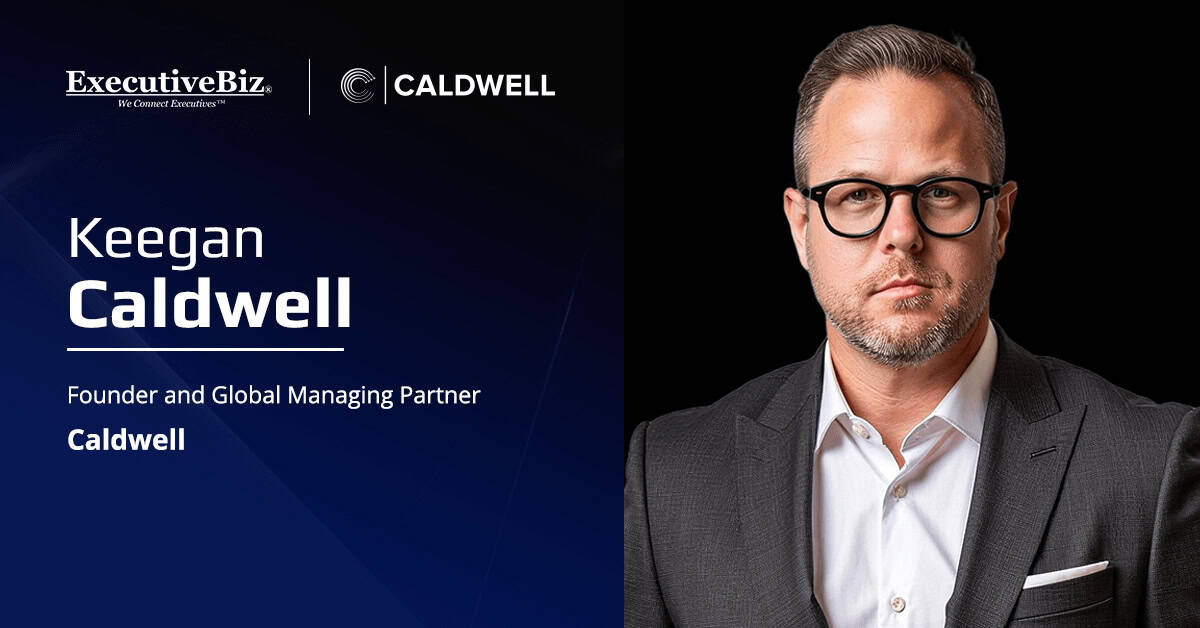
Keegan Caldwell is widening his legal expertise and global enterprise even further. Caldwell, global managing partner at self-titled law firm Caldwell, is opening an office in Tokyo to better serve government and defense contractors, and other multinational organizations on cross-border mergers and acquisitions.
Who Is Keegan Caldwell?
Keegan Caldwell is the founder and managing partner of Caldwell. He has an extensive track record of working with clients from innovation conception to 9-and-10-figure monetization events.
What Does Keegan Caldwell Do at Caldwell?
He works with new companies and established firms to create patent portfolios with as many options as possible for a return on investment. He has helped clients develop patent portfolios valued at $24 billion or more.
Already with an office in London in addition to locations in Los Angeles and Boston, Caldwell is positioning his fast-growing mid-sized firm with deep specialization in defense, aerospace and GovCon with the capability to execute transactions at a global level. We last spoke with Caldwell in Nov. 2024.
Caldwell sat down with ExecutiveBiz for his latest Spotlight interview to talk about the most crucial intellectual property topics he’s following this year, whether AI can be considered an inventor, the emerging technology most critical to the Pentagon’s national security mission and what to expect in M&A from his law firm in 2026.
Discover new exciting use cases for AI in federal applications at the Potomac Officers Club’s 2026 Artificial Intelligence Summit on March 18! Hear new partnership opportunities directly from Cameron Stanley, Department of War chief digital and AI officer, during an illuminating keynote address. Prepare your GovCon firm for boosted revenues in 2026. Sign up today!
ExecutiveBiz: What are some hot IP topics you’ll be watching in 2026?
Keegan Caldwell: One of the biggest question marks with the rise of AI is the validity of AI-related patents and whether companies will be able to obtain them at the same pace as in recent years—especially depending on policy changes.
Recently, the new director of the U.S. Patent and Trademark Office, John Squires, issued guidance that treats software patent eligibility favorably. It also views AI patent eligibility more favorably than it has over the past five-to-10 years. That surprised me, because I expected more pushback on patenting AI technologies—both for new language model development and for the integration of large language models into specific industries, whether that’s defense technology, staffing, healthcare services, insurance and others.
The key takeaway is patent eligibility and validity in this space appear more certain under this guidance. For companies developing new technologies, integrating AI into their products or building their own models, IP will continue to grow in value and remain an important business asset.
Outside the patent realm, I also expect government contractors to continue monitoring what’s happening with the General Data Protection Regulation in Europe. It’s critical for contractors that process personal data related to individuals in the European Union. It’s not always intuitive, but GDPR requirements can apply in situations involving European investment or operations, or when companies have a footprint in both the U.S. and Europe.
For GovCons that provide IT services, cloud hosting, analytics or other systems on behalf of public authorities, there can be specific disclosure requirements and regulatory rules. At the same time, U.S.-based entities must comply with U.S. data rights and compliance standards. As GovCon becomes more global, these requirements are becoming more complex and more important.
EBiz: What’s something in AI and IP that many government contractors don’t understand?
Caldwell: A common area of confusion is whether AI technologies can be patented. The answer is yes—AI-related technologies can absolutely be patented.
Where the confusion comes in is whether AI can be an inventor. The answer is no. The patent system is designed to protect the rights of people, not machines, and AI is not recognized as an inventor.
There’s also increasing focus on compliance and reporting requirements tied to government contracts. Depending on the nature of the work and the security requirements, contracts may include restrictions on how AI can be used and what it can be used for. While the topic can seem complicated, when we break down the relevant documents with a legal lens, it becomes clearer: there are approved uses and there are uses that should be avoided to remain compliant.
EBiz: When you say there’s confusion around whether AI technologies can be patented, are you talking about technologies created by AI—or technologies that involve AI?
Caldwell: I’m primarily talking about technologies that involve AI and are developed or implemented by people. For example, if a contractor develops a weapons system and integrates AI-based geolocation software for a specific purpose, that could be patentable. Or if they license an LLM and build proprietary layers on top of it, such as specialized geolocation or industry-specific functionality, that could also potentially be patentable.
What I’m distinguishing is the idea that AI independently “invented” something. If someone prompts a tool like ChatGPT to generate solutions, or if an AI system independently creates an invention without human contribution, AI still cannot be listed as an inventor under current rules. The patent office focuses on the “inventive spark”—the moment the idea is conceived—and that inventor must be a human being. Since AI cannot be an inventor, it can’t hold patent rights.
Be the first to learn about new DOW AI initiatives at the Potomac Officers Club’s 2026 Artificial Intelligence Summit on March 18! Check out a fascinating panel discussion, Operationalizing AI at Scale—Bridging the Gap from Prototype to Mission Impact, featuring Dr. Delester Brown, Army National Guard Bureau chief data officer. Get your pressing questions answered during the Q&A session. Don’t wait—secure your seat now!
EBiz: What can we expect to see from Caldwell from an M&A perspective in the next year?
Caldwell: This is one of the most exciting areas for us right now. We’ve built our practice around serving technology companies, GovCons, defense contractors and some of the largest tech companies in the world. We work closely with clients to protect, and monetize, their technologies.
We help companies sell, raise capital, borrow capital and go public. In those monetization events, strong IP, particularly patents, can add significant value, sometimes adding millions, or even hundreds of millions of dollars, to outcomes.
We’re continuing to build our M&A teams and bring in groups from other firms that integrate well with ours. We expect to remain focused on mid-market companies, generally in the $50 million to $500 million revenue range, supporting both buy-side and sell-side transactions.
Compared with the last three to five years, we’ve already seen a major uptick in M&A activity over the past six months, and I expect that momentum to continue through 2026. I believe we’re headed for a record year in deal volume. As markets recover from the down cycle of the last four to five years, private equity and strategic buyers have more capital available and are more willing to transact. We’re supporting buyers and we’re also helping clients sell to those buyers, or position for the public markets, so it should be an exciting year.
EBiz: Other than AI, what emerging technologies are likely to have the greatest impact on the DOW’s ability to meet national security challenges?
Caldwell: Cybersecurity. It’s the most consistent theme across conversations I have with general counsels and chief executive officers of defense organizations, whether they’re software-based or weapons-based. It’s also the topic I hear most from elected officials at the state and federal level, and from the intelligence community.
Cybersecurity will continue to evolve as we see more legislation tied to AI use. The U.S. needs to implement stronger security measures more rapidly to protect data and citizens, and ensure technology companies can scale. We regularly see foreign-based attacks targeting major U.S. banks and technology companies. In my world, data and IP are among our most valuable assets and the best way to protect them is through stronger cybersecurity measures.
EBiz: Why are you opening an office in Tokyo?
Caldwell: The Japanese market has some of the longest standing technology companies in the world. I grew up playing Nintendo and, if you’re a little bit older, you grew up playing Atari. If you’re a little bit younger, you grew up playing PlayStation, right? So it doesn’t matter where it was, it was from there.
Japan also has a large gross domestic product relative to its geographic size. The main reason we’re opening in Tokyo is to better serve our global clients, government and defense contractors, as well as other multinational organizations, on cross-border M&A transactions.
Having the Tokyo office open now with our London office, and our Los Angeles and Boston locations, we’re the only mid-size firm in the world that has that sort of transaction capability and specialization in defense, aerospace and GovCon.
EBiz: Are you already taking Japanese clients?
Caldwell: Yes. We’ve already been working with Japanese clients and completing M&A transactions involving Japan and the U.S. for a couple of years.