
 Pat Host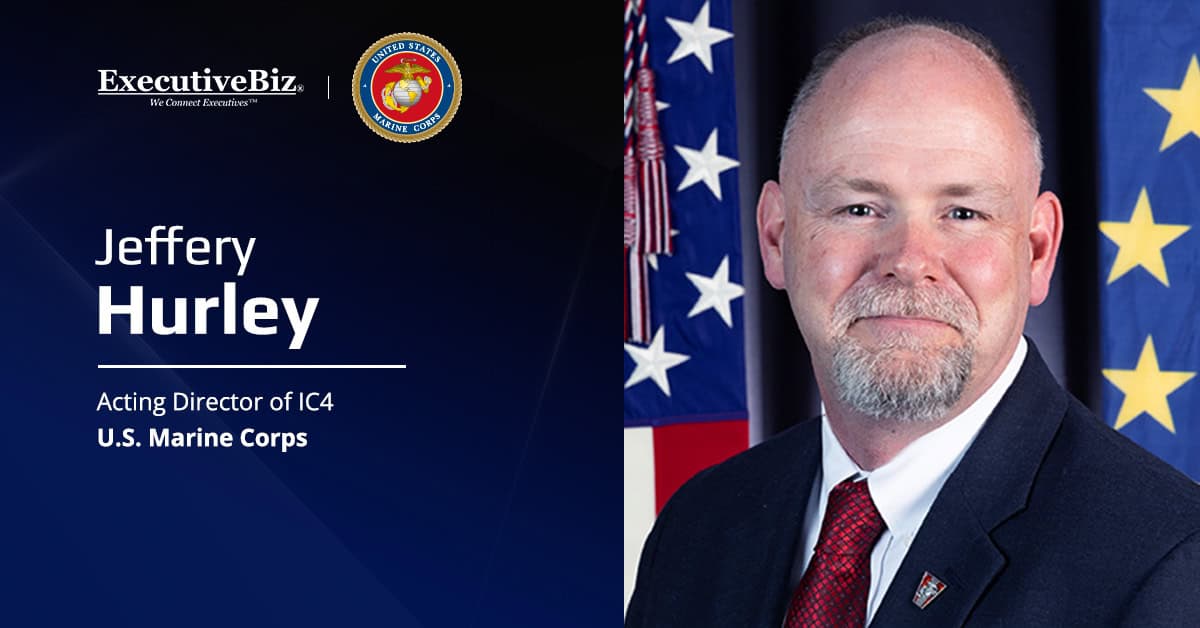
- Jeffery Hurley is prioritizing a DOW-mandated zero trust requirement for FY 2027
- The USMC acting IC4 director also wants his architecture to be resilient at the tactical edge
- Hear exclusive enterprise network insights from Hurley at the 2026 Navy Summit on Aug. 27!
Fiscal year 2027 is a critical milestone for the U.S. Marine Corps in its quest for implementing Pentagon-mandated zero trust cybersecurity requirements. Jeffery Hurley believes achieving that goal is only the beginning.
Hurley, acting USMC director for information command, control, communications and computers, a.k.a. IC4, told ExecutiveBiz in an exclusive interview ahead of his appearance on a panel at the Potomac Officers Club’s 2026 Navy Summit on Aug. 27 that his true priority is ensuring this architecture is fully-functional and resilient at the tactical edge.
“I am laser-focused on ensuring Marines executing Expeditionary Advanced Base Operations possess secure, multi-path communications capable of defeating active adversary disruption in highly-contested environments,” Hurley said.
Get exclusive insights directly from Hurley into how the USMC plans to transition its enterprise networks from legacy support systems into lethal warfighting platforms at the Potomac Officers Club’s 2026 Navy Summit on Aug. 27!
During the From Legacy to Lethality: Modernizing the Navy’s Enterprise Networks for Information Warfare panel discussion, examine how the corps is building a cyber-secure and resilient information infrastructure that bridges the gap between shore installations and forces operating afloat in austere environments.
Also dig into how the USMC is supporting global readiness with cloud-enabled enterprise services. Few tickets remain—get yours today!
What Is the Marine Corps’ Top Technology Modernization Focus?
The Marine Corps’ top technology modernization focus is achieving a unified network that operates seamlessly from the garrison to the tactical edge. Hurley said this requires modernizing the corps’ foundational Identity, Credential and Access Management, a.k.a. ICAM, services and integrating AI to automate network defense and data routing.
To close existing capability gaps, Hurley said the USMC is actively looking to industry partners for innovation in three key areas:
- Low size, weight and power, or SWaP, solutions. The corps needs these specifically for secure communications and edge computing solutions.
- Resilient, multi-orbit transport. The USMC requires transport layers that can dynamically route traffic when primary links are jammed or degraded.
- Data-centric security. The corps seeks advanced security tools and automated policy enforcement mechanisms that do not rely on constant backhaul to a centralized enterprise server.
What is Different About IC4’s Approaches to Cybersecurity and Zero Trust?
The IC4 is taking different approaches to cybersecurity and zero trust requirements for C4 systems operating in austere or contested environments. Hurley said the USMC is prioritizing decentralized ICAM solutions like Naval Identity Services that authenticate users and devices locally, even in severely denied, degraded, intermittent and limited, or DDIL, environments.
Additionally, this strategy ensures the USMC’s data is protected and access is continuously verified by shifting its focus from perimeter defense to data-centric security. Hurley said the corps is aggressively testing its architectures against simulated adversary attacks at the tactical edge to validate these capabilities.
“UItimately, our cybersecurity measures must enable, never hinder, the warfighter in austere locations,” he said.
The Navy has requested a record-breaking $378 billion budget for fiscal year 2027. Tailor your proposals for improved contracting success in fiscal year 2027 by attending the Potomac Officers Club’s 2026 Navy Summit on Aug. 27. Get an early signal on where money and requirements are heading from intriguing keynotes by our stellar lineup of top Navy officials:
- Hung Cao, acting Navy secretary and Wash100 Award 2026 popular vote winner
- Vice Adm. Robert Gaucher, DOW director for submarine programs
- Lt. Gen. Joseph Matos, USMC deputy commandant for information
- Vice Adm. Brad Skillman, deputy chief of naval operations for integration of capabilities and resources, N8
- Barry Tanner, performing the duties of Navy chief information officer
- Vice Adm. Michael Vernazza, Naval Information Forces commander
Spark collaborations with other ambitious GovCon professionals and leading sponsors and score that big contract. Sign up now for this eagerly-awaited GovCon event!
Who’s Speaking at the 2026 Navy Summit?
Let’s explore the backgrounds of the esteemed GovCon technology executives who will speak on the From Legacy to Lethality: Modernizing the Navy’s Enterprise Networks for Information Warfare Readiness panel at the 2026 Navy Summit on Aug. 27.
Jeffery Hurley
Acting Director of IC4, U.S. Marine Corps
Jeffrey Hurley is responsible for the planning, directing, coordinating and overseeing of USMC C4 functions and programs. He provides strategic direction to enable the effective and efficient application, modernization, functional integration, acquisition and management of all USMC C4/IT resources, ensuring Marines can communicate in any climate and place.
He was previously executive director for C4S and deputy chief information officer for U.S. Transportation Command. There, he provided oversight of the Joint Deployment and Distribution Architecture to guarantee mission assurance through resilient and critical C4S for TRANSCOM and its five component commands.
James Balocki
Executive Director, Marine Corps Installations Command
James Balocki is responsible for a $4 billion annual budget and oversees a military and civilian workforce of over 30,334. He supports the Marine Corps Installations Command chief in executing operations of 25 bases worldwide.
Balocki has held six prior senior executive service positions over the past 12 years. He previously served as the principal deputy assistant secretary of the Navy for energy installations and environment and deputy assistant secretary for the Navy for installations, energy and facilities.
In those capacities, he was the principal advisor to the Navy secretary and assistant secretary for energy, installations and environment on Navy and USMC policies and legislation related to a variety of issues. These were: military construction, environment, safety, climate, energy, installations and facilities sustainment. They also included restoration and modernization, acquisition, use and disposal of real property and facilities.
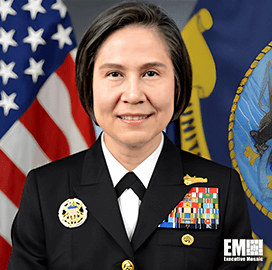
Rear Adm. Susan BryerJoyner
Director of Information Warfare, N99; U.S. Navy
Rear Adm. Susan BryerJoyner, as director of information warfare, N99, ensures that the Navy can defeat any enemy by using assured command and control, battlespace awareness and integrated fires to achieve freedom of maneuver across all warfighting domains. Her previous flag tours include deputy director for C4 systems, J-6; and director of Navy enterprise networks and cybersecurity, N2N6.
BryerJoyner’s fleet assignments include Carrier Strike Group 8 embarked on USS Harry S Truman, CVN 75; U.S. 7th Fleet; USS Blue Ridge, LCC 19; and Carrier Strike Group 8 embarked onboard USS George Washington, CVN 73.
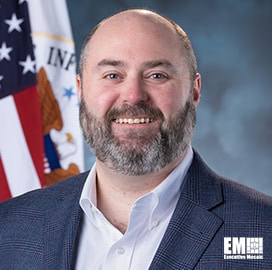
Richard Cunningham
Director of Naval Enterprise Networks, Navy PEO Digital PMW 205
Richard Cunningham has been recognized for leading Operation Rolling Tide, considered the Navy’s largest-ever defensive cyber operation. As the operation’s planner and program manager, he led a service-wide 48 hour cyber maneuver that successfully defeated a foreign non-state actor, for which he was named Navy Information Warfare Command Atlantic’s FY 2014 Civilian of the Year and received a commendation from the chief of naval operations.
In his previous role as the Defense Information Systems Agency’s chief strategist, Cunningham created and installed the intermediate military objective process to maneuver the agency toward its most pressing challenge: enabling long range joint and combined fires.
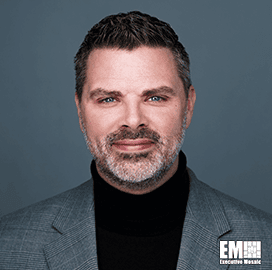
Andy Henson
Chief Technology Officer, Serco NA
Andy Henson leads Serco’s technology strategy, where he drives innovation, strengthens technical capabilities and supports the company’s continued growth in delivering critical services to government customers. His experience spans some of the most difficult operational settings, including supporting U.S. European Command during the early stages of the war in Ukraine, where he helped introduce new capabilities in real time.
Prior to Serco, Henson was at SAIC.There, he held senior leadership roles leading advanced analytics and solution delivery initiatives within the company’s solutions and technology team, its intelligence community portfolio and its defense agencies and combatant commands market. He previously worked at Booz Allen Hamilton, demonstrating success in developing and deploying technologies that work to the demanding needs of front-line users.
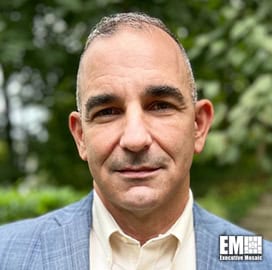
George Malkasian
Marine Corps Strategy Lead, AT&T (moderator)
George Malkasian is responsible for assessing Navy policies and strategies for connectivity requirements for edge computing for the warfighter, installation force protection, first responder communication for AT&T support. He previously served 29 years in the Marine Corps as a communications officer, retiring as a colonel.
He has extensive experience in senior strategy and policy positions, building and leading teams to deliver IT, cyber operations and operational communication planning. He held numerous billets throughout the Fleet Marine Force, including several Marine Expeditionary Unit deployments, command tours as well as serving in the supporting establishment, Headquarters Marine Corps and U.S. Cyber Command.