
 Pat Host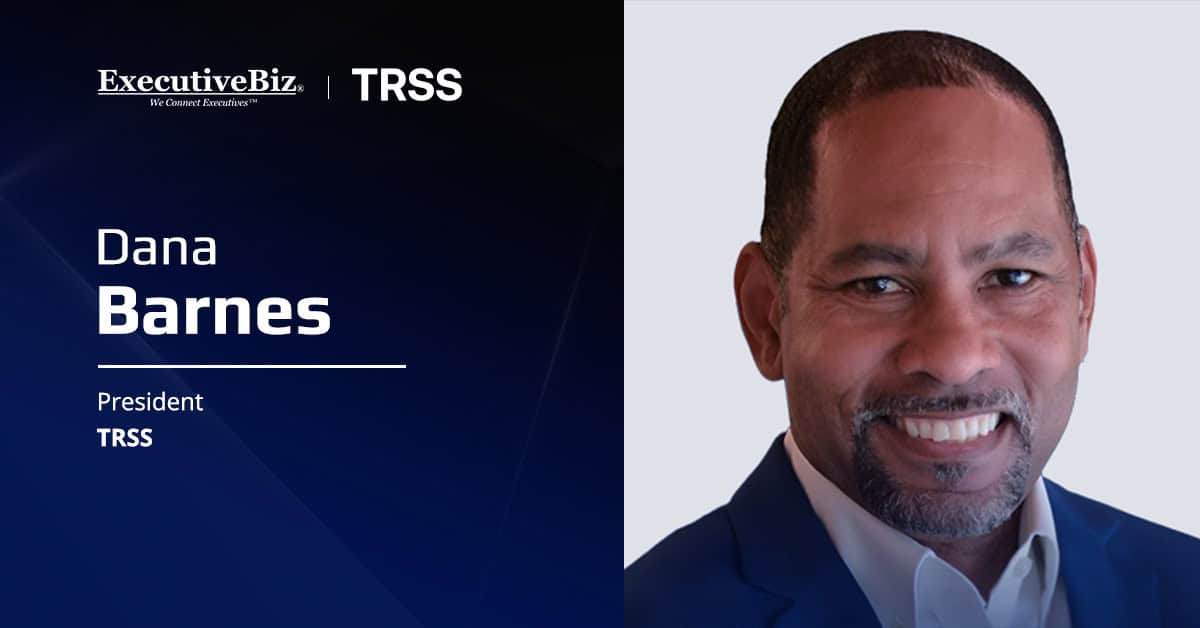
- Dana Barnes wants TRSS to be the go-to resource for high-stakes challenges
- These include national security or sophisticated financial fraud
- He sat down with ExecutiveBiz to discuss data, fraud prevention and identity verification
Dana Barnes wants Thomson Reuters Special Services to be the first organization customers turn to for high-stakes, low-margin-for-error challenges like national security or sophisticated financial fraud. That’s why Barnes, who was named company president in January and is a four-time Wash100 Award winner, is continuing investment in data, technologies and capabilities that make TRSS difficult to replace.
This includes expanding the company’s presence in federal law enforcement, national security and financial crime, realms with increasingly complex problems and growing demand for multifaceted solutions. Since joining TRSS, Barnes has been simultaneously focusing on two efforts: deepening his understanding of all aspects of the company’s business and the broader government landscape while leading an organizational transformation of TRSS.
TRSS is Barnes’ latest stop on his GovCon journey, with previous leadership positions at Forrester, Dataminr, Palo Alto Networks and Microsoft. A retired Marine Corps officer, Barnes takes pride in watching people he’s managed or mentored take leadership roles at other companies. He believes championing the growth of people is something that all leaders should do.
We last spoke with Barnes in 2024 when he was at Dataminr for a smart discussion about the responsible use of AI. Barnes sat down with ExecutiveBiz for his latest Spotlight interview to discuss what he has in store for federal customers as TRSS’ new president, what the company’s partnership with Socure brings for next-generation identity verification and fraud prevention, how TRSS’ integration of Sayari Signal into its intelligence platforms will benefit customers and his growth strategy over the next five years.
Dig into governing mission and operational data for AI at the Potomac Officers Club’s 2026 Intel Summit on Sept. 24! Examine bringing AI and compute to the data and unifying data across classification boundaries during the No Mission AI Without the Data panel discussion. It features top federal officials and leading industry experts, including:
- Kevin Keeney, Snowflake head of DOD
- Merrill Cook, SAP NS2 director for customer success
- And more to be named later
Sign up now for his highly anticipated GovCon event!
ExecutiveBiz: What do you have in store for federal technology, cyber and national security customers having been named president of TRSS?
Dana Barnes: My focus is on deepening our impact across all of the missions we support and that spans a broader landscape than people might expect. Yes, we serve federal technology, cyber and national security customers, but we also work with commercial partners tackling fraud and financial crime at scale. Those missions are connected in more ways than one and the intelligence and capabilities we have built across both sides of that work make us stronger in
each of them.
What I have in store is straightforward: I want TRSS to be the organization customers turn to
first when the problem is hard and the margin for error is low, whether that’s a federal agency protecting national security or a financial institution defending against sophisticated fraud. That means continuing to invest in our data capabilities, building the right partnerships that expand what we can offer and making sure our people have what they need to deliver at the highest level.
We talk internally about being elite, not as a catchphrase, but as a standard to which we hold ourselves. That means continuing to raise the bar on the quality of our work, the depth of our
capabilities and the experience of the people who make it all possible.
EBiz: How does TRSS’ partnership with Socure make it an industry leader in next-generation identity verification and fraud prevention capabilities for government agencies?
Barnes: Identity fraud is one of the most pressing and costly challenges facing government agencies today and the tools most agencies are relying on simply were not built for the threat
environment they’re operating in now. Synthetic identities, automated bot attacks and
fragmented legacy systems are creating vulnerabilities that bad actors are actively exploiting.
The financial losses are real and so is the erosion of public trust when government programs
fail to protect the people they serve.
Our partnership with Socure addresses that problem directly. TRSS brings proprietary data, risk
intelligence and deep experience serving the public sector. Socure brings AI-driven identity
verification at scale—trusted by 145 public sector organizations and built for the modern threat
landscape through their SocureGov platform. Together, we’re delivering a unified, layered
defense that’s proactive, automated and transparent enough that agencies can understand and
defend every decision the system makes.
What makes this partnership differentiated is that it does not just help agencies move faster—it
helps them verify more of their population accurately, including thin-file individuals who have
historically been difficult to verify through traditional credit-based methods. That means fewer improper payments, cleaner data and stronger public trust. That’s what next-generation fraud prevention looks like.
Gain clarity on how data, AI cyber and open-source intelligence are reshaping intelligence operations in a constrained fiscal environment at the Potomac Officers Club’s 2026 Intel Summit on Sept. 24! Build strategic relationships with senior IC officials and sponsors like TRSS driving the future of intelligence technology and services. Get actionable business intelligence from our stellar slate of keynote speakers:
- NEW–Matthew Fodor, FBI operations director for the national security branch
- NEW–Matthew Kozma, Department of Homeland Security undersecretary for intelligence and analysis
- Tim Kosiba, NSA deputy director
- Carrie Thompson, Drug Enforcement Agency chief of intelligence
- Ryan Lewis, National Reconnaissance Office chief architect for signals intelligence directorate
- Maj. Gen. Brian Sidari, Space Force deputy chief of space operations for intelligence
EBiz: How are you integrating Sayari Signal into TRSS’ intelligence platforms and how is that benefiting intelligence and national security customers?
Barnes: The threat environment our intelligence and national security customers operate in has
outpaced what traditional screening tools were designed to handle. Standard watchlist checks
miss unnamed sub-tier entities, obscured ownership structures and shell company networks that are specifically engineered to evade detection. That gap creates regulatory and mission risk.
Our integration of Sayari Signal into the TRSS ecosystem directly addresses that. Compliance
and intelligence teams can now access Sayari’s screening intelligence—including BIS50,
Sanctions50 and specialized modules covering cartel affiliates, forced labor, military end users and high-risk state-owned enterprises—directly within their existing TRSS workflows and internal platforms. That means no new systems to learn, no disruption to established standard operating procedures and no delay between identifying, and acting upon, a risk.
The benefit for our customers is significant. They gain deeper visibility into hidden compliance risks and ownership structures that would otherwise go undetected with the relational context they need to resolve potential matches and document their decisions with confidence.
EBiz: What is your growth strategy for the next five years?
Barnes: Our growth strategy is built on three things: depth, partnership and people.
Depth means continuing to invest in the data, technology and capabilities that make TRSS
genuinely difficult to replace. We’re not trying to be everything to everyone. We’re focused on
the missions where we have earned trust and where we can deliver outcomes that others
cannot. That includes expanding our presence in federal law enforcement, national security and financial crime, areas where the problems are growing in complexity and the demand for sophisticated solutions is increasing.
Partnership means being intentional about who we align with. Our partnerships with Socure and
Sayari are examples of how we think about this: these are genuine capability expansions that
make our customers more effective. We’ll continue to pursue partnerships that are additive and
complementary, rather than duplicative.
Also people: this is the one I feel most strongly about. The quality of our work is a direct
reflection of the quality of our team. Over the next five years, we’re investing in how we develop,
retain and grow the people at TRSS. That means building clearer pathways for advancement, investing in leadership development and creating an organization where talented people choose to stay because the work is meaningful and the culture supports them.
Growth is the outcome of getting those three things right. That’s where my focus is.