

 Jane Edwards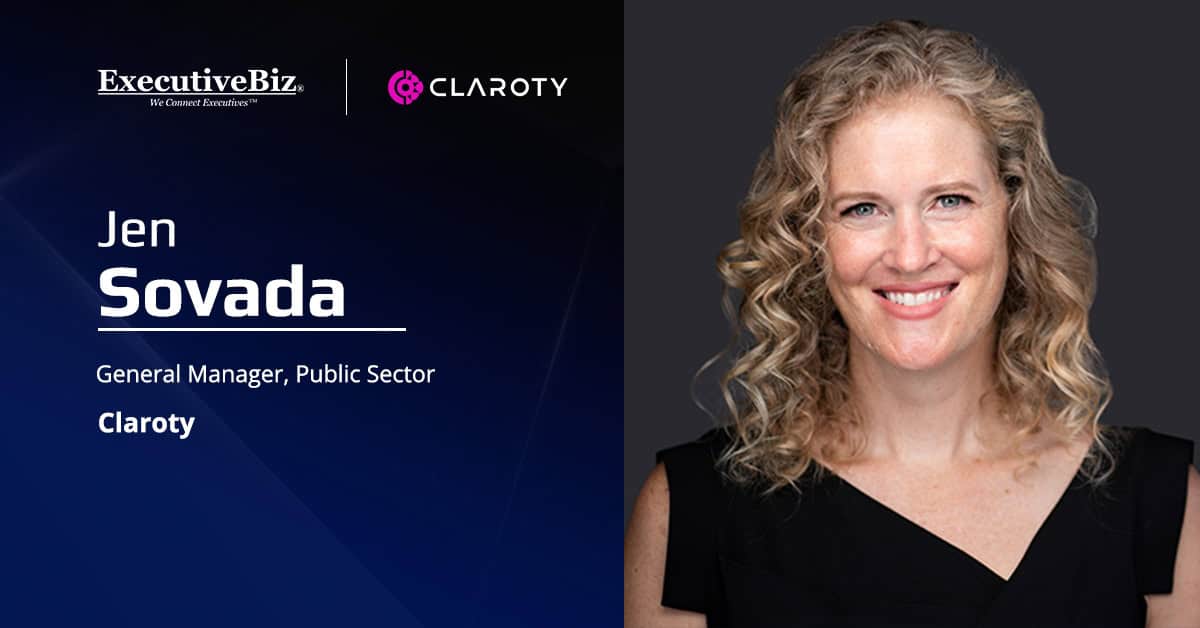
- Claroty executive Jen Sovada has emphasized human oversight in defense AI
- Validation and decision boundaries remain essential for AI use
- The 2026 Intel Summit will explore AI, cybersecurity and more
Jen Sovada, general manager of public sector at Claroty, said validation, human oversight and clearly defined decision boundaries remain essential as artificial intelligence adoption continues to accelerate across defense and national security operations.

As intelligence organizations continue exploring AI-enabled capabilities, leaders will gather to discuss the technologies shaping future intelligence missions at the Potomac Officers Club’s 2026 Intel Summit on Sept. 24. The event will feature discussions about agentic AI and its role in intelligence operations, open source intelligence and data, analytics, cybersecurity and other emerging priorities. Register now to hear perspectives from experts about the future of intelligence innovation in support of national security missions.
“Success will depend on more than technical performance. It will require clear decision boundaries, disciplined validation processes, and sustained human engagement in interpreting outputs under pressure,” Sovada, a previous Wash100 awardee, wrote in a commentary published Friday on Federal News Network.
In the commentary, Sovada discussed the growing use of AI to support battlefield intelligence and decision-making while emphasizing the importance of governance and accountability as operational adoption expands.
What Did Sovada Say About Human Oversight in Defense AI?
According to Sovada, AI systems can help military organizations process large volumes of information generated by sensors, communications networks, reconnaissance platforms and intelligence feeds, enabling faster analysis and improved situational awareness.
She said AI should function as a decision-support capability that enhances human judgment rather than replacing it. While faster analysis could provide operational advantages, Sovada noted that accelerated decision-making also reduces the time available for validation, review and human interpretation.
Sovada wrote that AI models may produce errors or inconsistent outputs depending on their design and training data, making validation and human oversight critical in operational environments. She said human operators should retain the authority to challenge AI-generated recommendations, apply operational context and weigh competing priorities before actions are taken.
How Does AI Decision-Making Apply Beyond Defense?
Sovada said the challenges associated with AI-enabled decision-making extend beyond defense to sectors such as energy, transportation and industrial operations. She noted that these environments increasingly rely on real-time data and automated systems to detect anomalies, optimize performance and support rapid response.
She added that faster decision-making must be paired with validation and oversight to reduce the risk of errors, unintended consequences and cascading failures. According to Sovada, maintaining the ability to control, verify and contain machine-speed decisions will remain important as interconnected civil and defense-dependent systems continue adopting AI.
What Other AI & National Security Priorities Has Sovada Highlighted?
Sovada has also discussed the role of AI in strengthening cyber resilience and national security. In May, Claroty introduced Claire, an artificial intelligence-powered security agent designed specifically for cyber-physical systems environments. In a LinkedIn post, Sovada said Claire “marks a paradigm shift in organizations’ ability to ensure safety, uptime, and availability in an AI-driven world.”
In a separate FNN commentary, Sovada wrote that securing commercial satellite communications requires a layered approach that addresses both cyber and electronic warfare threats.
Sovada has also addressed the evolving role of AI in intelligence analysis. In a recent interview, she said integrating open source intelligence, AI and classified collection into transparent, auditable and explainable workflows could help analysts shift their focus from gathering data to informing decisions while maintaining accountability. According to Sovada, analysts should move beyond understanding what happened to explaining why it happened and anticipating what comes next.