
 Jane Edwards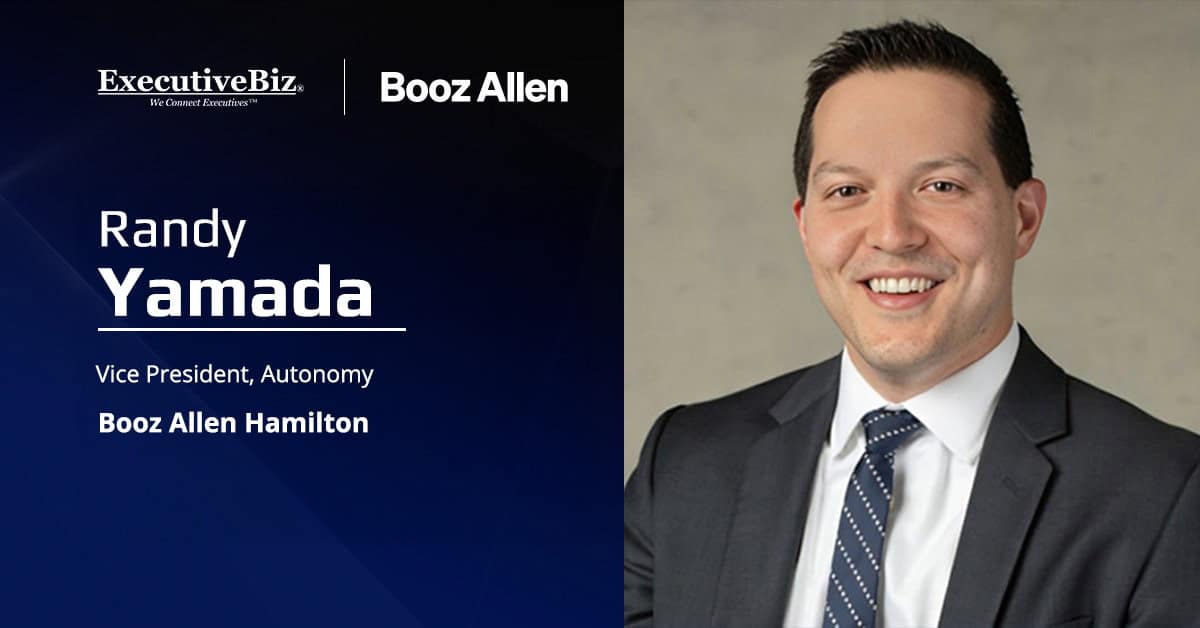
- Booz Allen officials have proposed a cloud-based approach for updating Navy UV fleets
- The approach uses onboard device managers to autonomously deliver software updates
- The 2026 Navy Summit will explore AI, unmanned systems and more
Booz Allen Hamilton executives Randy Yamada and Roy Kitchener have called on the U.S. Navy to combine emerging technologies with current naval capabilities to rapidly and securely update the mission software of its unmanned vehicle fleets.

As the Navy scales its fleet of unmanned aerial, surface and undersea vehicles, keeping pace with software updates and cybersecurity demands remains a growing challenge for military and industry leaders alike. The Potomac Officers Club will host the 2026 Navy Summit on Aug. 27, featuring discussions on AI, digital engineering, shipbuilding, unmanned systems and more. Save your seat now to join the conversation shaping the Navy’s autonomous future.
In an article published on the U.S. Naval Institute’s website, Yamada, vice president of autonomy at Booz Allen, and Kitchener, a senior executive adviser at the firm and a retired Navy vice admiral, wrote that the service can adopt cloud-enabled technology and implement zero trust approach to update its UV fleets quickly and securely.
How Can the Navy Update UV Fleets at Scale?
Yamada and Kitchener stated that a large-scale cloud environment, built on commercial hyperscaler infrastructure, would enable rapid communication between deployed vehicles and software teams. They said onboard device managers can then determine which updates are needed by a vehicle and retrieve them from the cloud with minimal human intervention.
The executives noted that device managers track each vehicle’s software inventory, including autonomy missions, maps, firmware, drivers and security patches, and can install and test updates autonomously.
For vehicles cut off from the cloud, they described a bridging method in which technicians download update caches to laptops and forward them through tactical radio networks.
How Does Zero Trust Help Secure UV Software Updates?
According to Kitchener and Yamada, protecting every vehicle with NSA Type 1 encryption is not practical at scale, so the Navy should expand its use of zero-trust cybersecurity instead. They explained that zero trust requires continuous verification of every device, application and user seeking data access.
The executives added that device managers built on zero-trust principles confirm that updates originate from legitimate sources, deny data access if a vehicle is captured, and flag attempts to reverse-engineer a vehicle to issue false commands.
Yamada and Kitchener concluded that maintaining an attritable mass of unmanned vehicles will require continuous, rapid and secure updating at scale to preserve the Navy’s advantage over adversaries.
How Is Booz Allen Expanding Its Autonomy Portfolio?
The push for rapid, secure UV updating builds on Booz Allen’s broader effort to scale autonomous capabilities across the defense sector.
The company recently invested in PDW to support U.S.-made drone production, with Yamada stating, “Our investment in PDW reflects a shared focus on accelerating the deployment of mission-ready, resilient, American-manufactured drone capabilities.”
Booz Allen also backed NODA AI through a strategic investment to advance a platform that orchestrates autonomous systems across multiple domains.
“NODA provides an important layer within the technology stack, and their capabilities will be increasingly important as autonomous platforms become pervasive throughout national security missions,” Yamada said.