

 Jane Edwards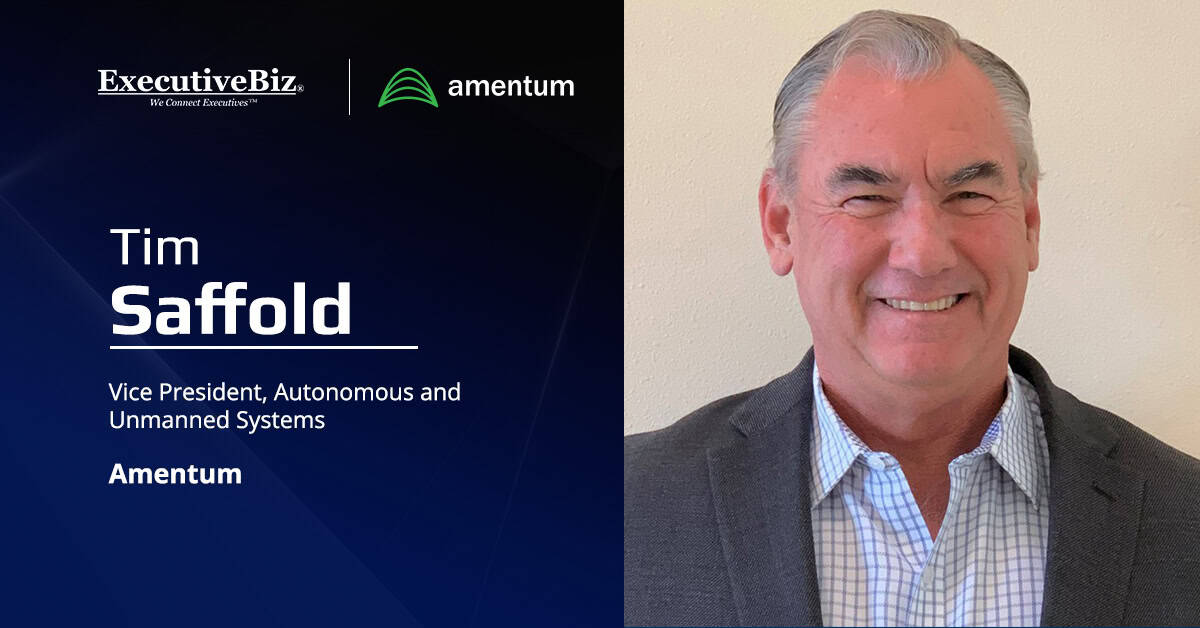
Tim Saffold, vice president of autonomous and unmanned systems at Amentum, said unmanned systems are playing a key role in supporting warfighters operating in contested logistics environments by reducing risk to personnel, extending communication lines and facilitating the delivery of supplies.
“Unmanned systems are becoming central to the Pentagon’s contested logistics initiatives, enabling resilient, distributed resupply in and around denied environments through the employment of autonomous multi-domain systems,” Saffold said in an interview with Breaking Defense published Monday.
How Do Autonomous Systems Reduce Risk to Manned Platforms?
According to Saffold, autonomous systems could help mitigate risk to individuals and crewed assets operating in denied or contested environments by enabling “low signature resilient resupply.”
“Maritime unmanned surface and undersea connectors can follow low observable routes and operate with minimal emissions using inertial navigation and preplanned waypoints to mitigate disruptions,” he noted. “Semi-autonomous cargo unmanned aircraft systems could fly pre-planned routes at low altitude, using terrain following profiles, if necessary, with enough autonomy to complete missions when data links are intermittent.”
What Is the Role of Integration in Enabling Unmanned Systems to Work With Legacy Platforms?
The Amentum executive stressed that the success of contested logistics operations depends on how effectively autonomous and unmanned systems are integrated across ground, aerial and maritime domains.
He noted that technologies, such as artificial intelligence, sensor fusion for GPS-denied navigation, positioning, navigation and timing systems and secure data links, allow unmanned systems to operate alongside legacy platforms.
How Can Unmanned Systems Be Protected From Jamming & Cyberattacks?
Saffold said organizations can leverage cybersecurity technologies, inertial navigation and vision-based positioning to protect unmanned platforms from jamming and other cyber vulnerabilities.
“The key is to create layered protections that ensure unmanned platforms remain operational even under cyber or electronic attack,” he added.
How Does Tim Saffold View the Future of Unmanned Logistics?
When asked about the future of unmanned logistics systems, Saffold expressed enthusiasm about integrating autonomous and unmanned technologies with legacy logistics architectures.
“This is going to enable logistics to overcome access-denial strategies and deliver across a modern battlespace with precision,” he stated. “I’m excited about how we can prioritize our logistics allocations and delivery for multi-domain support, and how AI and machine learning will further enhance prioritization and allocation, ensuring our warfighters have the resources needed to execute their missions.”
The latest interview came three months after he discussed the company’s holistic approach to counter-drone technology, highlighting the use of intelligence, analytics, AI and machine learning to identify and mitigate aerial threats.