

 Pat Host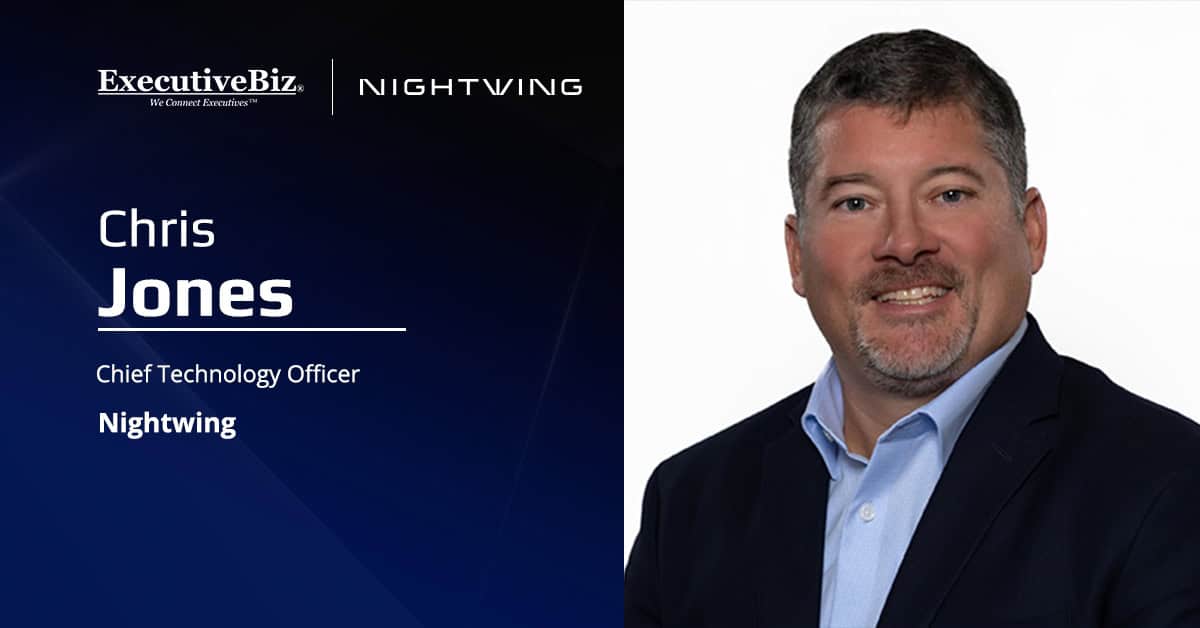
- Advanced technologies are useless without proper acquisition processes, said Chris Jones
- The Nightwing CTO said supply chains are vulnerable due to legacy IT, OT components
- Catch Jones on the Speed of Military Tech Advancement panel at the 2026 Air and Space Summit!
The most advanced and cutting-edge capabilities are useless to U.S. forces if poor acquisition processes prevent them from getting fielded, according to a Nightwing executive.
Chris Jones, company chief technology officer, told ExecutiveBiz in an exclusive interview ahead of his appearance at the Potomac Officers Club’s 2026 Air and Space Summit on July 30 that acquisition has been a hot topic among contractors in 2026. Jones said while advanced technologies certainly remain important, developing technical talent for acquiring technologies and systems is just as critical.
“Commensurate with evolving the technology is making sure that the workforce is invested in, capable and ready to adopt and engage with advanced technology, and get it into the fight,” he said.
Get actionable business intelligence from Jones during the Speed of Military Technological Advancement panel discussion at the Potomac Officers Club’s 2026 Air and Space Summit on July 30! Examine scaling advanced military capabilities at operational speed and emerging technologies reshaping defense strategy and tactics. Space is extremely limited—secure your seat today!
How Are GovCons Reconsidering How They Do Business With the Federal Government?
Many GovCons are reconsidering how they do business with the federal government, challenging the traditional notion of relying on government research and development funds for developing emerging technologies. Jones said companies are starting to shoulder the financial burden of R&D work to help develop technologies faster.
There’s additionally been a big push from the White House. President Trump in April issued an executive order instructing federal agencies to default to fixed-price contracts, or flat-rate awards where contractors pay for cost overruns, whenever possible. The executive order also requires justifications for federal use of cost-plus contracts, where the government pays for ballooning costs.
Why Are Supply Chain Vulnerabilities an Underdiscussed Topic?
Jones said supply chain vulnerabilities are an underdiscussed topic in GovCon as many of the most advanced Department of War technologies have legacy IT and operational technology components. This is because it’s expensive and difficult to both access and resource these components to rectify them.
The U.S. supply chain is also vulnerable from a cyber perspective, he said, as the defense industrial base is dependent upon foreign-developed semiconductors and microelectronics. Jones said the DOW and DIB face a key dilemma: how to build state-of-the-art capabilities when many of the sourcing components are originating in Asia and elsewhere.
How do you vet those components before being inserted into capabilities like intelligence, surveillance and reconnaissance, or communications platforms? Jones said this problem applies equally across space, air and maritime domains.
“If I had to pick one area for us to rapidly advance our capabilities and keep pace with China…[it would be]: how do we square and rectify our challenges in the supply chain?,” Jones said.
What Is the Future of Air and Space Technology?
Jones told us that the future of air and space technology is the automation of data integration, and the tipping and queuing, of unmanned platforms. Tipping and cueing, in this instance, is identifying key data points to send an alert to an unmanned system that performs an action in response. He cited a June 8 incident when an Army AH-64 Apache helicopter crashed during operations in Iran. The Pentagon deployed an autonomous Corsair maritime unmanned system developed by Saronic to find and recover two soldiers who were stranded near the Strait of Hormuz.
Jones said this is an example of the new ways the DOW is considering using unmanned capabilities.
“Unmanned movement in all domains, but particularly in space and air, is paramount,” Jones stated.
The Potomac Officers Club’s 2026 Air and Space Summit on July 30 is GovCon’s premier forum for evaluating business opportunities and new requirements for the advanced air and space technologies transforming warfare. Learn how the USAF and USSF plan to spend substantial budget increases planned for FY 2027 from our stellar lineup of the most esteemed leaders in both services:
- NEW—Brig. Gen. Mark Bigley, Space Command current operations division chief
- Anthony Baity, Air Force assistant deputy chief of staff for logistics, engineering and force protection
- Matt Anderson, NASA deputy administrator
- Gen. John Lamontagne, Air Force vice chief of staff
- Tom Ainsworth, Air Force acting assistant secretary for space acquisition and integration
- Dr. Eliahu Niewood, Air Force director for integrated capabilities and director of studies and analysis
Who Is Speaking at the 2026 Air and Space Summit?
Let’s explore the backgrounds of the esteemed GovCon technology executives who will speak on the Win or Lose – The Speed of Military Technology Advancement panel at the 2026 Air and Space Summit.

Dr. Robert Antypas
Space Access, Mobility and Logistics Mission Area Lead, Air Force Research Laboratory
Robert Antypas coordinates AFRL’s customer engagement strategy and ensures synchronization with the technology needs of the Space Force, Space Operations Command and Space Systems Command. Before becoming the space access, mobility and logistics mission area lead, he served as the interim electric propulsion group lead in the in-space propulsion branch.

Dr. GP Sandhoo
Director, Space Development Agency
GP Sandhoo leads the strategic direction and program execution for acquisition, delivery and operation of the Proliferated Warfighter Space Architecture, or PWSA. He is also the USSF portfolio acquisition executive for missile warning and tracking.
Sandhoo has held senior leadership positions across the national security, defense, intelligence, academic and civil space communities. This includes serving as deputy director at the Intelligence Advanced Research Projects Agency, where he helped guide advanced research efforts in support of the U.S intelligence community.
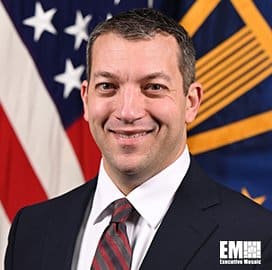
Jacob Glassman
Deputy Assistant Secretary for Science and Technology, Department of War
Jacob Glassman is responsible for overseeing all foundational initiatives within the DOW science and technology enterprise. He manages the defense research laboratories, warfare and engineering centers, the DOW’s federally-funded research and development centers, university-affiliated research centers and the department’s basic research investments.
He came from the Navy, where he most recently served as the senior technical advisor to the assistant secretary of the Navy for research, development and acquisition. There he was responsible for the implementation of modular open system architectures and AI.

Chris Jones
Chief Technology Officer, Nightwing
Chris Jones is a seasoned intelligence community executive leader with more than 28 years of experience. Before joining Nightwing, he spent most of his career with the CIA in executive leadership roles, most recently serving as associate deputy director for science and technology with responsibility for several thousand employees.
Prior to this role, he worked as director for the Directorate of Science and Technology/Human Intelligence Technology Office, and as deputy director in the Office of Global Access.

Ron Fritzmeier (moderator)
Director of Mission Solutions, Intel Government Technologies
Ron Fritzemeier is a retired rear admiral who joined Intel Government Technologies in 2022. He advises Pentagon and intelligence community leaders on options to achieve mission success through modernization and enhanced processing and employment of data as a strategic asset. Fritzemeier served as U.S. Strategic Command’s Nuclear Command, Control and Communications Enterprise Center director before retiring from the Navy in 2021.