
 Miles Jamison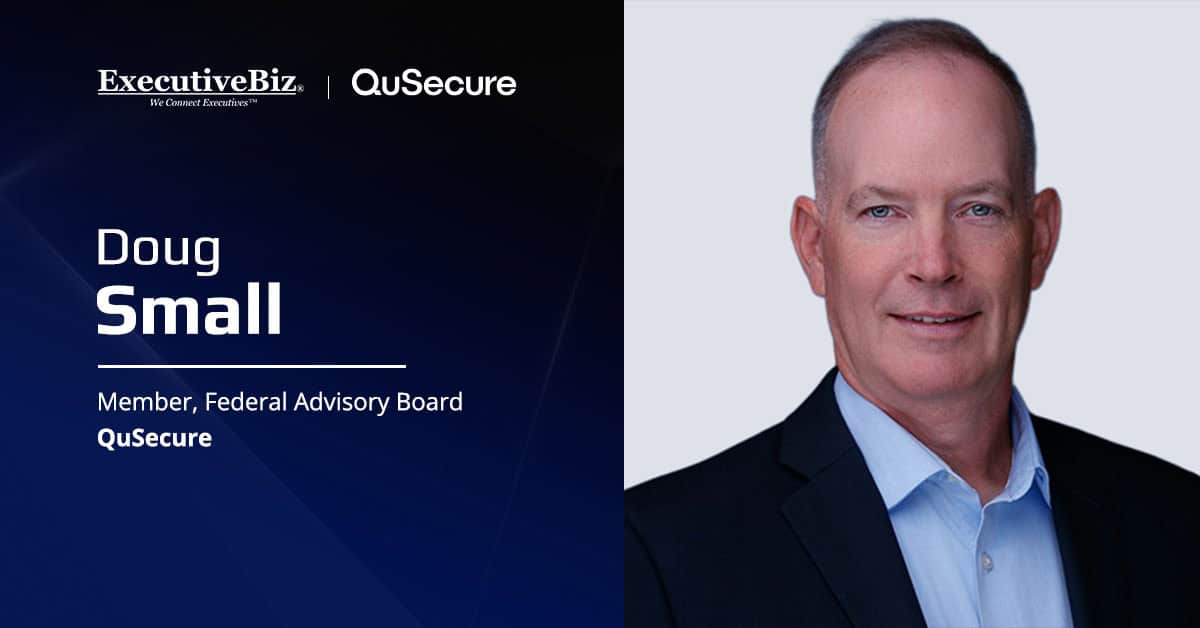
- Doug Small joined QuSecure’s federal advisory board as agencies accelerate post-quantum cryptography adoption
- He will leverage 36 years of Navy leadership in information warfare and defense modernization in his new role
- Small previously led Naval Information Warfare Systems Command, overseeing a global workforce and a multibillion-dollar portfolio
Retired U.S. Navy Rear Adm. Doug Small has been appointed to QuSecure’s federal advisory board, the San Mateo, California-based company announced Tuesday. Small joins QuSecure as federal agencies accelerate post-quantum cryptography migration efforts in response to executive orders and Department of War security mandates.
Who Is Doug Small?
Small is a 36-year Navy veteran who advises national security and defense technology companies through DWS Strategies, where he serves as president. He is also a member of the board of directors at Thales Defense & Security and the board of advisers at federal data and cybersecurity contractor Core4ce.
Small has also participated in Potomac Officers Club events, joining a fireside chat during the 2025 Navy Summit and sharing his perspective as a panelist at the 2026 Defense R&D Summit.
What Experience Does Small Bring?
The executive served as the commander of Naval Information Warfare Systems Command for four years until 2024. In this role, he oversaw a $6 billion annual budget and about 11,000 personnel worldwide.
He was the first direct-reporting program manager for Project Overmatch, the Navy’s effort to modernize its operational architecture for all domains.
Earlier, Small held the role of program executive officer for Integrated Warfare Systems, where he managed Navy programs tied to surface sensors, combat systems and weapons. He also guided NATO and bilateral defense cooperation efforts, helping partner nations align priorities and advance shared security objectives.
Small’s appointment follows QuSecure’s recent addition of retired CIA executive Eman Blair to its federal advisory board, reflecting the company’s effort to bring in former defense and intelligence leaders as federal agencies prepare for post-quantum security requirements.