
 Pat Host
- The Navy is using new prototyping authorities and DIU partnerships in its submarine efforts
- The undersea domain also features robust innovation in autonomy and acoustics
- Hear new submarine requirements from Submarine Czar Vice Adm. Robert Gaucher at the 2026 Navy Summit!
The U.S. Navy believes the undersea domain is its biggest warfare advantage over near-peer competitors and it’s backing that up in its fiscal year 2027 budget request. The Navy submarine portfolio is one of the few areas of the Pentagon budget where new prototyping authorities, Defense Innovation Unit partnerships and traditional shipbuilding are coming together in real time for a new era of force projection.
For GovCon professionals, shifting acquisition pathways, new entry points for non-traditional vendors and multibillion-dollar opportunities across combat systems, autonomy and undersea sensing make submarine programs a bellwether worth tracking closely. Dive deep into the FY 2027 budget details of five of the Navy’s most innovative submarine technology efforts.
Get exclusive submarine investment insights from the Pentagon’s top submarine official during his keynote at the Potomac Officers Club’s 2026 Navy Summit on Aug. 27! Hear directly from Vice Adm. Robert Gaucher, Department of War director of submarine programs, on his strategy to break shipbuilding logjams and get new subs fielded faster. Also learn how Gaucher plans to leverage his new “czar” authority to grow the ranks of submarine machinists. Secure your seat today for Gaucher’s highly-anticipated speech!
What Are Five Key Navy Submarine Efforts in the FY 2027 Budget?
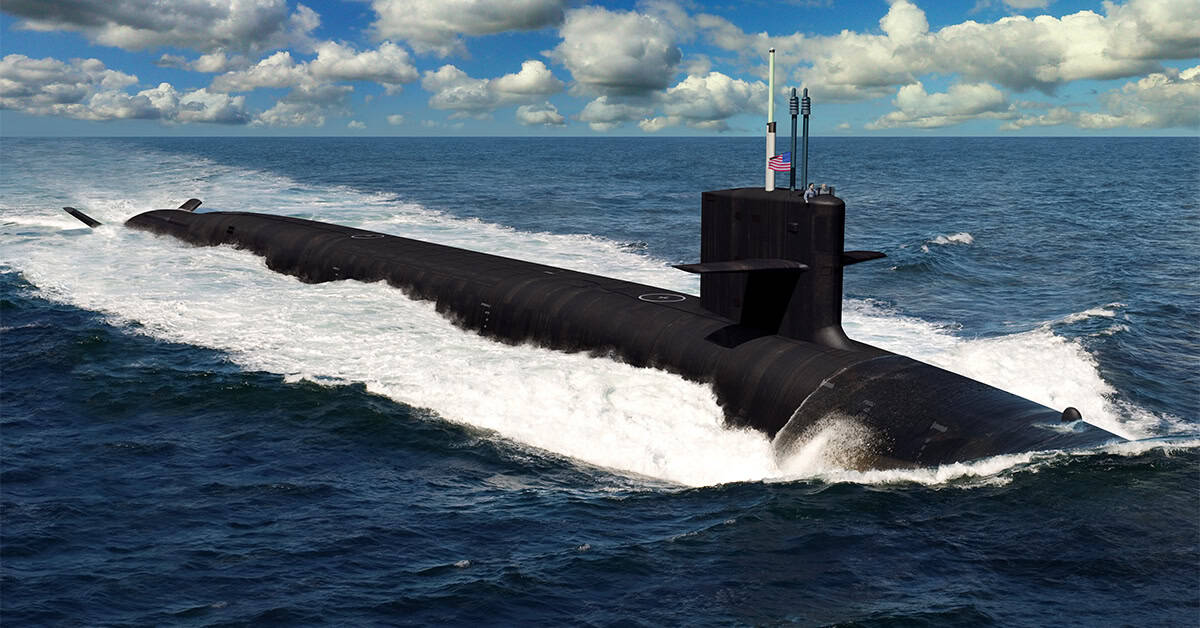
1. Columbia-class (SSBN Replacement)
The Navy is prioritizing the Columbia-class SSBN nuclear-powered ballistic missile submarine effort to replace the aging Ohio-class submarines. It’s putting serious investment behind it by requesting $332 million in FY 2027, up 19 percent from the $278 million provided in FY 2026.
The Navy is committed to the Columbia-class program. It expects to request $208 million annually for the program through FY 2031.
This budget request will support innovative research and development in submarine hull, mechanical and electrical, and combat system technology development. It will also increase the submarine technology base and provide subsystem design options not feasible today.
The Navy plans to design and build 12 new Columbia-class subs to replace its current force of 14 Ohio-class craft. The service estimated in its FY 2025 budget request that the total procurement cost of the first Columbia-class sub would be $15.1 billion while the second sub would cost about $9.3 billion, according to a 2025 Congressional Research Service report.
2. Next-Generation Attack Submarine (SSN(X))
Procuring a new attack submarine has been one of the Navy’s foundational efforts for years. The service continues its sustained commitment to the SSN(X) class submarine program in FY 2027, requesting $316 million, which is about equal to the $336 million enacted in FY 2026. The Navy plans for this level of commitment to continue into the future as it expects to request $372 million per year through FY 2031.
The SSN(X) program is a cornerstone of the Pentagon’s effort to create the world’s most lethal military force. SSN(X) should retain and improve multi-mission capabilities, including, among others:
- Anti-surface warfare
- Anti-submarine warfare
- Subsea seabed warfare
- Strike
- Intelligence, surveillance and reconnaissance
The Navy for FY 2027 plans to perform whole-ship concept maturation informed by ongoing technology development to frame requirements for the capability development document. The service also plans to continue targeted advanced technology development with Virginia-class Block VII and VIII to reduce risk by maturing technologies and maintaining the critical design base for SSN(X).
Want to tap into the Navy’s record-breaking $378 billion budget in FY 2027? There’s no better forum to make that happen than the Potomac Officers Club’s 2026 Navy Summit on Aug. 27. Get expert analysis and advice from the brightest minds in the unmanned undersea industry at our Future of UUV & USV Navy-Industry Partnership lunch panel. Thrive in elite-level networking with other leading GovCon professionals in a supportive and collaborative environment. Sign up now for this esteemed GovCon event!
3. Combat Autonomous Maritime Platform
The Navy wants to accelerate development of advanced autonomous submarines. It takes a major step forward toward that goal in FY 2027 with a $98 million request for the Combat Autonomous Maritime Platform, or CAMP. This will speed up the Orca Extra Large Unmanned Undersea Vehicle, a.k.a. XLUUV.
CAMP will leverage commercial source and rapid prototyping through the Defense Innovation Unit and will be complemented by stationary systems like Liberator, for which the Navy requested $27 million in FY 2027. This is a seabed-positioned launcher for deploying various payloads in hard-to-reach areas. CAMP will also feature the Hunter payload, which provides advanced mining capabilities to XLUUV platforms.
CAMP XLUUV vendors will complete prototyping projects in FY 2027 and the service will assess their systems against prototype success along with fleet feedback. Successful projects will begin engineering tasks for the production of minimal viable products and iterative system improvements.
4. Submarine Combat System Improvement (Advanced)
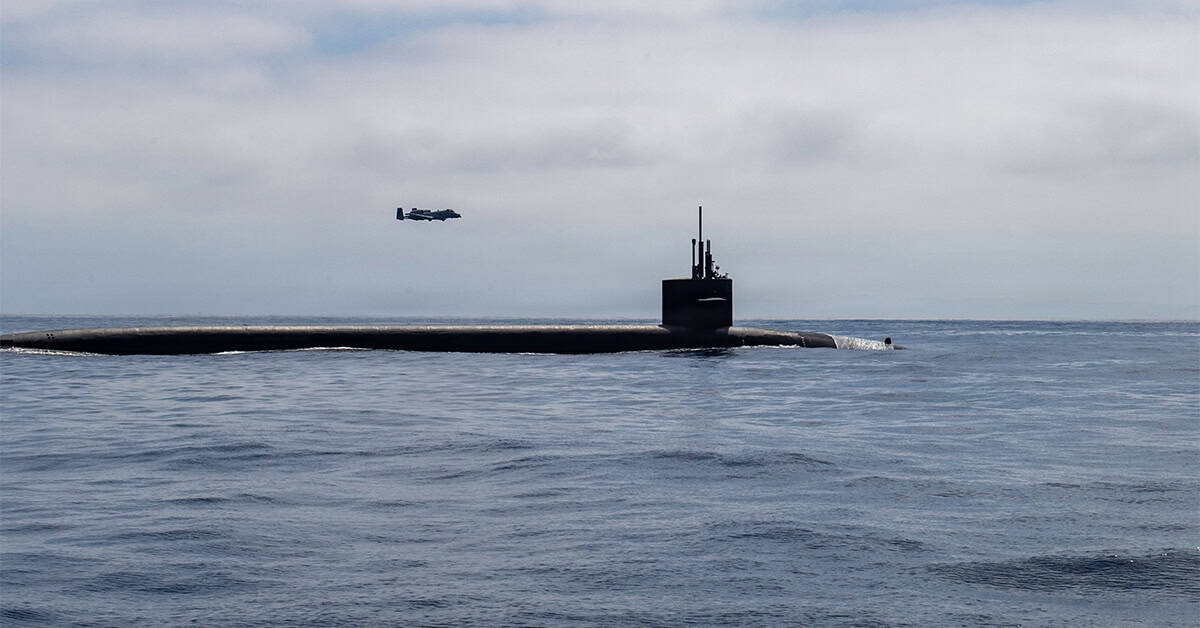
The Submarine Combat System Improvement (Advanced) project researches, develops, tests and delivers capabilities for sonar, combat system, imaging and electronic warfare software for PEO Undersea Warfare Systems programs of record. It supports Navy submarine acoustic superiority and technology insertion initiatives through the application of advanced development and testing of sensors and sensor processing systems.
This project has three major efforts:
- Advanced processing builds, a.k.a. APB
- Advanced sensors
- Large vertical array
APB tests technologies for many capabilities, including acoustics. Advanced sensors develops new technologies for hull-mounted and towed arrays. LVA introduces new electronic hardware and software applications to enhance array and signal processing performance.
The Navy requested $52 million for SCSI (Advanced) in FY 2027 and expects to request $57 million annually for this effort through FY 2031.
5. Acoustic Warfare Development
The Navy is making another big bet on undersea acoustic warfare with the Submarine Acoustic Warfare Development program. This effort is creating acoustic countermeasures, submarine defense capabilities, external launch systems and all acoustic augmentation systems for Navy subs.
The biggest investment that is part of this program is for the Compact Rapid Attack Weapon, or CRAW, a new lightweight torpedo that will provide enhanced anti-submarine warfare and anti-torpedo torpedo mission capabilities. CRAW leverages torpedo hardware developed by the Anti-Torpedo Torpedo Defense System, a.k.a. ATTDS, program, and very-lightweight torpedo technologies developed by the Office of Naval Research.
For CRAW, the Navy requested $89 million in FY 2027, a 271 percent increase from the $24 million provided in FY 2026. The service, for the overall Submarine Acoustic Warfare Development program, requested $114 million for the upcoming fiscal year. If approved by Congress, this would represent a 137 percent increase from FY 2026.