
 Joey Harris
What Is MAHA?
Chaired by Health and Human Services Secretary Robert Kennedy Jr., the Make America Healthy Again Commission has a mandate to address the root causes of the country’s health issues, with an initial focus on childhood chronic diseases.
The commission is tasked with creating a strategy to improve the health of America’s children, in particular by advancing “gold standard science,” realigning incentives, increasing public awareness and strengthening private-sector collaboration.
Federal health leaders, including the National Institutes of Health’s Senior MAHA Adivsor Dr. Richard Woychik and the Veterans Health Administration’s Chief Data Officer Dr. John Scott, will speak at Potomac Officers Club’s rescheduled 2025 Healthcare Summit tomorrow, Feb. 12. A few tickets still remain!
The strategy is based on four policy directives to reverse chronic illness:
- Fostering transparency and open-source data and avoiding conflicts of interest in all federally funded health research
- Finding out why Americans are getting sick
- Working with farmers to ensure that food is healthy, abundant and affordable
- Implementing expanded treatment options and health coverage flexibility for disease prevention.
According to statistics, six in 10 adults in the U.S. have at least one chronic condition, and four in 10 have two or more. Furthermore, the U.S. has the highest age-standardized cancer incidence rate across 204 countries, nearly double the next-highest rate.
In children, autism has become more prevalent; the condition now affects one in 36 children, a high rise from rates of one to four out of 10,000 children in the 1980s. Eighteen percent of teens suffer from fatty liver disease, nearly 30 percent are prediabetic and more than 40 percent are overweight or obese. The incidence of childhood cancer increased 0.8 percent annually since 1975.
One of the commission’s main focuses is food safety. As such, MAHA is making a commitment to reforming dietary guidelines; defining ultra-processed foods; improving food labeling; raising infant formula standards; removing harmful chemicals from the food supply; increasing oversight and enforcement of direct-to-consumer prescription drug advertising laws; improving food served in schools, hospitals and to veterans; and improving Medicaid quality metrics to measure health outcomes.
The Impact of MAHA on Federal Contracting
In 2025 to 2026, the intersection of MAHA efforts and the government contracting industry is creating a volatile yet possibly lucrative landscape, driven by Trump’s focus on restructuring federal health spending. Contractors, particularly those in health, pharma and food regulation, are facing potential funding cuts, contract reevaluations and shifting priorities, according to ROSE Financial Solutions.
The accounting firm advised smaller companies to partner with established contractors to navigate the changing regulatory landscape and secure subcontracting opportunities. Contractors should also build trust and make their identities known on social media platforms like LinkedIn.
Maximizing Impact: Supporting Warfighter Health and Addressing Government Healthcare Technology Issues
How will MAHA contribute to warfighter health and the broader health landscape? How can government leaders apply strategies to maximize mission impact? Expert panelists will answer this and other significant questions during the Potomac Officers Club’s 2025 Healthcare Summit tomorrow, Feb. 12. The panel Data-Powered Prevention: Supporting the “Make America Healthy Again” Agenda will share perspectives from high-ranking HHS leaders about how industry can support MAHA.
Meet the 2025 Healthcare Summit’s MAHA Panelists
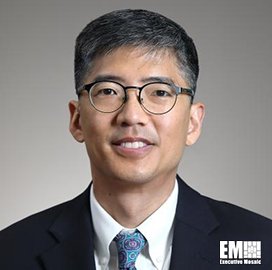
Dr. Michael Chiang
Director, National Eye Institute
As director of the National Eye Institute, Dr. Michael Chiang sits at the intersection of biomedical research, clinical care and federal data strategy. A pediatric ophthalmologist and board-certified clinical informaticist, Chiang has built his career around applying artificial intelligence, telehealth and advanced analytics to improve outcomes in areas such as retinopathy of prematurity. His research group developed an assistive AI system that earned FDA Breakthrough Device designation, underscoring his experience navigating the research-to-regulation pipeline.
Within NIH, Chiang co-chairs multiple trans-agency initiatives focused on high-value data asset sustainability, medical imaging, clinical trials infrastructure and the Common Fund’s Bridge2AI program. He also serves on the NIH Scientific Data Council and participates in cross-agency health IT coordination efforts.
For GovCon stakeholders, Chiang brings insight into how NIH is thinking about AI-enabled research, interoperable data ecosystems and long-term stewardship of federal health data, all of which are central to operationalizing the Make America Healthy Again initiative at scale.
Ken Hofgesang (moderator)
Vice President of Health, RELI Group
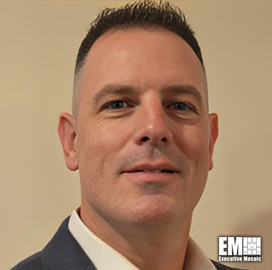
Ken Hofgesang brings an industry execution perspective to the Make America Healthy Again conversation. As vice president of health at RELI Group, he oversees health-focused programs that blend cost control, operational modernization and technology infusion across federal health agencies.
With more than two decades in health IT and program leadership, including prior service as vice president for the Health and Human Services account at SAIC, Hofgesang has managed complex federal portfolios spanning application development, system modernization and enterprise service delivery. His background as a software engineer and program executive positions him to translate policy priorities into scalable digital solutions.
For government contractors, Hofgesang offers practical insight into how MAHA objectives, such as improved data integration, modernization of legacy systems and performance-driven service models, can be implemented through structured program management, agile development and measurable outcomes. His perspective bridges mission intent with contract execution realities.
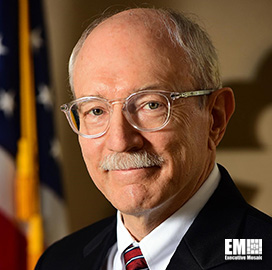
Dr. Richard Woychik
Senior Advisor, Make America Healthy Again Strategy, National Institutes of Health
Dr. Richard Woychik is the senior adviser to the director of the National Institutes of Health regarding the MAHA Commission. A molecular geneticist with a doctorate in molecular biology from Case Western Reserve University, he spent nearly 10 years at Oak Ridge National Laboratory, culminating as the head of the Mammalian Genetics Section and then director of the Office of Functional Genomics.
Dr. John Scott
Chief Data Officer, Veterans Health Administration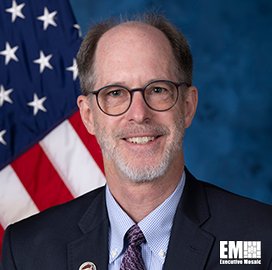
Dr. John Scott is the chief data officer of the Veterans Health Administration. A pediatric cardiologist and clinical informatics specialist with more than 35 years of experience in the Military and Veterans health care systems, Scott transitioned from active duty in the U.S. Army to the VHA in 2020. As VHA chief data officer, he spearheads the agency’s Data Governance Council and represents VHA on interagency working groups with the Military Health System.
Don’t miss these highly informed experts’ in-person discussion. Learn how the federal government is reshaping government contracting under the MAHA initiative at the Potomac Officers Club’s 2025 Healthcare Summit on Feb. 12. Register now.