
 Kristen Smith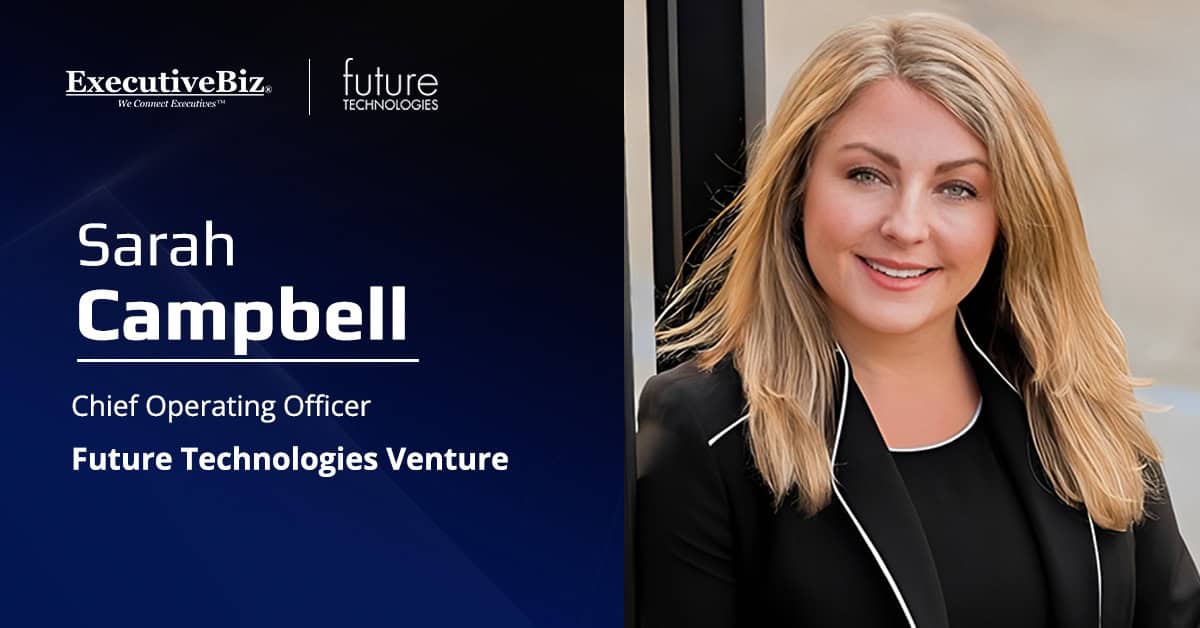
- Future Technologies COO Sarah Campbell said integrated sensing and communications is moving from research into real-world development
- By combining communications and sensing, wireless networks can help detect threats like rogue drones
- Campbell has called for open, multi-vendor testing to advance ISAC
Integrated sensing and communications, or ISAC, is shifting from a research concept into experimentation and operational development, and the decisive factor for U.S. leadership is no longer whether the technology works but how quickly it can be fielded.
In a commentary published Friday, Sarah Campbell, chief operating officer of Future Technologies Venture, said ISAC has reached an inflection point after years of being viewed as a distant research topic tied to next-generation wireless. Campbell led an academic study and a national ISAC workshop, backed by the Office of the Undersecretary of War for Research and Engineering’s FutureG Wireless Office, before joining the company.
ISAC merges two functions that have traditionally operated separately: communications, which moves information between users and devices, and sensing, which detects, locates and tracks objects. By combining them in shared infrastructure, Campbell said, a wireless network can contribute to situational awareness, object detection and positioning, effectively becoming part of the sensing architecture itself.
Why Does ISAC Matter for National Security?
She pointed to defense and critical infrastructure uses such as detecting unauthorized drones near sensitive facilities, extending awareness across large operational areas and monitoring infrastructure where conventional sensors fall short.
The strategic challenge, she said, is not a shortage of U.S. innovation. American universities, labs and defense organizations continue to produce strong research. The difficulty lies in converting that work into deployable capability while other nations invest heavily in next-generation wireless testbeds and operational experimentation.
Campbell argued that technological leadership has historically been determined by the ability to operationalize an invention rather than to make it first. The next phase of ISAC, she said, will favor organizations that can accelerate experimentation and operational learning.
What Is Slowing Operationalization?
Many of the remaining obstacles are organizational rather than technical, according to Campbell. Programs need ways to evaluate ISAC in realistic conditions, integrate sensing data into operational workflows and build architectures that support interoperability and security over the long term.
She made the case for open, collaborative environments where multiple vendors and disciplines can integrate and test rapidly, and described cooperation among government, academia, industry and systems integrators as essential to bridging research and deployment.
How Does This Align With Future Technologies’ Work?
The commentary reflects the company’s market focus. Future Technologies provides connectivity services for critical infrastructure spanning cloud, WAN, LAN, private LTE and 5G. It has partnered with Ericsson on wireless infrastructure supporting real-time operations and AI workloads. Much of that work centers on what the company calls the “AI Connectivity Gap,” driven by the spread of AI-enabled robotics, sensors and autonomous platforms across industrial environments.
Campbell, who joined the company as COO in May following a late-2025 recapitalization, previously served as associate vice president of research for defense and security at George Mason University and sat on Future Technologies’ industry advisory board.