

 Pat Host
- Upgrades in technologies like AI, autonomy and edge processing are enabling Army fires to operate with greater speed, precision and coordination while reducing operator burden.
- The Army’s shift from counterinsurgency to large-scale combat operations is creating an urgent need for fires that are more mobile, survivable and lethal than current systems
- Get actionable business intelligence on cost-effective fires from Mike Tomlinson, SAIC VP for Army aviation, missiles and fires; during a panel at the 2026 Army Summit this Thursday!
Upgrades in a variety of emerging technologies are enabling Army fires to operate with greater speed, precision and coordination while reducing operator burden, according to a SAIC executive.
Mike Tomlinson, company vice president for Army aviation, missiles and fires, told ExecutiveBiz in an exclusive interview ahead of his appearance at the Potomac Officers Club’s 2026 Army Summit on Thursday, June 18, that these upgrades have been in AI, autonomy, sensor fusion, edge processing and networking. Simultaneously, modular open system architectures, or MOSAs, are making it easier to integrate, scale and repeat capabilities across platforms and mission sets.
Tomlinson said improvements in digital engineering and modeling and simulation are also accelerating product and solution development, testing and deployment timelines.
“The combination of autonomy, integrated mission systems and scalable architectures is helping shift the focus from platform-centric approaches to mission outcomes delivered at speed and at a more sustainable cost,” Tomlinson said.
Get actionable business intelligence from Tomlinson during the Reconfigurable Air Defense and Cost-Effective Fires panel discussion at the Potomac Officers Club’s 2026 Army Summit this Thursday! Examine driving cost-per-kill efficiency in modern engagements and integrating reconfigurable systems across Army platforms. Space is extremely limited—secure your seat today!
What Are Army Fires?
Army fires are the service’s artillery, rocket and missile systems used to counter advances by potential adversaries. The Army’s shift in focus from counterinsurgency to large-scale combat operations is creating an urgent need for fires that are more mobile, survivable and lethal than current systems, according to a June 2025 Government Accountability Office report.
The 2021 Army Modernization Strategy identified long-range fires as one of its six priority areas, including these four signature long-range fires efforts:
- Extended Range Cannon Artillery, or ERCA: To provide increased range over the current M109A7 Paladin Self-Propelled Howitzer system
- Precision Strike Missile, PrSM: Designed to replace the Army Tactical Missile System, aka ATACMS
- Mid-range capability: Adapts existing Navy technologies, including missiles and a launcher, for ground operations
- Long-Range Hypersonic Weapon, or LRHW: Seeks a ground-launched, hypersonic and non-nuclear strategic deterrent with a range greater than 1,200 miles and speeds exceeding five-times the speed of sound.
What Are Some Lessons Learned About Fires From Recent Combat?
Lessons from Ukraine and the U.S.-Iran war have reinforced the importance of operational speed, adaptability and scalability in contested environments. Tomlinson said one of the clearest lessons is that low-cost unmanned systems and loitering munitions can create significant operational effects at scale, particularly when integrated with resilient command-and-control and sensing capabilities.
These environments, he said, have also highlighted the importance of cost-effective air defense solutions that can respond to large volumes of threats without relying only on high-cost interceptors. These include the Patriot Advanced Capability-3, or PAC-3, which cost $2.6 million each.
Another key trend is the need for rapid integration and continuous adaptation. Tomlinson said open architectures, interoperable systems and accelerated technology insertion are becoming increasingly important as threats evolve faster than traditional acquisition cycles.
“The focus is on delivering integrated, mission-ready capabilities to our armed forces and warfighters that provide flexibility, resilience and operational advantage at scale,” he said.
Are you a GovCon technology executive? Then you can’t afford to miss the Potomac Officers Club’s 2026 Army Summit this Thursday. Our all-star lineup of top Army officers and executives will equip you with the knowledge to win more, and larger, contracts in FY 2027:
- Marc Andersen, assistant secretary for financial management and comptroller
- Lt. Gen. Robert Collins, assistant secretary for acquisition, logistics and technology and military deputy/director, Army Acquisition Corps
- Maj. Gen. David Hall, Army Transformation and Training Command deputy commanding general for Army National Guard
- Lt. Gen. Jeth Ray, deputy chief of staff, G-6
- Katie Thompson, deputy executive director, Army Contracting Command-Aberdeen Proving Ground
- Dr. Jeff Waksman, principal deputy assistant secretary for installations, energy and environment
Buy your ticket now before it’s too late!
How Is SAIC Advancing Technology in 2026?
SAIC’s technology priorities for 2026 are focused on accelerating the delivery of mission-ready performance and effectiveness through integrated systems, autonomy and digital modernization. Tomlinson said these include advancing scalable solutions that improve operational speed, interoperability, intelligence sharing and resilience across mission environments.
The company, he said, is particularly focused on helping customers integrate sensors, platforms, AI-enabled technologies and C2 capabilities in ways that support faster and better-informed decision-making. Another key SAIC priority is reducing onboarding complexity and accelerating deployment timelines through open architectures, rapid integration, and strong collaboration across government and industry partners.
“Our work is rooted in getting critical information to the warfighter as quickly as possible so they can make the most informed decisions when needed,” Tomlinson said.
Who’s Speaking at the 2026 Army Summit?
Let’s explore the backgrounds of the esteemed GovCon technology executives who will speak on the Emerging Technologies at Scale: Reconfigurable Air Defense and Cost-Effective Fires panel at the 2026 Army Summit:
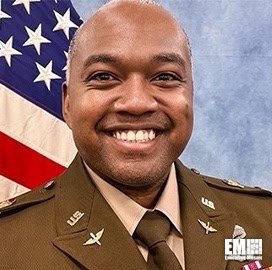
CW4 Reggie Oliver
Chief Digital Transformation Officer, Capability Program Executive Aviation, U.S. Army
CW4 Reggie Oliver leads enterprise-wide digital transformation efforts as Capability Program Executive Aviation chief digital transformation officer, a position he took in 2026. He joined Headquarters, CPE Aviation in 2025 as the primary advisor for AI and sustainment.
CW4 Oliver has twice attended the AI strategic broadening seminar at the Army Research Laboratory and worked with the Army AI Integration Center, aka AI2C, on AI application implementation for aviation readiness.

Tony Garcia
Director of Munitions Technologies for the Office of the Assistant Secretary of War for Science and Technology
Tony Garcia helps oversee the joint Department of War/Department of Energy munitions program and the Joint Enhanced Munitions Technology Program. He executes more than $80 million per year in munitions science and technology research efforts with the DOW, DOE, industry and academic partners.
Garcia also serves as the deputy director of the Joint Energetics Transition Office, responsible for coordinating and facilitating accelerated development, qualification and transition of energetic materials and systems. He served more than 20 years as a commissioned officer aviator in the Navy and Navy Reserve, earning flight and tactical qualifications in multiple H-60 series helicopters.

Martin Zybura
Acting Deputy for Acquisition Systems and Management, U.S. Army
Martin Zybura has vast experience in Army contracting and acquisition. Prior to becoming acting deputy for acquisition systems and management, he served as the program executive officer for enterprise information systems, which is now known as CPE Enterprise Software and Services.
Zybura began his Army career as a soldier. While on active duty, he served as chief of staff of Army Contracting Command at Redstone Arsenal, Alabama. He was the principal assistant to the commanding general and was responsible for planning, coordinating, directing, supervising and training more than 200 headquarter staff members.
Prior to his ACC assignment, Zybura served as commander for the 413th Contracting Support Brigade at Fort Shafter, Hawaii. There, he was responsible for installation, service and expeditionary contracting in the Army Pacific area of responsibility.
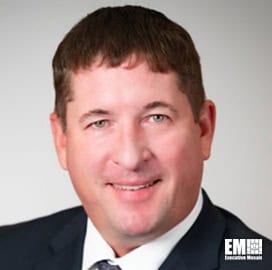
Mike Tomlinson
Vice President for Army Aviation, Missiles and Fires, SAIC
Mike Tomlinson is a veteran national security professional with extensive experience in GovCon and the Army. As vice president for Army aviation, missiles and fires at SAIC, he leads more than 2,000 employees within the Army Navy business group and is responsible for strategy, growth and program execution for a more than $1 billion operation.
Early in his career, Tomlinson was an Army field artillery officer and was the battery for the 1st Infantry Division’s Multiple Launch Rocket System Battery. He was also a 155mm self-propelled Howitzer Fire Direction Officer and Combat Observation Lasing Team, or COLT, platoon leader