

 Jane Edwards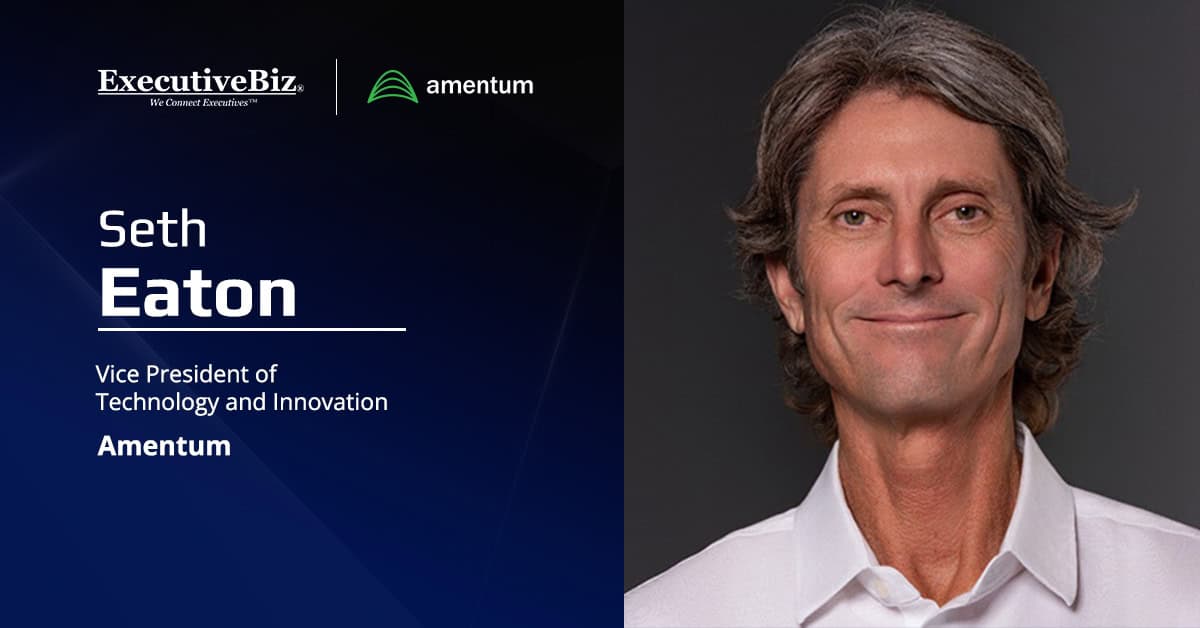
Seth Eaton, vice president of technology and innovation at Amentum, said 2026 will be the year in which federal agencies must develop data ecosystems that make data usable, trustworthy and ready for artificial intelligence.

As agencies look ahead to the next phase of federal AI adoption, conversations about data readiness continue to gain momentum across government and industry. Those interested in engaging with the broader federal AI community can learn more at the Potomac Officers Club’s 2026 Artificial Intelligence Summit on March 18. Save your spot now!
In a Jan. 14 commentary published on Federal News Network, Eaton discussed eight trends that will define how agencies secure, modernize and activate data for AI in 2026 and beyond.
“What’s coming next is not another incremental upgrade. Instead, it’s a shift toward connected intelligence, where data is governed, discoverable and ready for mission-driven AI from the start,” he said.
What Are the First 3 Data Trends That Will Shape Federal AI Readiness?
Eaton identified the three trends shaping how federal agencies will prepare for AI in 2026 and beyond. First, he emphasized the shift from manual data governance to machine-assisted, continuous governance, with AI automating lineage tracking, metadata creation and policy enforcement.
Second, Eaton highlighted the transition from fragmented data tools toward unified data collaboration platforms that integrate observability, cataloging and pipeline management.
Third, he pointed to the rise of federated data architectures as the emerging federal standard, replacing centralized models with hybrid data fabrics that will allow agencies with legacy environments and diverse missions to responsibly scale AI.
How Will Zero Trust Evolve to Support AI-Driven Workloads?
In 2026, Eaton said he expects zero trust to expand into data access and auditing, replacing static permission models with policy-as-code approaches to support AI-driven workloads.
What Additional Trends Does Eaton Say Will Shape Federal AI Readiness?
The Amentum executive also highlighted four additional trends defining federal AI readiness.
According to Eaton, integration will shift from simply moving data to preparing it for large language models, real-time analytics and mission systems. At the same time, data storage will evolve into AI-native environments that support advanced AI workloads. He said real-time data quality will become non-negotiable as agencies adopt automated monitoring to ensure accuracy at scale.
Eaton noted that federal workforce roles will shift toward human-AI collaboration, increasing the demand for skills, such as prompt engineering, semantic modeling and data ethics.
In a recent Executive Spotlight interview with ExecutiveBiz, Eaton discussed how the company is using AI and shared his perspective on where the technology is headed next.