
 Pat Host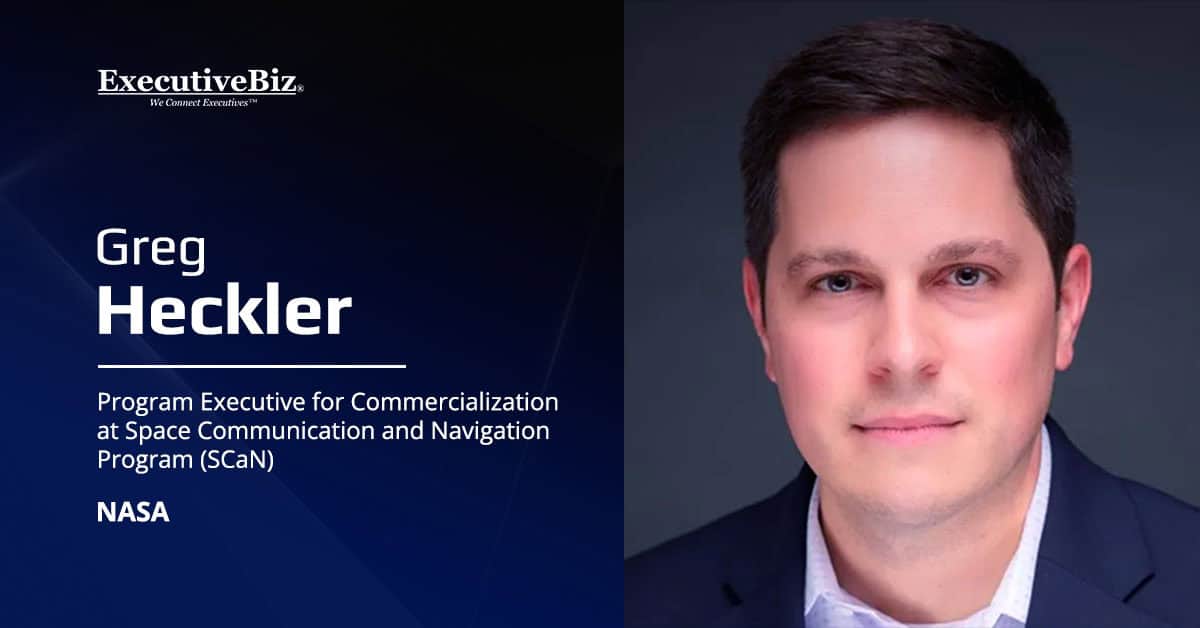
- NASA is considering investing in commercial quantum sensing to improve U.S. PNT capabilities in LEO and possibly around the Moon.
- Quantum sensing’s exquisite capabilities would provide alternatives to GPS, which is vulnerable to jamming and spoofing.
- Get actionable business insights from Greg Heckler, NASA program executive for commercialization at ScAN, during a panel at the 2026 Air and Space Summit on July 30!
NASA is considering investing in commercial quantum sensing technology to enhance U.S. position, navigation and timing capabilities in low Earth orbit and possibly around the Moon, according to a key agency official.
Greg Heckler, NASA program executive for commercialization at the Space Communication and Navigation Program, or SCaN, told ExecutiveBiz in an exclusive interview ahead of his appearance at the Potomac Officers Club’s 2026 Air and Space Summit on July 30 that cislunar advanced PNT has been a requirement for Lunar Communications Relay and Navigation Systems, or LCRNS, since its inception. NASA, he said, will be asking for more advanced PNT as it tries to onboard a second relay provider.
PNT is a critical national capability. But the Global Positioning System, a space-based radio-navigation system owned by the U.S. and operated by the Air Force, is vulnerable. Heckler said quantum sensing will provide NASA with exquisite capabilities like self-sustained and localized PNT, many times without external signal sources.
“The more investments we see in those things, I think the more resilient PNT capability users can carry in some cases with themselves and achieve their mission goals and objectives,” said Heckler.
Get more investment insights from Heckler during the commercial space relay panel discussion at the Potomac Officers Club’s 2026 Air and Space Summit on July 30! Examine optical communications reducing latency and increasing capacity and NASA’s transition toward commercial relay infrastructure. Secure your seat today for this highly anticipated GovCon event.
What Is Quantum Sensing?
Quantum sensing leverages the stable properties of atoms, allowing next-generation atomic clocks, accelerometers, gyroscopes, magnetometers and gravimeters to provide unmatched precision, long-term accuracy and dependable performance in contested environments. The Center for a New American Security in May released a report on how quantum sensing could back up, or even surpass, existing GPS services in the next few years.
What’s a Hurdle to Quantum Sensing in PNT?
CNAS said that although early quantum sensors are beginning to move from the laboratory to the field, many prototypes are too brittle and bulky for widespread deployment. To provide real operational value, these devices must be hardened so their fragile quantum states can survive harsh environments and continuous use on dynamic platforms.
Heckler said NASA will expand investment in commercial communication and navigation services as these will be foundational to creating a sustainable lunar economy. NASA in 2024 awarded Intuitive Machines a Near Space Network services contract to become the first LCRNS service provider. Kongsberg Satellite was also selected in 2024 to provide space-to-ground communication services in the Near Space Network.
There’s a lot going on with commercial satellite communications as Heckler said the market size is two- or three-times NASA’s budget, which was $24.4 billion in FY 2026. The agency is requesting $19 billion in FY 2027.
“Being able to leverage those companies and that industrial base forward to the Moon, I think that’s how we move faster,” he said. “We’re showing we can directly partner in LEO and we’re already doing that for cislunar and we anticipate doing more over the upcoming months and years.”
Want to win more, and larger, contracts in FY 2027? Then you can’t afford to miss the Potomac Officers Club’s 2026 Air and Space Summit on July 30. We have an all-star lineup of top federal technology officials providing actionable business intelligence on all things air and space:
- Tom Ainsworth, Air Force acting assistant secretary for space acquisition and integration
- Matt Anderson, NASA deputy administrator
- Anthony Baity, Air Force assistant deputy chief of staff for logistics, engineering and force protection
- Gen. John Lamontagne, Air Force vice chief of staff
- Dr. Eliahu Niewood (pending confirmation), director of integrated capabilities
Who’s Speaking at the 2026 Air and Space Summit?
Let’s explore the backgrounds of the esteemed GovCon technology executives who will speak on the Commercial Space Relay: Achieving Speed to Mission panel at the 2026 Air and Space Summit:
Greg Heckler
Deputy Program Manager for Capability Development, SCaN, NASA
Greg Heckler oversees the transition of NASA’s near-Earth missions to commercially-provided communication and navigation services. He’s also responsible for coordinating development and integration of NASA’s lunar infrastructure that will support Artemis astronauts’ safety and success on the Moon and beyond.
Prior to his position at NASA headquarters, he was a telecommunications systems engineer at NASA Goddard Space Flight Center in Maryland. He spent six years supporting the Tracking Data Relay Satellite Project, or TDRS, as deputy telecommunications systems and payload manager, where he contributed to the construction, launch and operational deployment of three TDRS satellites.
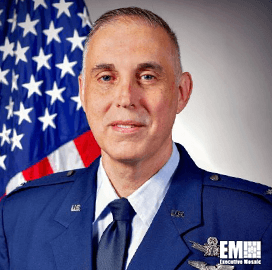
Col. Aaron Stevenson
Deputy Director, Commercial Space Office, Space Systems Command
Col. Aaron Stevenson provides strategic leadership and operational oversight for the integration of innovative commercial space capabilities into Space Force architectures. Prior to his current position, he was deputy director of the Electronic Warfare Systems Delta at Los Angeles Air Force Base in California.
Col. Stevenson synchronized space combat effects across multiple EW programs to meet cost, schedule and performance baselines, program executive office objectives, enterprise priorities and senior leader guidance. He was also accountable for key delta level decisions, directing on behalf of, and representing, the director of the EW Systems Delta when required.
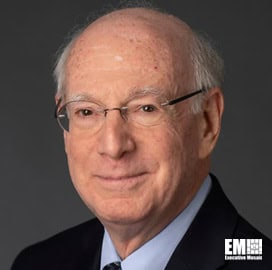
Dr. Joseph Bravman
Chief Engineer, Lynk Global
Dr. Joseph Bravman in 2018 joined Lynk Global, which is developing, building, launching and operating direct-to-device proliferated LEO satellites that connect unmodified cellular devices. He founded Omnispace LLC in 2012 and served as its CEO until 2016.
Bravman is also the founder of Omnisat LLC, a satellite data transmission services and consulting company that leased satellite capacity to deliver high value digital content over most of Europe, Asia and Africa. He previously held several leadership positions at Orbital Sciences, now part of Northrop Grumman.
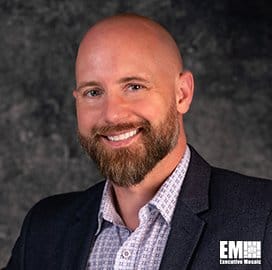
Jared Newton
Senior Solutions Architect, Planet Labs
Jared Newton leads Planet Labs’ strategic planning and capture for space systems technology as well as advanced mission concepts. He joined Planet after 22 years in the federal government, including service as a technical executive for the National Geospatial-Intelligence Agency’s commercial operations group, where he led data integration initiatives and shaped the agency’s commercial technology strategy.
During his tenure at NGA, Newton was a primary contributor to the Commercial Remote Sensing Working Group, providing counsel on the national security implications of private remote sensing systems. His work at NGA also included substantial contributions to NGA’s Automation, AI and Augmentation Strategy.
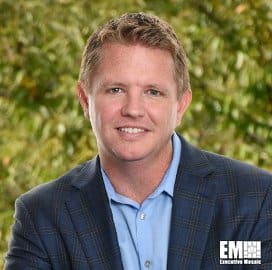
Samuel Sutton (moderator)
Director of Space Systems Architecture, SES
Samuel Sutton has more than 20 years of experience as both a technical and program leader across satellite development and operations for the Department of War, NASA and commercial customers. He was previously the program manager for SES-18 and SES-19 C-band satellites, a critical initiative to clear spectrum for 5G services, where he led spacecraft design, production, testing and launch.
He has a track record of delivering on orbit more than 10 large telecommunications, Earth observation and science spacecraft for a diverse set of domestic and international organizations. In his current role, he is shaping SES’ future geostationary Earth orbit fleet strategy, advancing medium Earth orbit constellation architectures and developing innovative solutions for U.S. defense customers.