
 Jane Edwards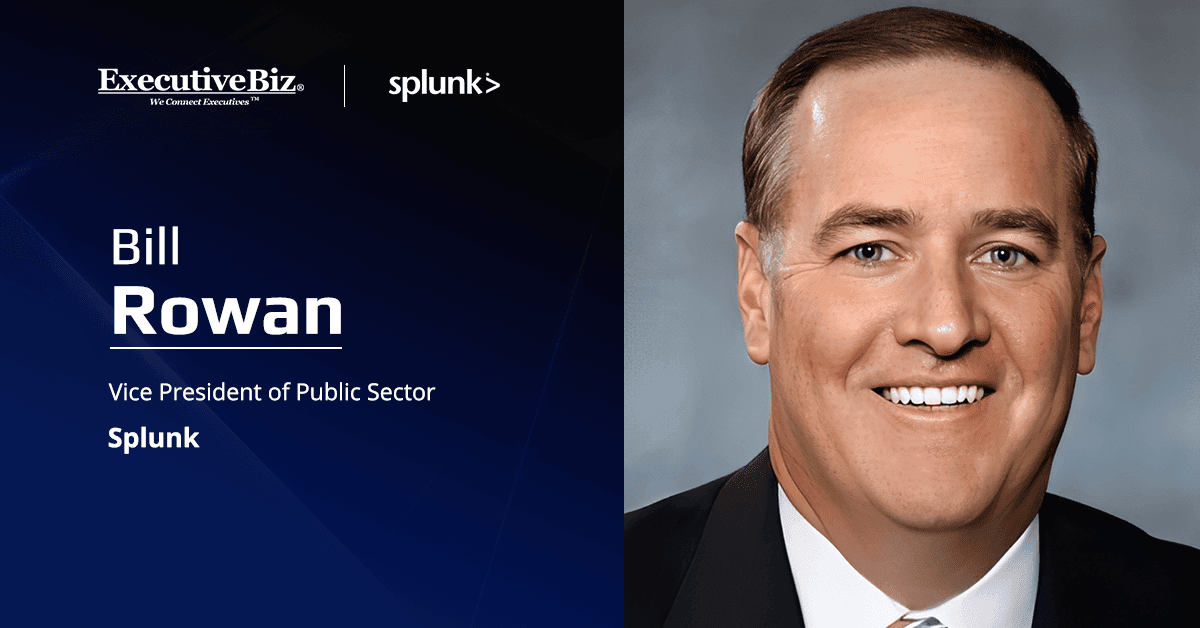
Bill Rowan, vice president of public sector at Splunk, said operationalizing artificial intelligence and achieving unified visibility could help public and private sector organizations mitigate risk, accelerate response and strengthen cybersecurity resilience.

As agencies work to close the gap between AI adoption and legacy infrastructure, conversations around cyber resilience and zero trust are taking center stage across government. Register now for the 2026 Cyber Summit on May 21, and hear leaders explore strategies to strengthen security, visibility and response in an increasingly complex threat landscape.
In a blog post published Wednesday on the company’s website, Rowan, a four-time Wash100 Award winner, cited a Splunk-sponsored study conducted with Foundry in January that surveyed 201 U.S.-based IT and security leaders on cybersecurity and IT challenges across the public and private sectors.
What Are the Key Findings of the Foundry-Splunk Research?
Rowan said 83 percent of IT leaders reported that tech debt and legacy systems impede cybersecurity efforts, while 94 percent of respondents expect their reliance on AI to increase in the next 12 months.
He added that 89 percent said AI can significantly improve their ability to defend against cyberthreats, but only 37 percent reported they could resume normal operations within six hours after a cybersecurity outage.
What Is the Role of AI in Advancing Resilience?
Rowan wrote that organizations that use AI-enabled tools more extensively report stronger resilience outcomes.
He noted that leaders of these organizations are more likely to consider their cyber resilience as advanced; receive real-time or near-real-time alerts; initiate remediation faster; and restore operations more quickly. He added that they also express greater confidence in securing AI-enabled environments, and that the use of security orchestration, automation and response, or SOAR, and observability tools is associated with more advanced AI risk controls.
What Modernization Challenges Does Zero Trust Face?
Rowan said gaps in visibility and automation continue to affect zero trust implementation. According to the study, 43 percent of organizations use SOAR platforms, while 47 percent use observability tools and 39 percent receive real-time or near-real-time alerts.
He noted that zero trust requires real-time visibility, automation and infrastructure modernization.
What Are the Required Capabilities to Address the Structural Gap?
Rowan said organizations should focus on several capabilities to address the gap between AI adoption and legacy infrastructure.
He stated that organizations should advance observability and SOAR maturity to deliver AI-driven insights; build integrated data pipelines that enable real-time visibility; and implement automation to accelerate response and remediation. He added that agencies and companies should establish operational metrics to measure resilience performance and align modernization initiatives with security strategies.