

 Kristen Smith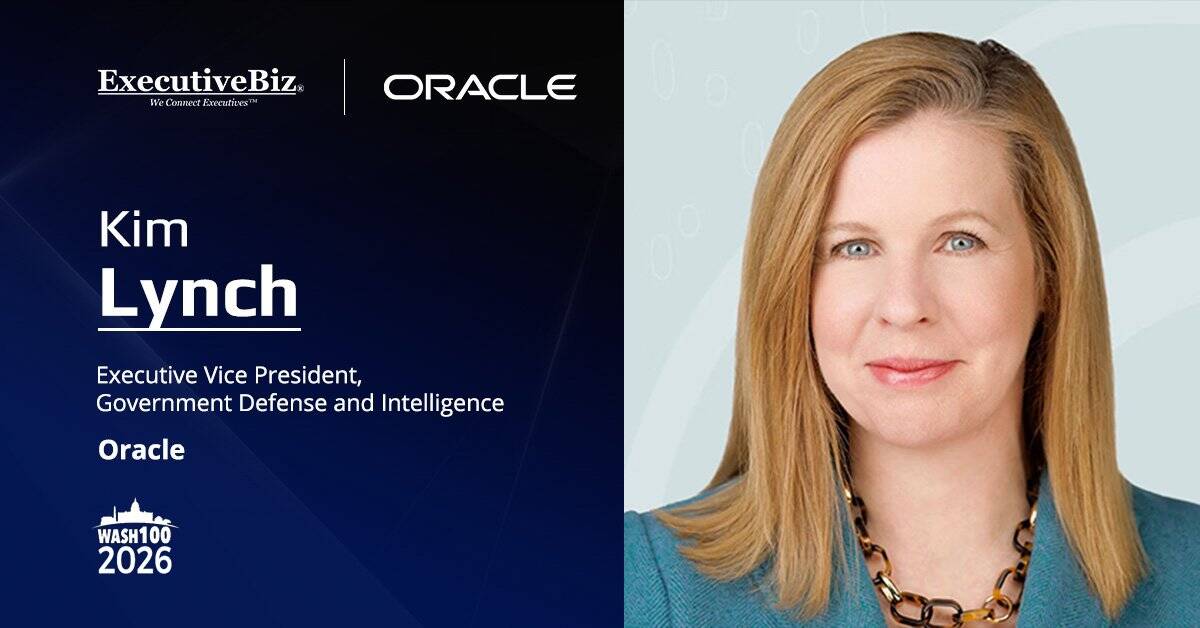
Oracle has announced an expansion of its government portfolio, headlined by the launch of the Oracle AI Data Platform for U.S. federal agencies. The new ecosystem, announced Tuesday during the recent Oracle Federal Forum, is designed to dismantle information silos and provide a secure, high-performance foundation for generative artificial intelligence across civilian and defense missions.

The Potomac Officers Club’s 2026 Digital Transformation Summit, scheduled for April 22, will highlight next-generation developments in AI, cybersecurity, enterprise IT and user experience, along with opportunities for collaboration to accelerate mission outcomes. Register now!
The announcement coincides with Oracle’s strategic push to provide agencies with greater sovereign control and more robust computing power. In a blog published on the company website, Peter Guerra, group vice president of data and AI for government, defense and intelligence, detailed plans to integrate NVIDIA B300 graphics processing units into Oracle Cloud Infrastructure government regions, alongside new model options, including xAI Grok and NVIDIA Nemotron.
How Does Oracle Provide a Secure Foundation for Agentic Government?
Oracle introduced the AI Data Platform amid a shift toward “AI-ready” governance. By unifying OCI, Oracle Autonomous AI Database and OCI Enterprise AI, the AI Data Platform allows agencies to deploy agentic applications while adhering to Federal Risk and Authorization Management Program High and Impact Level 5 security standards.
“Federal agencies are under increasing pressure to turn data into a secure, decisive mission advantage at speed and scale,” said Kim Lynch, executive vice president of GDI at Oracle.
“By unifying Oracle’s leading cloud infrastructure, AI database, and AI services, Oracle AI Data Platform for Federal Government provides a powerful, cost-effective way to connect data and workflows to generative AI,” the three-time Wash100 Award recipient explained.
According to Oracle, its Autonomous AI Database features “Select AI” for natural language querying, allowing non-technical users to interact with data without Structured Query Language expertise, while the OCI Enterprise AI provides access to leading large language models within a secure cloud environment.
The AI Data Platform also offers Oracle Analytics, which uses AI-powered assistants to surface trends and anomalies directly to decision-makers, and OCI Object Storage, which functions as a scalable lakehouse foundation, allowing agencies to analyze structured and unstructured data in place.
How Is Oracle Expanding Compute and Model Choice for Federal AI?
Recognizing that federal AI requirements vary by mission, Oracle is increasing infrastructure flexibility. According to Guerra, the upcoming availability of NVIDIA Blackwell Ultra-powered B300 GPUs on OCI will provide the energy efficiency and performance required for LLM inference and training workloads.
The addition of xAI Grok 4 and Grok 4 Fast models, designed for data extraction and code generation, alongside high-throughput NVIDIA Nemotron models, will enable agencies to tailor their AI deployments to specific situational awareness or cybersecurity needs, the executive said.
How Is Oracle Modernizing Federal Financial Operations?
In a move to modernize government operations, the company also announced at the forum that Oracle Cloud Federal Financials has been added to the Department of the Treasury’s Financial Management Quality Service Management Office Marketplace, marking the first cloud-native offering of its kind to join the vetted marketplace. By embedding AI directly into financial workflows, the Oracle Fusion Cloud Enterprise Resource Planning capability enables agencies to automate budget planning, funds control and debt collection.
“The inclusion of Oracle Federal Financials in the FM QSMO Marketplace builds on our proven track record across the public sector,” stated Rondy Ng, EVP of applications development at Oracle.
“With Oracle Federal Financials, agencies can use embedded AI capabilities to improve visibility and reporting and streamline core finance operations, freeing teams to focus on mission-critical priorities,” he added.