
 Kristen Smith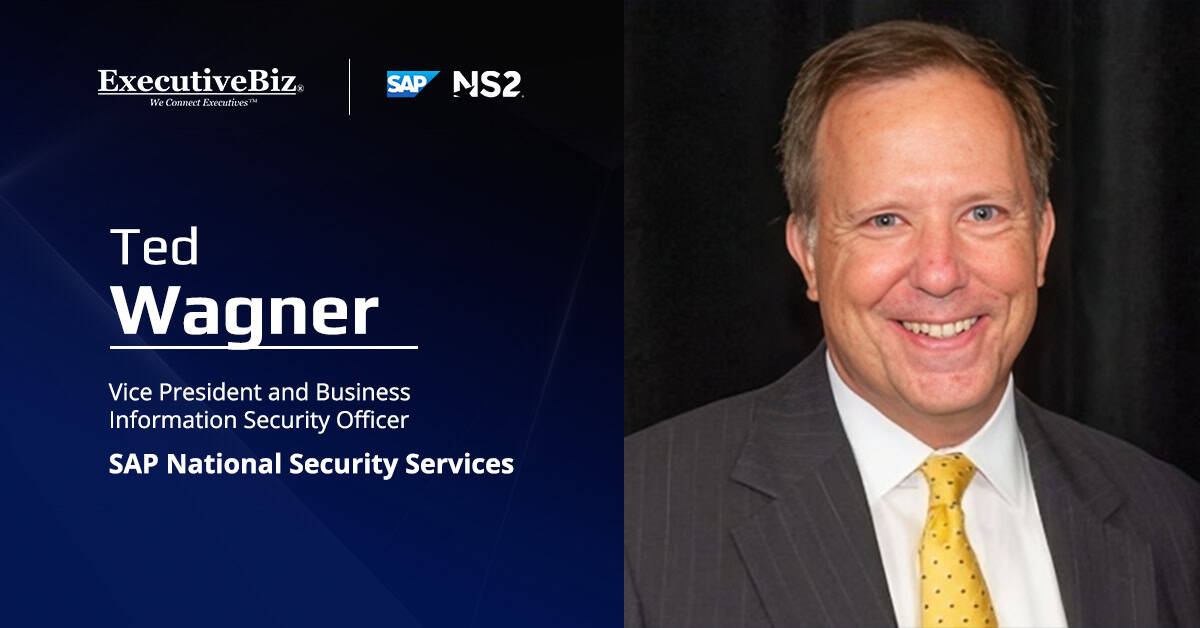
SAP National Security Services is positioning zero trust architecture as a foundational requirement for delivering secure cloud capabilities to federal customers as cyberthreats and mission demands continue to evolve.

Published Tuesday on the SAP NS2 website, a new blog post by Ted Wagner, the company’s vice president and business information security officer, framed zero trust not as an emerging concept but as an operational necessity already embedded in SAP NS2’s approach to supporting defense, intelligence and other high-security environments.
Zero trust implementation will be among the topics discussed at the 2026 Cyber Summit, hosted by Potomac Officers Club on May 21. Register now to hear government and industry leaders discuss evolving cyberthreats and federal cybersecurity priorities.
Why Is Zero Trust Central to Federal Missions?
Wagner said traditional perimeter-based security models are no longer sufficient in environments where users, systems and data operate across hybrid and distributed networks.
He noted that SAP NS2’s implementation of zero trust ensures continuous verification of every user, device and application interaction, eliminating implicit trust that could allow adversaries to move laterally once inside a network.
“Our Zero Trust strategy aligns with Department of War ZTA principles, while still tailoring our approach to the realities of commercial cloud operations and diverse regulatory frameworks,” Wagner wrote.
How Does Zero Trust Improve Operational Outcomes?
According to the executive, embedding zero trust delivers measurable mission and operational benefits:
- Improved operational resilience: Zero trust enables more secure and resilient operations by enforcing least-privilege access, segmenting systems and applying real-time monitoring across environments.
- Faster authorization to operate: Standardized identity, access and monitoring controls streamline security reviews, while reusable controls and automation help agencies achieve ATO more efficiently.
- Improved time and personnel allocation: Automation and centralized identity management reduce manual security tasks, allowing teams to focus on mission support, threat analysis and strategic priorities.
- Protected supply chain: Granular access controls enable secure collaboration with vendors and partners without exposing broader networks, reducing third-party risk.
Wagner noted that zero trust is a continuous journey of improvement, involving the integration of new technologies to keep pace with evolving threats.
“At SAP NS2, we embrace this reality. Every new application, every system update, every change in the threat landscape requires us to reassess and refine our approach,” he wrote.
What Other Cybersecurity Priorities Did Wagner Highlight?
In a separate blog post, Wagner identified three priorities shaping the future of cybersecurity: strengthening public-private collaboration, embedding security-by-design practices into emerging technologies and investing in the cyber workforce.
He also described artificial intelligence as a “double-edged sword,” noting that while threat actors use AI to automate attacks, defenders can use it to analyze large datasets, automate responses and identify vulnerabilities earlier. Wagner said SAP NS2 integrates AI into its security architecture while maintaining guardrails to ensure human oversight remains central, particularly for high-consequence decisions.
How Does SAP NS2 Align With Federal Requirements?
SAP NS2’s zero trust model aligns with evolving federal cybersecurity requirements, including continuous monitoring and protection of controlled unclassified information.
Earlier in March, the company obtained Level 2 certification under the Cybersecurity Maturity Model Certification program amid tightening cybersecurity across DOW and the defense industrial base.