
 Kristen Smith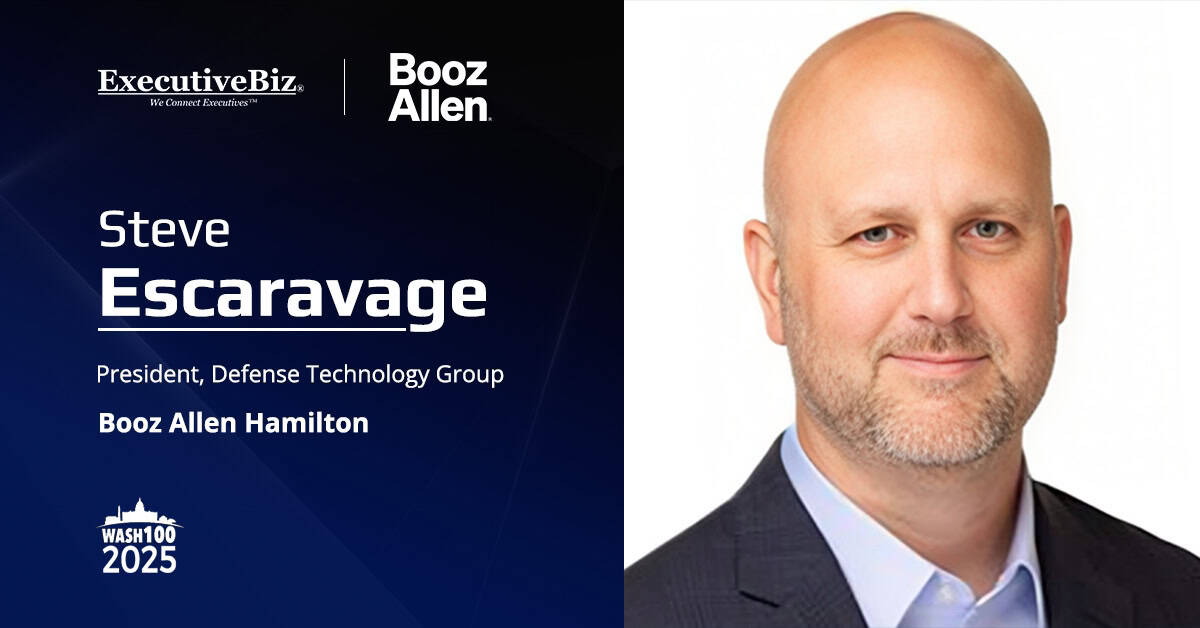
Booz Allen Hamilton is accelerating the delivery of emerging defense technologies by investing in in-house engineering, rapid prototyping and real-time collaboration with warfighters, Steve Escaravage, president of Booz Allen’s defense technology group, said in an article Axios published on Friday.
How Is Booz Allen Accelerating Emerging Defense Technologies?
Escaravage, a four-time Wash100 Award recipient, said the firm’s strategy centers on shortening the path from concept to operational use and delivering technologies that work with existing systems, while avoiding reliance on minimum viable products that perform well in labs but fall short in battlefield conditions.
The company operates more than 20 engineering, manufacturing, and research and development facilities offering rapid prototyping, industrial testing, scalable production and defense systems sustainment. Escaravage said the capabilities enable Booz Allen to reduce timelines and costs.
How Does Booz Allen’s Approach Align With Trump’s Defense Contracting EO?
The approach aligns with the priorities outlined in President Donald Trump’s recent executive order, which directs changes to defense contracting practices. The order emphasizes faster acquisition, greater investment in production capacity and accountability for on-time delivery, while discouraging stock buybacks and executive compensation practices that divert resources away from manufacturing and innovation.
As defense contracting and acquisition practices evolve, the 2026 Defense R&D Summit on Jan. 29 will provide a setting for government, industry and research leaders to discuss how innovation is developed and delivered across the defense enterprise. Convened by the Potomac Officers Club, the event will focus on research and technology efforts that support U.S. military capabilities and national security. Register now!
How Does Warfighter Feedback Shape Booz Allen’s Technology Development?
According to Escaravage, the company focuses on areas such as autonomy, battle management and electronic warfare, where existing technologies fall short in contested environments.
A key differentiator, he said, is continuous feedback from warfighters. Booz Allen updates systems based on real-world use, incorporating operational insights to adapt capabilities as missions evolve — a process he described as a “race against time” to stay ahead of emerging threats.
Strategic partnerships also play a role in accelerating delivery. The executive cited recent collaborations with companies including L3Harris, Shield AI and Carnegie Robotics, which allow Booz Allen to improve its offerings.
What Role Will Autonomy and AI Play in Future Warfare?
Looking ahead, Escaravage said autonomy and artificial intelligence will be central to future warfighting, but noted a shift in the economics of military operations, with increasing emphasis on affordability and the ability to deploy technology at scale.
“Our adversaries are coming together, and they intend to challenge our place in the world and our way of life,” Escaravage said. “This stuff needs to work — and we need to get it in the hands of the warfighters now.”