
 Elodie Collins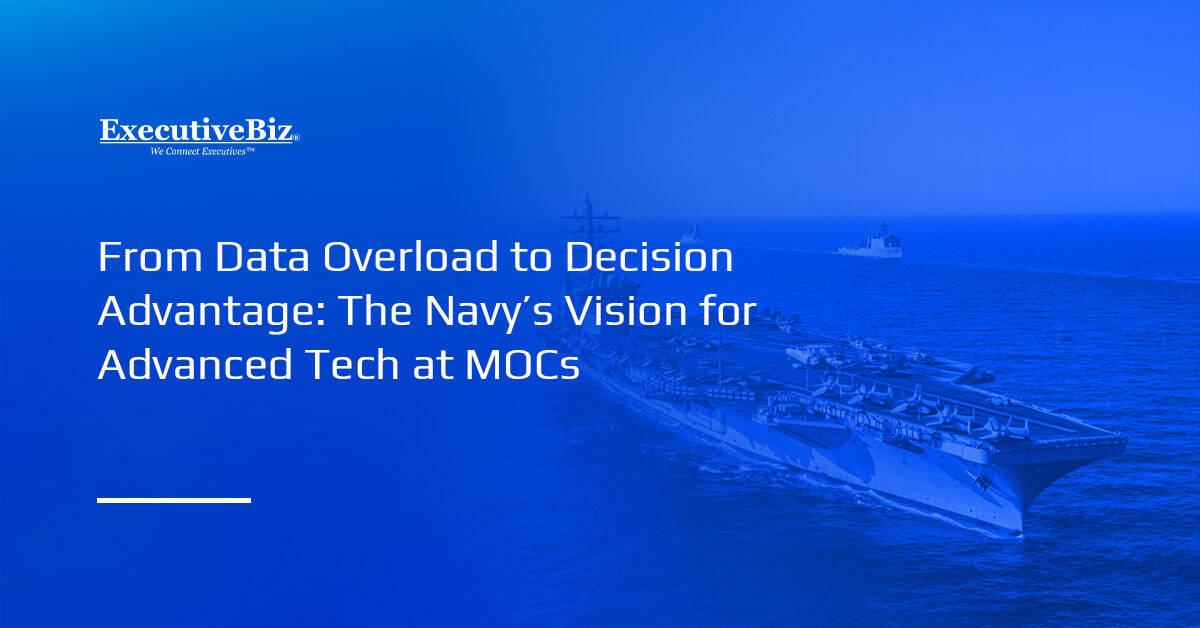
- MOCs serve as nerve centers, delivering C2 across distributed forces
- The Navy plans to introduce AI into MOCs for predictive analytics, data fusion and operational planning
- The 2026 Navy Summit on Aug. 27 will host a dedicated panel on integrating commercial tech into MOCs
The U.S. Navy is preparing to fight on a battlefield where adversary weapons can reach vast distances, forcing ships to spread out to strengthen defense. The service is relying on maritime operations centers, or MOCs, to maintain command and control over widely separated forces, ensuring commanders retain a common operating picture and synchronize maritime activities.
Learn more about the U.S. Navy’s evolving strategy to win fights against near-peer adversaries, and the important roles that MOCs will play in future conflicts at the Potomac Officers Club’s 2026 Navy Summit on Aug. 27. The Integrating Commercial Capabilities Into the MOCs: Opportunities & Challenges panel will explore the advantages of deploying advanced commercial technologies into MOCs to achieve decision superiority. Tickets are now available here!
What Are Maritime Operations Centers?
MOCs serve as the “nerve centers” of the Navy’s fleet operations, delivering C2 and facilitating information-sharing to support various missions. The concept was introduced in the 2000s following 9/11 to address shortfalls and restore the Navy’s C2 capabilities to the operational level of war, according to the Center for International Maritime Security.
In her Navigation Plan published in 2024, Adm. Lisa Franchetti, then chief of naval operations, wrote that MOCs are central to how the Navy fights in a distributed manner and must be treated as weapon systems. She said MOCs must integrate with the joint force, allies and partners to effectively connect commanders with the sensors, effectors and shooters in a distributed environment.
The Naval Information Forces was appointed as the type command for MOCs, responsible for manning and training all 10 MOCs.
Why Is Data-Sharing a Challenge for MOCs?
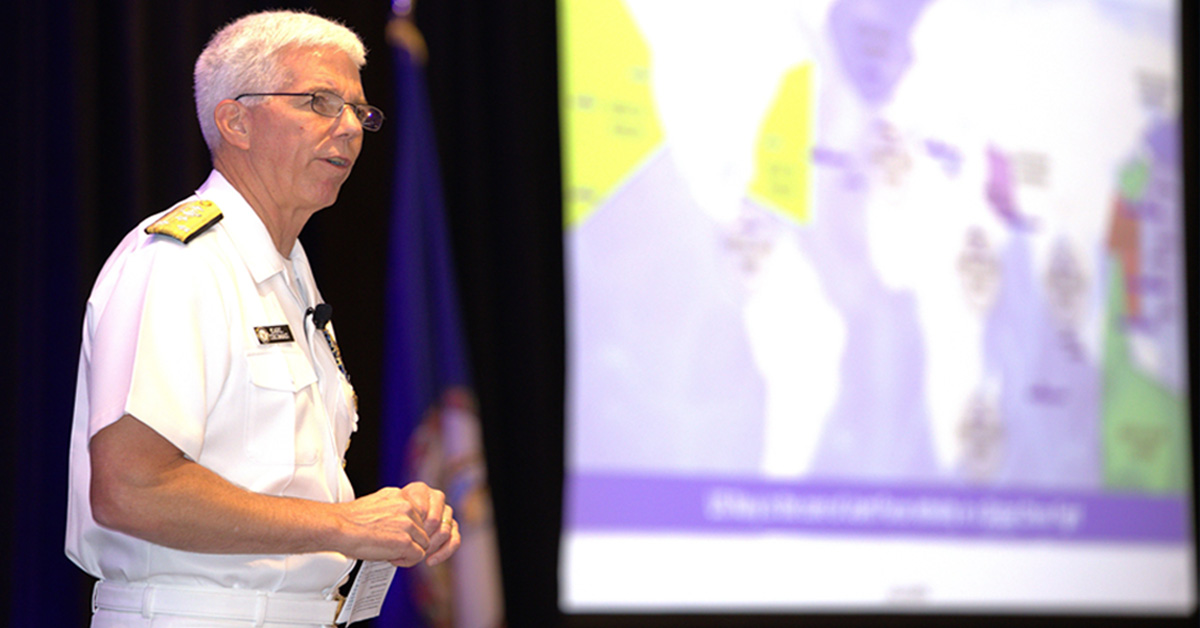
Vice Adm. Karl Thomas, who served as deputy chief of naval operations for Information Warfare and is now head of the U.S. Fleet Forces Command, emphasized the need to deliver data from sensor-to-shooter fast, especially in a high-end battle with peer adversaries, in a 2025 interview with Federal News Network. He said the challenge right now is to fuse data from all sensors across a “large swath of battle space.” Thomas delivered a keynote at the 2025 Navy Summit.
“It’s about getting a decision advantage. It’s about turning inside the adversary’s decision process so that speed, that velocity of data — which is really important — and certainly, as the other side is going to try to interrupt that data,” he added. “The battle space that we’re looking at, which also is a contested battle space, where you have to move that data from the edge back to the decision process and get it back out to those shooters.”
Can AI Solve the Navy MOC Data Problem?
The Navy plans to release an updated manual for MOCs that, according to Vice Adm. Michael Vernazza, commander of NAVIFOR, will introduce the use of artificial intelligence at MOCs for predictive analytics and to improve operational efficiency. At an event covered by GovCIO Media and Research, Vernazza shared that AI will be integrated into current and future operational planning.
“It’ll allow us to better posture our own forces,” he stated.
He also shared at a conference held in January that he sees AI as a tool that can improve decision-making, adding that the tool can fuse data and create a “coherent picture that matches the commander’s timing and tempo and sequencing of events that needs to occur as he or she makes those decisions,” DefenseScoop reported.
Vernazza will deliver a keynote at the 2026 Navy Summit on Aug. 27. The Navy’s “I-boss” is expected to discuss MOC modernization and AI integration and other topics critical to achieving maritime warfighting dominance. Sign up today to gain insights from the Navy’s information warfare leader!
What Other Advanced Capabilities Do MOCs Need?
Beyond AI, the Navy is building out a high-tech MOC to deliver data across distributed forces.
The service’s Information Environment Ecosystem Blueprint, first released in 2024 and updated in 2025, provides a look into the technologies needed to power MOCs, DefenseScoop reported. The plan defines a common MOC tech stack that leverages cloud capabilities and implements zero trust principles to allow forces to use customizable apps with standardized data.
The Navy’s most recent Hedge Strategy, issued in February, mentions investments in capabilities for MOCs. The strategy lists “investing in cost-effective innovation and tailored offsets” to achieve decision advantage at MOCs, among other key operational goals, as one of its five key components, AFCEA’s Signal said.
How the Commercial Sector Can Support the Navy’s MOCs
The Navy is increasingly turning to industry to help deliver the tools and expertise needed to keep pace with a rapidly evolving threat environment.
To help the Navy modernize its MOCs, the Defense Innovation Unit launched an effort in 2025 to develop and deploy AI and machine learning tools that enable cross-domain data sharing. The effort, called Situational Awareness by Intelligent Learning Systems, or SAILS, aims to converge data from space-based, shipboard and airborne assets and deliver intelligence reports to support MOC operations.
Equipping MOCs with advanced capabilities aligns directly with broader efforts among naval leadership to acquire and deploy cutting-edge tools faster to secure a clear warfighting edge.
Former Navy Secretary John Phelan, at a conference in February, spoke about the service’s accelerating tech adoption across all aspects of operations, and the critical role that partners in the private sector will play in ensuring the service gets access to advanced capabilities fast.
“The Navy is rapidly adopting AI and digital capabilities to increase the lethality and survivability of the fleet with unmanned systems that provide mass and flexibility with AI enabled command and control that turned platforms into a coherent fleet, private sector partnership that delivers speed and scale,” he stated via GovCIO Media and Research.
Who Are the Speakers on the 2026 Navy Summit MOC Panel?
The Integrating Commercial Capabilities Into the MOCs: Opportunities & Challenges panel at the 2026 Navy Summit will explore the technologies that can accelerate decision-making. Panelists include:
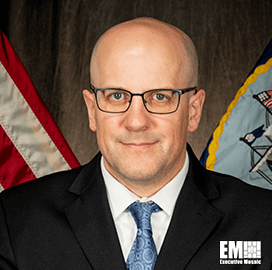
Richard Okrasinski
Director of C4I, Commander of Submarine Forces
U.S. Navy
Okrasinski is a retired Navy master chief, who has served in three fast-attack submarines: USS Toledo, USS Albuquerque and USS Parche. He currently serves as director of command, control, communications, computers and intelligence for the Commander of Submarine Forces, or COMSUBLANT. He is responsible for the development and execution of communications and cybersecurity strategy for the Navy’s Atlantic submarine fleet.
According to his LinkedIn, before his current role, he held the role of chief information security officer at COMSUBLANT.
His military career includes serving as a master chief information systems technician (submarines), providing technical assistance to 17 submarines home ported in Groton, Connecticut.
Additionally, he brings defense sector experience, having spent over five years as a senior cybersecurity analyst at Ansol.
Okrasinski was also one of the speakers at the 2025 Navy Summit, where he discussed private-public partnerships to accelerate the delivery of advanced warfighter technologies.
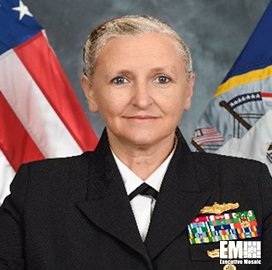
Capt. Ruth Lane
Assistant Chief of Staff for Maritime Operations Center, Naval Information Forces
U.S. Navy
Lane is a decorated surface warfare officer who deployed aboard three Navy vessels: USS Whidbey Island, USS Harry S. Truman during Operation Southern Watch and USS Iwo Jima during Operation Enduring Freedom.
Her Navy career includes two command tours. She served as director of the U.S. National Ice Center, where she earned the U.S. Coast Guard Meritorious Unit Commendation. She also held the role of commanding officer of the Farragut Technical Analysis Center within the Office of Naval Intelligence.
At present, she serves as assistant chief of staff for MOC at NAVIFOR.
Maura Thompson
Fleet Enterprise Lead
Thompson is a military logistics and digital transformation expert who has experience in both public and private sectors. She currently serves as fleet enterprise lead at Palantir Technologies, a position she has held since September 2025. She joined the defense company in 2024 as a deployment strategist.
Before Palantir, Thompson led as strategic branch chief for digital transformation at the Joint Staff, where she oversaw logistics planning for the Global Information Dominance Experiment. Her career also includes positions as Pacific logistics planner and logistics coordinator for the Russia-Ukraine Crisis Management Team on the Joint Staff; J48 Wargaming Branch Chief; and special assistant to the vice chief of naval operations.
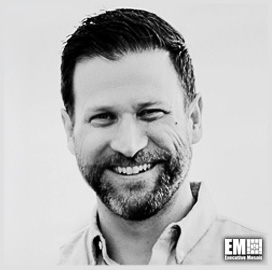
Joe Simons
Head of U.S. Defense and National Security Affairs
Simons, an executive with extensive experience in defense and intelligence leadership, joined Kpler’s U.S. Senior Advisory Group as head of defense and national security affairs in February.
He most recently served as director of communications and information systems at Fleet Forces Command, where he led a 250-person team that provided cyber, command and control, communications, computer, and intelligence, surveillance and reconnaissance capabilities to the commander of the U.S. Atlantic Fleet.
He joined USFFC as deputy director of information warfare and senior intelligence analyst in 2020. In the role, he supported the Navy’s responses to conflicts in Eastern Europe and the Middle East.
Simons spent more than 12 years at the CIA as a senior intelligence officer specializing in science, technology and weapons analysis.
He began his career as a satellite analyst at the National Reconnaissance Office and Naval Research Laboratory.
The 2026 Navy Summit is a premier gathering for the leaders behind the initiatives to reassert the Navy’s position as a global seapower. The event will bring together senior Navy leadership, defense experts and industry innovators to address the critical operational and technological challenges facing the service today. Get your tickets today!