
 Charles Lyons-Burt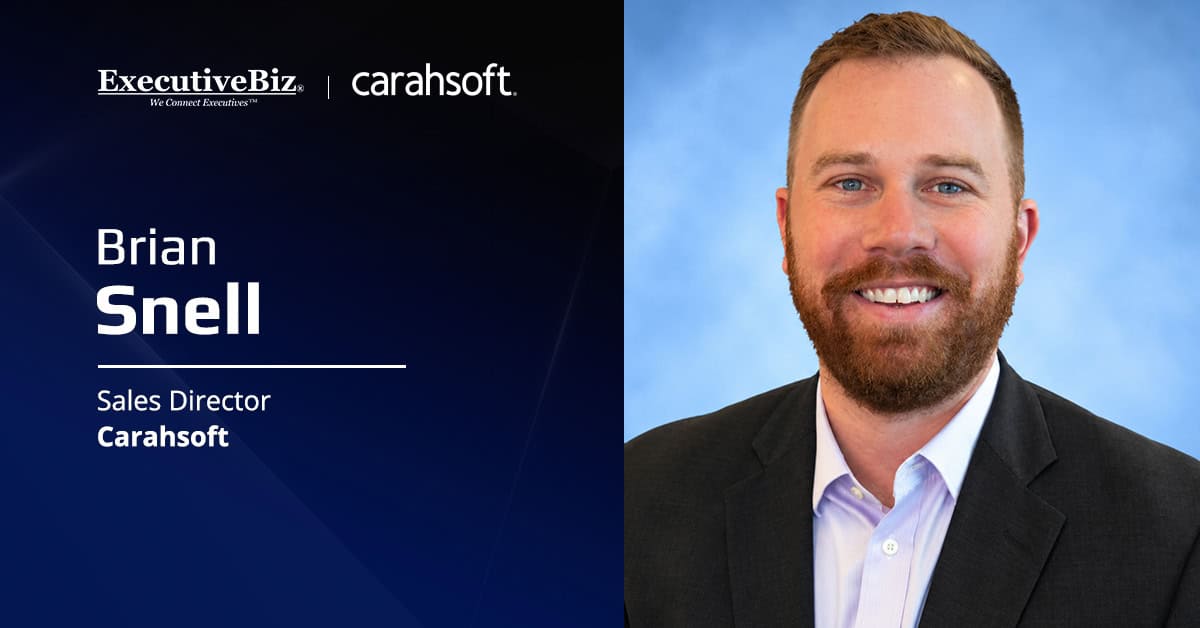
During his 18 years in the federal IT market, Brian Snell has watched infrastructure conversations come full circle. Organizations that once focused on moving workloads into hosted cloud environments are now taking a more selective approach, reassessing public cloud costs and repatriating certain workloads to on-premises private-cloud environments. The growing interest in running AI and large language model workloads within customers’ own data centers is adding new urgency to that conversation.
As director of sales at Carahsoft, Snell works with customers who are navigating that shift while seeking to get more value from their technology investments. For organizations that have standardized on Broadcom’s VMware Cloud Foundation, or VCF, the focus is moving beyond the core platform to the Advanced Services that can help them secure infrastructure, automate workflows and gain greater visibility into their environments.
Snell sat down with ExecutiveBiz to discuss Broadcom Advanced Services, including how offerings such as vDefend, Automic and AppNeta extend VCF deployments, and why private cloud is becoming a more important part of organizations’ infrastructure strategies.
ExecutiveBiz: For readers new to the term, what are Broadcom Advanced Services, and how do they extend a customer’s investment in Broadcom’s VMware Cloud Foundation, a.k.a. VCF?
Brian Snell: First off, ‘Advanced Services’ is really a bit of a technical term. These are really products, integrated capabilities designed to extend and enhance VCF deployments.
For example, vDefend is a hypervisor-level security product that can help customers improve change management and manage their infrastructure more securely. Automic is a workload automation platform that can automate business and workflow processes at scale. AppNeta provides network observability and helps organizations monitor their private-cloud environments.
These are just a few examples of a very broad Advanced Services ecosystem. There are dozens of products in all that help extend VCF deployments and make customers’ cloud strategies safer, faster, and cheaper. Think of VCF as the core private cloud platform. Once customers have standardized on that foundational platform, they still need to monitor their networks, harden their infrastructure, and make their operations run more efficiently.
Broadcom Advanced Services are designed to round out the cloud platform with capabilities that are native to and integrated with VCF so organizations can take full advantage of the platform. Carahsoft helps bring those capabilities to market and supports customers as they adopt them.
“Agencies deploying AI, LLMs, and other advanced capabilities within their data centers need to plan ahead. They need their own infrastructure and private clouds, not just as places to run workloads, but as part of a more integrated strategy for addressing security concerns, observability needs and infrastructure costs.”
EBiz: Which types of organizations can benefit from Broadcom Advanced Services, and what does that journey look like?
Snell: There are two buckets of large VMware customers. Our initial focus is on the organizations that were already heavily invested in VMware and have now standardized on VCF.
For those customers, the move to VCF is not a huge departure because they are already using much of the platform’s functionality. The next step is making sure they take full advantage of their investment.
Rather than treating security, automation and observability as separate point products, customers can add capabilities that work within the private-cloud environment they’ve already built.
For other customers, the opportunity is to help them deploy the capabilities they’ve already licensed and identify where additional Advanced Services offerings can deliver near-term value. These organizations may not have been as deeply invested in the VMware environment before moving to VCF, so the focus is on helping them address immediate operational needs and understand how to make VCF work for them.
EBiz: You’re seeing organizations reassess their public-cloud dependence. What is driving the repatriation of certain workloads to private-cloud environments, and how does VCF support that strategy?
Snell: Cloud repatriation is a foregone conclusion at this point. Increased public cloud costs and local data sovereignty requirements are driving more on-premise workloads, a trend that I expect will continue to accelerate.
But agencies deploying AI, LLMs, and other advanced capabilities within their data centers need to plan ahead. They need their own infrastructure and private clouds, not just as places to run workloads, but as part of a more integrated strategy for addressing security concerns, observability needs and infrastructure costs. Rising DRAM prices make that infrastructure planning especially important.
VCF can become a hub by which all of these things integrate. It helps customers bring greater visibility, security and infrastructure management into a broader private cloud strategy. For some organizations, VCF can act as an alternative to public cloud, while for others, it can be one leg of the stool in a multicloud environment.
EBiz: What differentiates Carahsoft’s role in bringing Broadcom Advanced Services to market and supporting customers after purchase?
Snell: Carahsoft is the exclusive North American aggregator for many of the products that Advanced Services are built on. We’re uniquely positioned to help customers take full advantage of their VCF licenses, thanks to our familiarity with the products and deep expertise in how they function.
We have hundreds of technical experts across VCF, automation, security and infrastructure, with specialized capabilities in automation, security and portfolio management. Our experts help customers identify the capabilities that fit their environment and adopt them effectively
But giving customers access to the products is only the first step. Carahsoft provides post-sales technical support across the entire stack, including automation and network observability, a breadth of support unique among partners in North America. As customers consolidate more technology around VCF, Carahsoft becomes an important partner across technical support, sales and customer service.
That support is complemented by customer-success programs, continued education, and enablement opportunities. The more customers invest in this consolidated technology, the more those programs can help them get value from it over time.
In other words, we’re not just in the business of selling to them. We’re here to support them throughout the entire VCF experience.