
 Charles Lyons-Burt
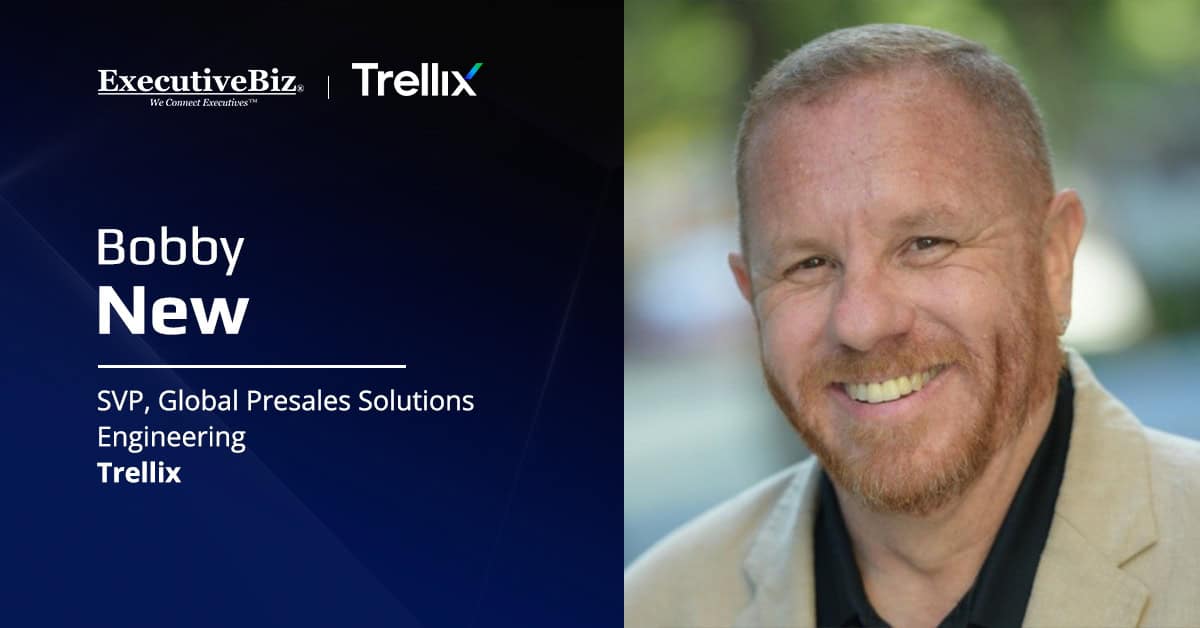
- New says trust in AI security tools must be engineered and proven in stages
- Trellix keeps AI investigation and data processing inside agency boundaries
- New, a FireEye and Trellix leader since 2015, wants AI to free analysts for judgment calls
Bobby New wants federal agencies to challenge Trellix with their hardest operational problems. For the company’s senior vice president of global presales solutions engineering, artificial intelligence earns its place in the security operations center, or SOC, only when it proves itself inside the customer’s own environment.
That philosophy now has a flagship product behind it. Trellix Wise for Private Cloud, which Trellix announced Oct. 13 and made generally available Oct. 15, runs AI-powered investigation across on-premises, air-gapped, hybrid and private cloud environments. Data stays inside the customer’s security boundary and never reaches a public large language model, while predictable pricing replaces token-based consumption.
New first sat down with ExecutiveBiz for a February Spotlight interview covering teaming, Trellix’s core values and the nation’s most pressing security threats. Now he returns to dig into what comes next: how agencies can adopt autonomous technologies at their own pace, defend against AI agents, separate meaningful capabilities from marketing hype and keep experienced analysts at the center of the mission.
New also serves as chairman of the 4×24 Cyber Group, part of Executive Mosaic’s 4×24 Leadership Program, which gives senior-level executives of consequence direct dialogue with government guest speakers alongside peer exchange with fellow industry leaders. Learn how to join the 4×24 Leadership Program today.
ExecutiveBiz: Cybersecurity is at the heart of what Trellix does. Can you share with our audience what makes the organization’s approach unique?
Bobby New: As SVP of global presales solutions engineering, I spend a lot of time with customers understanding how technology performs in their environment and what it takes to turn that technology into mission outcomes.
For federal agencies, the conversation goes beyond general cyber capabilities. Where does the data go? Can the technology operate in a disconnected environment? Can my team understand and trust the AI’s decisions? Those requirements shape our approach.
We bring AI-powered investigation and threat hunting into the agency’s environment, including on-premises and air-gapped networks. We connect existing security investments, keep data and AI processing within the agency’s boundaries and give analysts evidence and context they can use to make decisions.
What makes our approach different is that we engineer around the realities of the customer’s mission. The technology has to work where they operate, under the controls they require.
EBiz: In what ways is Trellix supporting federal organizations as they move forward in their adoption of autonomous technologies?
New: My team’s job is to help agencies turn the promise of autonomous technology into something they can deploy, validate and trust.
A practical starting point is security investigation. Analysts spend significant time gathering evidence, moving between tools and determining which alerts deserve attention. We can automate much of that work, correlate the findings and provide an evidence-backed verdict with response guidance.
From there, agencies can expand autonomy at a pace that fits their mission. They establish permissions, approval requirements and the boundaries within which agents can act. Our role is to help them validate those workflows and understand where human judgment remains essential.
The ability to do this inside their environment, using existing data sources and predictable pricing, also removes significant adoption barriers.
I measure success by whether an agency can investigate more, respond faster and give its people more time for the decisions that require their expertise.
EBiz: How is Trellix adapting to the rapidly evolving threats posed by AI, specifically agents, in its support of federal agencies?
New: From a solutions engineering perspective, AI agents change both the threat we have to defend against and the way we build the defense. Agencies need to understand what agents can access, what actions they’re taking and whether that activity represents a threat.
We’re bringing together telemetry from AI agents and traditional security tools to help defenders connect activity across their environment. Our technology investigates incoming alerts and hunts for suspicious behavior that may otherwise go unnoticed, giving analysts the evidence and context to determine what needs action.
We apply that same scrutiny to the agents supporting the defense. Their findings need to be explainable, their actions auditable and their permissions governed, with human approval where required.
My responsibility is to help agencies put those capabilities into operation so they can defend at machine speed while retaining their authority over their mission, their data and their response.
EBiz: How do you help agencies distinguish meaningful AI capabilities from marketing hype?
New: My team’s responsibility is to prove that the technology delivers in the customer’s environment. I want agencies to challenge us with their operational problems: Can we investigate faster? Can we find threats they’re missing? Can their analysts understand and act on the findings?
We establish success criteria with the customer and validate against them. The measure of AI is whether it improves the agency’s ability to defend its mission.
Gain direct access to the government leaders driving agency priorities through Executive Mosaic’s 4×24 Leadership Program. Members engage in candid dialogue with senior government guest speakers on mission needs and upcoming priorities, then trade insights with fellow “executives of consequence,” including Cyber Group Chair Bobby New. Explore the program today!
EBiz: How can federal agencies trust AI to make security decisions?
New: From my perspective, trust has to be engineered and demonstrated. Analysts need to inspect the evidence behind a finding, understand the uncertainty and know exactly what the system is permitted to do.
I approach autonomy in stages. We validate investigations first, then expand authorized actions based on demonstrated performance and mission requirements. An agent gathering evidence and an agent isolating a critical system require different levels of oversight. My team helps customers establish and validate those boundaries.
EBiz: Will autonomous security replace experienced analysts?
New: I see enormous value in giving experienced analysts more capacity. They understand the mission, the environment and the consequences of taking action.
Too much of their time goes into collecting evidence and moving between tools. Automating that work allows them to focus on complex threats and decisions that require judgment.
As a leader, I also have to think about readiness. Teams need training in how to validate AI findings, supervise agents and recognize when to intervene. Technology and workforce development have to advance together.
EBiz: Can AI actually reduce SOC burnout, or does it just create more information to review?
New: I look at this through the analyst’s day. If we give someone 10 pages of generated text for every alert, we’ve added work.
What helps is a clear finding, the evidence supporting it, what remains uncertain and the recommended next step. Then we need to measure whether that actually reduces investigation effort and the backlog.
Who Is Bobby New?
Bobby New is SVP of global presales solutions engineering at Trellix, where he directs the company’s presales strategy and technical teams across North America, the public sector, Europe, the Middle East and Africa, and Asia-Pacific. A 30-year veteran of cybersecurity and enterprise technology, he previously led Trellix’s global public sector solutions engineering organization and spent nearly seven years at FireEye, advancing from consulting sales engineer to director ahead of the merger that created Trellix. Earlier in his career, he held technical and sales roles at Unisys, Dell, Novell, Senforce Technologies, Microsoft and Northrop Grumman. New holds the Certified Information Systems Security Professional credential and has chaired Executive Mosaic’s 4×24 Cyber Group since October 2024.
What Is Trellix?
Trellix is a Frisco, Texas-based cybersecurity company that combines AI-native security, operational threat intelligence and automated detection and response across on-premises, air-gapped, operational technology, hybrid and cloud environments. Symphony Technology Group launched Trellix in January 2022 by combining the FireEye and McAfee Enterprise businesses, Telecompaper reported. Vishal Rao has led the company as CEO since January 2025.
Trellix holds key federal credentials, including Impact Level 5 High Provisional Authorization from the Department of War for Trellix Endpoint Detection and Response and Federal Risk and Authorization Management Program, or FedRAMP, High authorization for its GovCloud Security Platform. Its newest offering, Trellix Wise for Private Cloud, draws on nearly 40 years of Trellix threat intelligence.