

 Pat Host
- NASA’s commercial space relay efforts could transform the low Earth orbit economy
- It could increase transmission rates as much as 100-fold and expand the LEO services market
- Get commercial space relay investment insights from top space officials at the 2026 Air and Space Summit on July 30!
NASA’s efforts to advance commercial space relay, or communications, have the potential to expand the low Earth orbit economy like never before.
The potential rewards are substantial. A key study released in January said that the commercial space data relay service market could increase by a 19-percent compound annual growth rate by 2032. Pure optical data links can offer increased transmission rates ranging from 10- to 100-fold.
Some of the space industry’s biggest companies, such as SpaceX, SES Space and Defense and Amazon, are working on NASA commercial space relay efforts. This technology is an urgent effort for the civil space agency as it plans to retire its generations-old Tracking and Data Relay Satellite, or TDRS, system by the mid-2030s.
Lastly, NASA is already working on the next-generation of commercial space relay: allowing missions to roam between government and commercial satellites similar to cellular telephony. Let’s dive into the five biggest storylines for NASA’s efforts to advance commercial space relay technology.
Get commercial space relay spending insights from top federal officials at the Potomac Officers Club’s 2026 Air and Space Summit on July 30! Learn how commercial relay services are accelerating mission timelines and how optical communications are reducing latency and increasing capacity during the Commercial Space Relay panel discussion featuring:
- Greg Heckler, NASA Space Communications and Navigation, or SCaN, deputy program manager for capability development
- Col. Aaron Stevenson, Space Systems Command deputy director for commercial space
- Samuel Sutton, SES director of space systems architecture
- Dr. Joseph Bravman, Omnisat LLC president
- Jared Newton, Planet Labs senior solutions architect
What Are the Key Attributes of NASA’s Commercial Space Relay Efforts?
1. Growing Market
Commercial space relay is a fast growing market, driven by demand for low-latency communications and expanding government, commercial and defense use. The market for commercial space relay is forecasted to grow from $2.5 billion in 2026 to $7.2 billion in 2032, according to the report Commercial Space Data Relay Service Market – Global Forecast 2026-2032, published in January.
The commercial space data relay services market covers capabilities including:
- End-to-end delivery of space-based data
- Integrating satellites
- Relay nodes
- Ground networks
- Managed service models
Key market participants include private sector providers, technology vendors and satellite manufacturers, with prevailing trends toward hybrid network models, cloud computing integration and service-based contracting.
2. Massive Increase in Capability
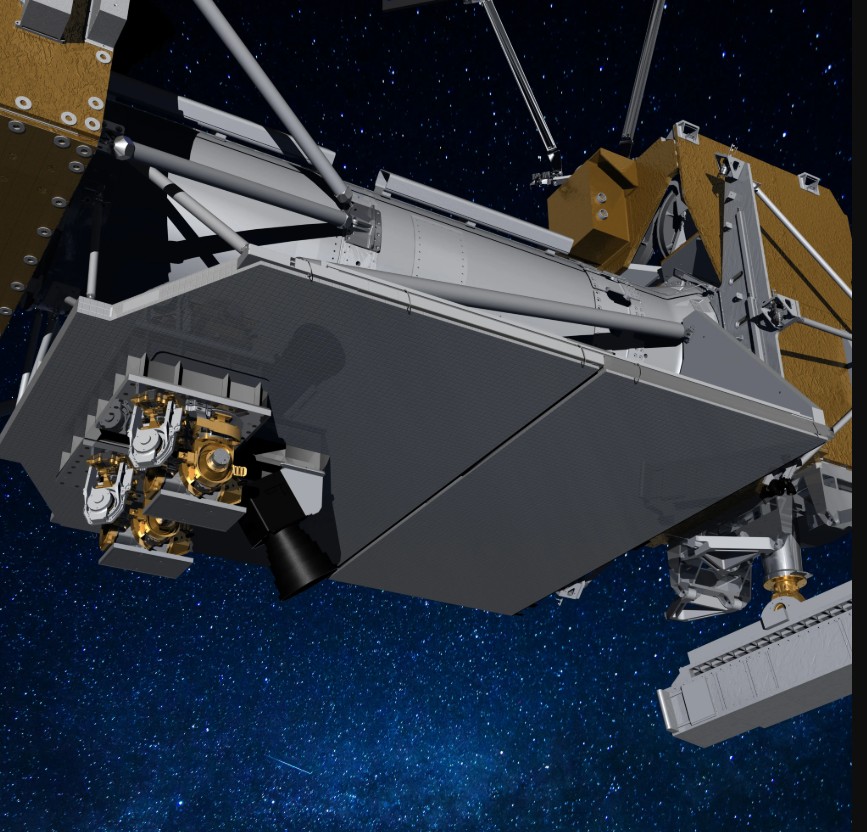
Laser communications and its high capacity for data transmission promises to transform future science missions. NASA previously demonstrated that pure optical links can offer a 10- to 100-fold increase in transmission rates compared to traditional radio links, according to a 2021 Laser Communications Relay Demonstration study. This is in addition to using payloads that are smaller, lighter and more power efficient than radio hardware.
A TeraByte InfraRed Delivery, or TBIRD, laser communications payload developed by MIT Lincoln Labs in 2022 delivered terabytes of data from space to a ground station at 100 gigabits, or Gbps, per second. This is 100 times faster than the best internet in most cities and more than 1,000 times faster than traditional radio frequency links.
TBIRD broke its own record in May 2023 when it delivered data from space to ground at 200 Gbps. MIT Lincoln Labs engineers achieved this by developing a variety of new technologies, including a protocol for ensuring laser communications data can be transmitted error-free through the atmosphere without a significant reduction in data rate.
Another new technology developed was a body-pointing scheme to precisely point the satellite toward the ground station. This was critical as the TBIRD payload has no moving parts.
Are you a GovCon technology executive looking to grow your space revenues in FY 2027? Then you cannot afford to miss the Potomac Officers Club’s 2026 Air and Space Summit on July 30. Learn about advanced space technologies like long-range kill chains, electro-optical/infrared weather systems and space situational awareness from our all-star lineup of keynote speakers, including:
- Tom Ainsworth, Air Force acting assistant secretary for space acquisition and integration
- Matt Anderson, NASA deputy administrator
- Anthony Baity, Air Force assistant deputy chief of staff for logistics, engineering and force protection
- Gen. John Lamontagne, Air Force vice chief of staff
- Dr. Eliahu Niewood (pending confirmation), Air Force director for integrated capabilities
Secure your seat today for this eagerly anticipated GovCon event!
3. Participation of Industry Heavy Hitters
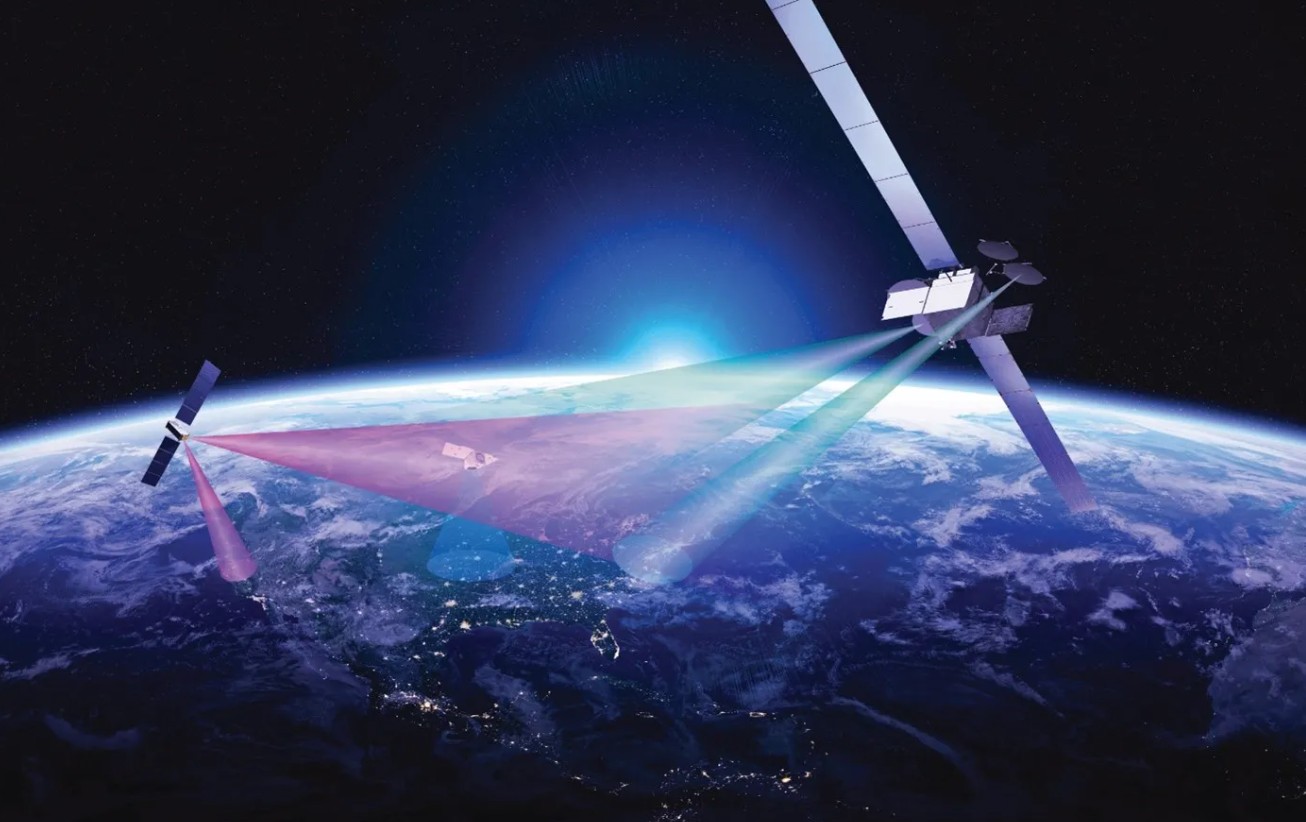
Many of the biggest players in the space industry have made advancements in commercial space relay. SES Space and Defense has demonstrated not only high-rate data exchanges but also tracking, telemetry and command services using its O3b mPower satellite network in medium Earth orbit and geosynchronous Earth orbit satellites, according to NASA.
Amazon has developed the hardware and software components necessary to support optical communication links within its Amazon Leo satellite relay network. Upcoming Amazon Leo demonstrations will test the pointing, acquisition and tracking capabilities of their optical communication systems to make sure the technology can accurately locate, lock onto and stay connected with a mission as it travels through space.
SpaceX, since 2024, has completed multiple demonstrations of on-orbit optical communications services. The company, during the Polaris Dawn and Fram2 human spaceflight missions, used its Starlink satellite constellation and an optical communications terminal installed on the Dragon spacecraft to demonstrate high-rate data relay services.
4. Urgency for NASA
Delivering operationally-ready, commercial space-based communications relay services is one of NASA’s most critical efforts as the agency is gradually phasing out its legacy Tracking and Data Relay Satellite, or TDRS, system. NASA announced in October 2024 that TDRS would only support existing missions while new missions would be serviced by future commercial services.
Current TDRS users like the International Space Station, the Hubble Space Telescope and other Earth and universe-observing missions will continue to receive TDRS services until the mid-2030s. Each TDRS spacecraft’s retirement will be driven by individual health factors as the seven active satellites are expected to decline at variable rates.
The TDRS fleet began in 1983 and consists of three generations of satellites, launching over 40 years. The first TDRS spacecraft was designed for a mission life of 10 years, but lasted 26 before being decommissioned in 2009.
5. Roaming Like Cellular Telephony
NASA is already working on the next-generation of commercial space relay: allowing missions to roam between government and commercial satellites similar to how cellphones roam between networks on earth. This program is called Polylingual Experimental Terminal, or PExT.
PExT launched in July 2025. Once it reached low Earth orbit, the terminal successfully relayed data between a York Space Systems BARD spacecraft, NASA’s TDRS fleet, commercial networks operated by Viasat and SES Space and Defense and mission control on Earth.
During each demonstration, the terminal completed critical space communications and navigation operations, ranging from real-time spacecraft tracking and mission commands to high-rate data delivery. By showcasing end-to-end services between the BARD spacecraft, multiple commercial satellites and mission control, the wideband terminal showed future NASA missions could become interoperable with government and commercial infrastructure.
“Today, we take seamless cellphone roaming for granted, but in the early days of mobile phones, our devices only worked on one network,” said Greg Heckler, NASA Space Communications and Navigation, or SCaN, deputy program manager for capability development and a panelist at the Potomac Officers Club’s 2026 Air and Space Summit on July 30.
“Our spaceflight missions faced similar limitations—until now,” Heckler continued. “These revolutionary tests prove wideband terminals can connect spacecraft to multiple networks, a huge benefit for early adopter missions transitioning to commercial services in the 2030s.”