

 Miles Jamison
- Seerist users can access Janes data on orders of battle, installations and equipment
- Analysts can use Seerist events to reach linked Janes military intelligence records
- The integration supports indications and warnings with added military context
Janes has made its validated military intelligence available in Seerist’s artificial intelligence-driven risk intelligence system for the government, national security and defense sectors.
What Does the Janes-Seerist Integration Offer?
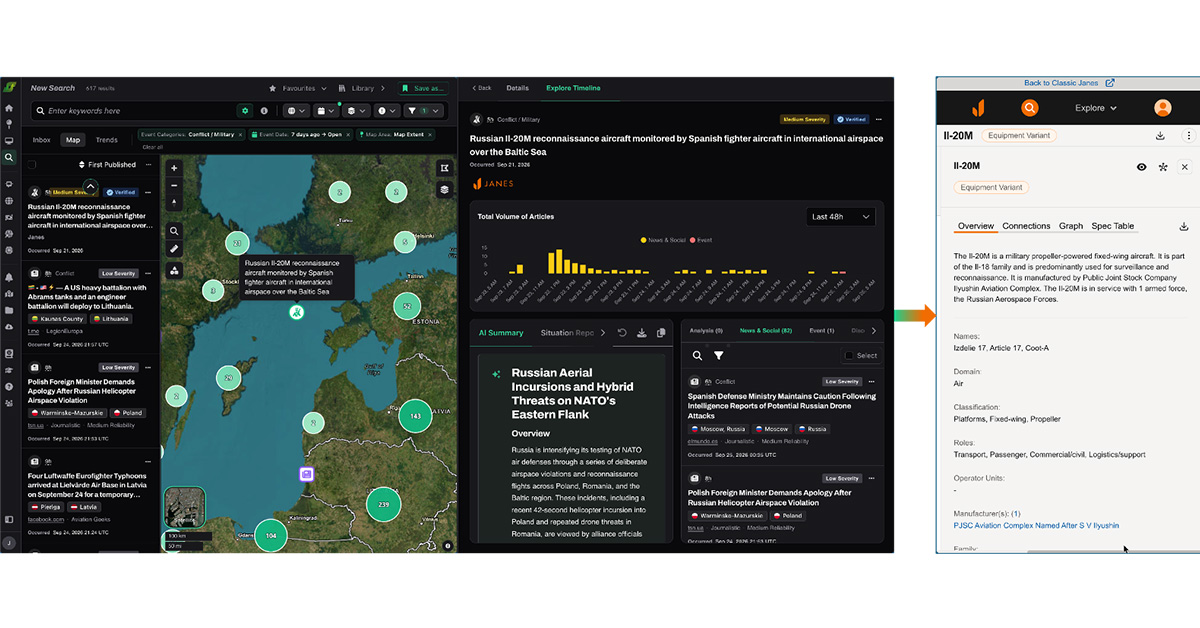
Janes said Tuesday its military data on units, orders of battle, installations and equipment is now available to Seerist users alongside the company’s AI-driven and expert-verified risk intelligence. Analysts can use emerging or verified Seerist events as an entry point to relevant Janes information and access more detailed records through linked entries.
The integration brings Janes’ structured military data into Seerist’s forecasting and detection capabilities, as well as its expert analysis. Seerist said the integration can support indications and warnings while giving analysts military context for developing events without requiring them to switch between systems.
What Did Seerist & Janes Leaders Say?
Janes CEO Blake Bartlett said intelligence is most valuable when it is “trusted, contextual and available within the workflows where decisions are being made.”
According to Bartlett, the combination helps users link emerging events to the relationships, capabilities and forces behind them.
John Goolgasian, president of global government at Seerist, said the value for government and defense customers lies in bringing “a more complete intelligence picture together for the analyst in one place.”
He said analysts can then focus on assessing mission impact and informing follow-on decisions rather than gathering information from multiple sources and systems.
How Did the Janes-Seerist Collaboration Begin?
The integration follows a strategic partnership Seerist and Janes announced in March to combine real-time threat alerts with validated defense data. The companies said the joint offering was designed for the Department of War, the North Atlantic Treaty Organization, the intelligence community, European defense ministries and federal systems integrators.