
 Arthur McMiler
- Leidos will manage site preparation, installation and removal of screening equipment nationwide
- The contract covers airports, as well as agency laboratories and other government sites
- The award continues the company’s work under the original SEDS contract and earlier programs
Leidos has announced it booked a potential $672 million Transportation Security Administration contract to support the agency’s Screening Equipment Deployment Services II Checkpoint, a U.S.-wide replacement and modernization of thousands of passenger security check systems.
The Reston, Virginia-based company said Monday the work will extend to airports where TSA conducts federal screening, as well as agency laboratories and other government sites. The ordering period spans eight years, starting with a base year followed by up to seven option periods.
TSA posted the award on SAM.gov in September, naming Leidos as the awardee on the indefinite-delivery/indefinite-quantity contract. The vehicle carries a $1 million minimum guarantee, and task orders may be firm-fixed-price or time-and-materials.
What Will Leidos Deliver Under the SEDS II Checkpoint Contract?
Leidos will manage each deployment from start to finish, overseeing project management, conducting and validating site surveys, handling engineering and design, and readying facilities for new equipment. Company teams will ship, rig, install, move and retire screening hardware while supporting testing and closeout. The scope also includes rolling out operational upgrades, safety enhancements and measures to optimize screening.
Systems slated for fielding include computed tomography scanners, advanced imaging technology, X-ray machines, credential authentication technology and explosives trace detection units, along with other screening tools.
How Does SEDS II Align With TSA’s Checkpoint Modernization Push?
The award comes as TSA carries out its Horizon 25 Strategy, unveiled in August, which ranks checkpoint modernization among its top objectives and calls for speedier procurement of new technology. The agency is also reworking its Screening Partnership Program following the cancellation of the Gold+ initiative, with Administrator David Cummins citing possible links between private screening arrangements and upgrades to PreCheck and standard lanes.
Leidos said its role is to help TSA bring new capabilities online without hampering airport operations or reducing screening availability during the changeover.
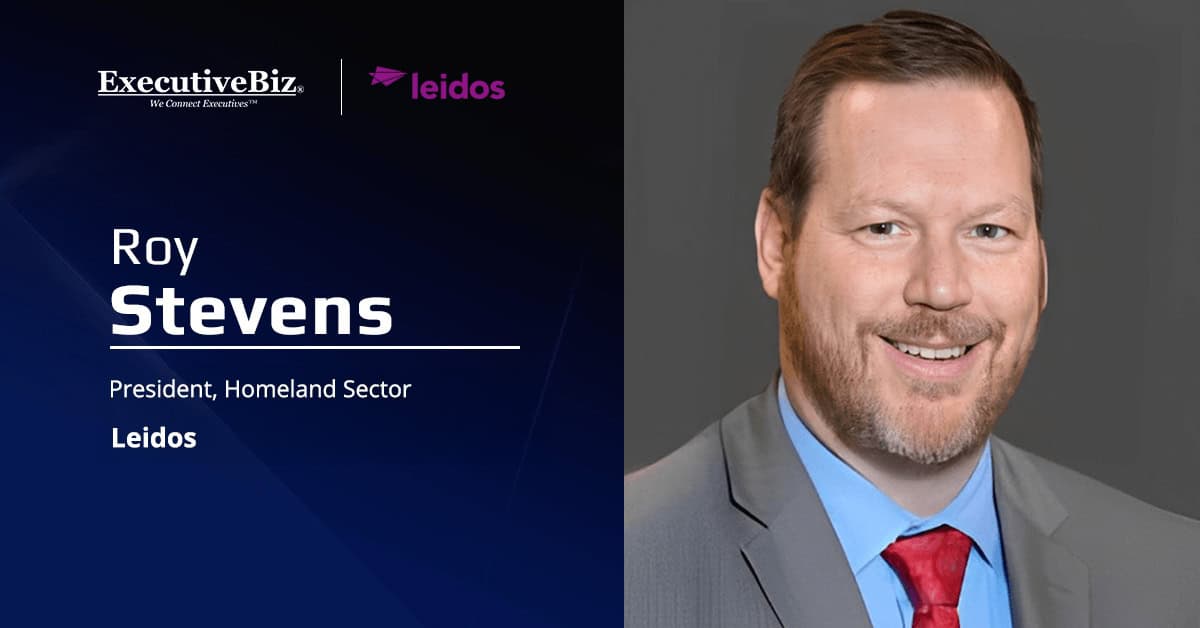
“Modernizing airport security requires more than new technology. It requires careful planning, coordination and disciplined execution across TSA, airports and technology providers,” said Roy Stevens, president of the homeland sector at Leidos and a three-time Wash100 Award winner.
Stevens added that the team’s background in fielding screening technology at busy, complex airports will help TSA introduce new tools while keeping operations running.
What Is Leidos’ History Supporting TSA?
Leidos has supported TSA missions for more than two decades. SEDS II builds on the original SEDS contract, a five-year vehicle valued at up to $470.7 million that the company booked in 2021, as well as earlier deployment programs.
The company also sustains equipment it helps install. In December 2024, TSA awarded Leidos a follow-on integrated logistics support contract worth up to $2.6 billion over eight years to keep roughly 12,000 pieces of security equipment operating across more than 430 airport locations. Leidos has provided integrated logistics for TSA’s passenger screening mission since 2013.
How Is Leidos Expanding Its Homeland Security & Technology Portfolio?
Leidos and Altaris in October completed an Analogic security screening joint venture, with Leidos retaining a significant minority stake as it targets modernization of airports and air traffic systems. Separately, U.S. Customs and Border Protection in June awarded Leidos a potential $270 million contract for up to 100 medium energy mobile systems.
Leidos also holds positions on both tracks of a $1.5 billion Department of Homeland Security counter-drone IDIQ, which covers hardware and software as well as comprehensive services.
The company has also broadened its artificial intelligence and cyber portfolio, launching the UpHold Effect Agentic SOC Automation platform and the Parcata vulnerability-patching tool and teaming with CoreWeave on sovereign AI cloud services for defense and intelligence customers.