

 Pat Host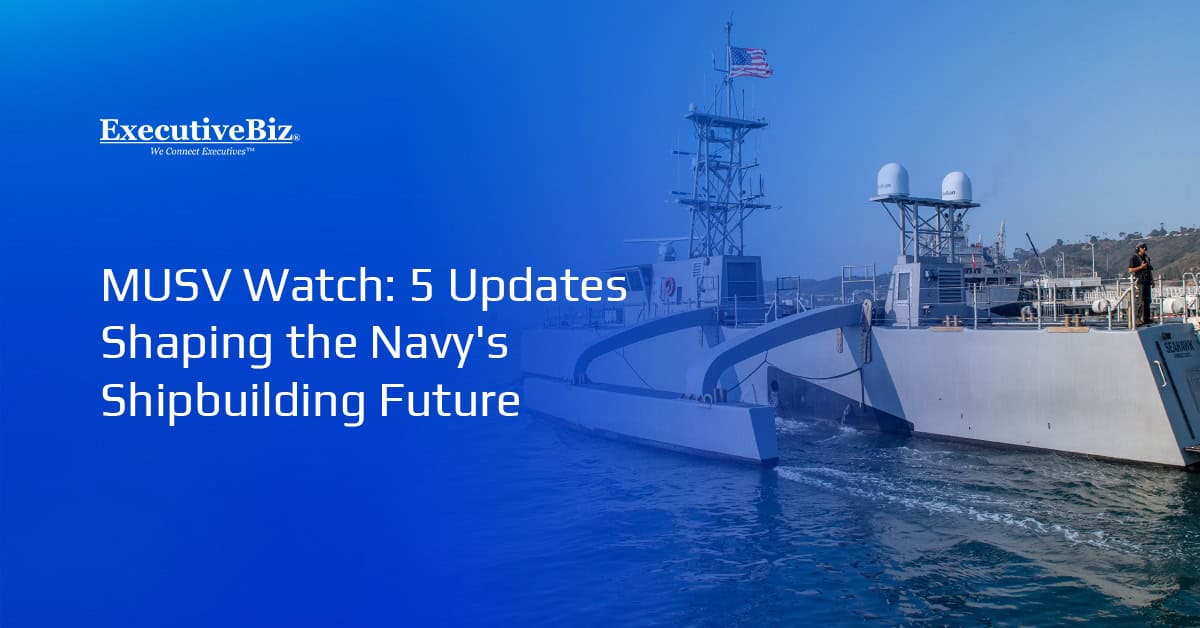
- MUSV is a cornerstone of the Navy’s Golden Fleet and Hedge Strategy efforts
- The OBBBA of 2025 provided $2.1 billion specifically for MUSV
- Get MUSV insights from Navy “CFO” Vice Adm. Brad Skillman at the 2026 Navy Summit on Aug. 27!
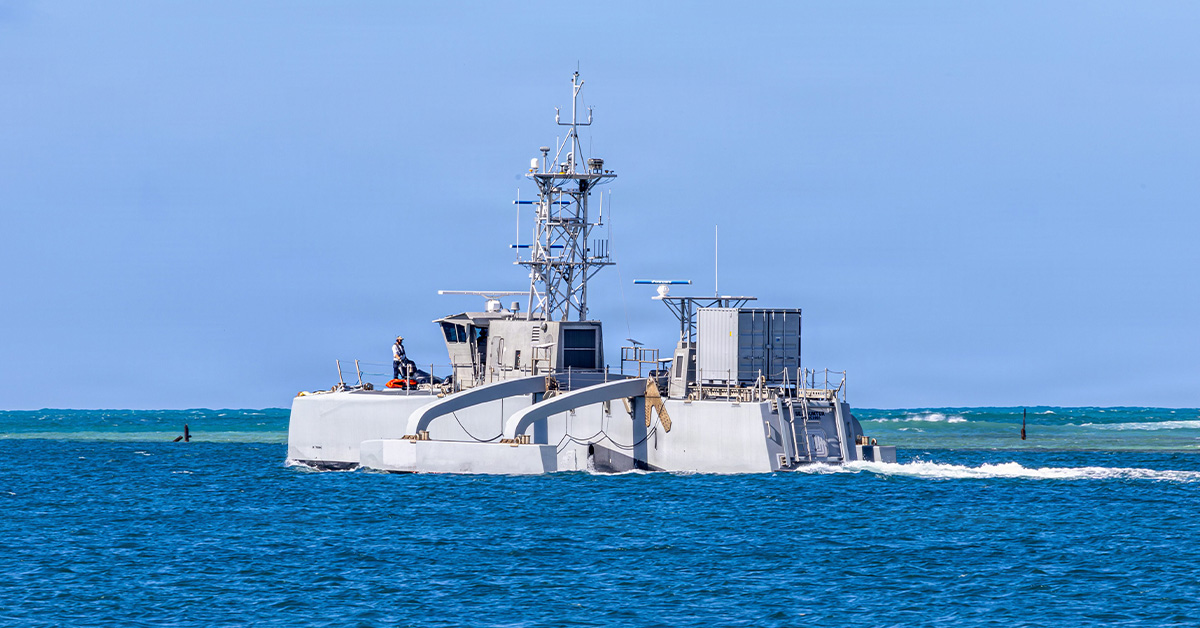
The Navy’s Medium Unmanned Surface Vessel, or MUSV, program is one of the most significant procurement opportunities in today’s shipbuilding landscape. Once a niche experimental effort, MUSV has been elevated into a cornerstone of the Navy’s Golden Fleet and Hedge Strategy, with the service quickly moving from prototype testing straight into large-scale fleet procurement.
The Navy is backing MUSV with significant investment. The One Big Beautiful Bill Act of 2025 allocated nearly $5 billion for Navy unmanned programs, including $2.1 billion specifically for MUSVs. The Navy’s fiscal year 2027 shipbuilding plan builds on this with potentially $171 million for three vessels next year and $3.1 billion through FY 2031 to field a planned fleet of 47 platforms.
A new “marketplace” acquisition model, replacing the canceled Modular Attack Surface Craft, or MASC, program, has opened the field to established primes and newer entrants alike, with seven designs already advancing to at-sea trials. Dive into five critical updates for MUSV—one of the Navy’s top unmanned programs
Learn the latest investment insights on MUSV and other essential unmanned and shipbuilding programs at the Potomac Officers Club’s 2026 Navy Summit this Thursday—Aug. 27. Hear directly from the Navy’s “CFO,” Vice Adm. Brad Skillman, during his keynote and get exclusive details unavailable anywhere else on the acquisition strategy for Golden Fleet and the broader unmanned/hybrid fleet buildout. Few tickets remain–secure yours today!
What Are the 5 Biggest MUSV Updates?
1. Detailed MUSV Acquisition Plans Released
MUSV is a priority line of effort for the Navy with spending growth to match. The service is requesting $121 million for the program in discretionary funding and another $50 million in potential reconciliation funding in FY 2027 and anticipates requesting $736 million annually through FY 2031, according to the service’s FY 2027 budget request.
This total outlay would provide for a planned fleet of 47 platforms, according to Army Recognition. It represents a significant expansion of the service’s ability to perform screening, scouting, deception, scanning and strike endeavors in contested waters without having to commit crewed frigates or destroyers to every forward mission.
The wider strategic implication is that MUSV is one of the earliest unmanned naval efforts developed to impact fleet employment, rather than just experimentation. It will not replace destroyers, frigates, submarines or carrier aviation, but it can broaden sensing and some weapons carriage among a wider force.
2. Navy Unveils Next MUSV Steps
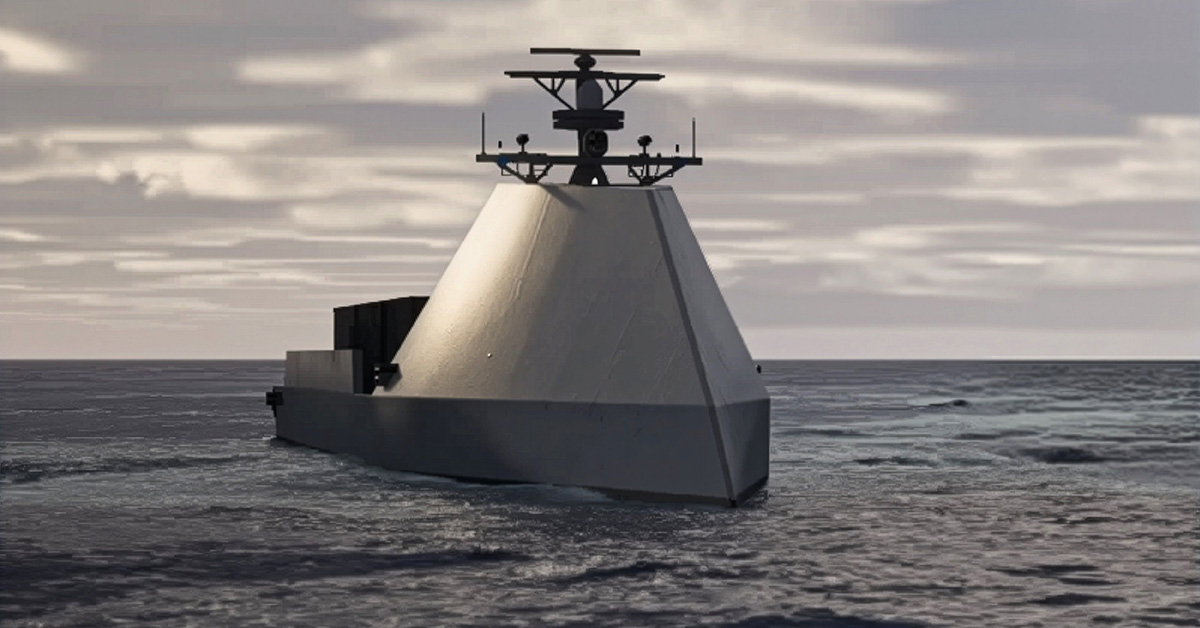
The Navy plans to eventually kickoff the next marketplace opening for MUSV with a request for prototype proposal featuring detailed requirements for high-capacity MUSV solutions used for logistics support and capable of transporting containerized payloads.
According to a notice posted on SAM.gov, the service specifically seeks candidates with expertise in vessel construction, autonomy, perception systems and complex maritime problem solving experience. The specific purpose of this phase is to focus on relevance, maturity, feasibility, performance and affordability of the proposed vessel solutions. The service plans on utilizing other transaction authority to rapidly field prototypes.
The Navy earlier this year adjusted its strategy to buying MUSVs, preferring a marketplace format and creating a competition with sea trials, DefenseOne reported.
Get unfiltered and candid insights on naval unmanned underwater vehicle and unmanned surface vessel efforts at the Potomac Officers Club’s 2026 Navy Summit this Thursday–Aug. 27. Panelists on our Future of UUV & USV Navy-Industry Partnership lunch panel will cut through the usual talking points to reveal what’s really working, and what isn’t, in advanced naval unmanned technology efforts.
For GovCons, that’s the kind of frank advice that sharpens proposals and strengthens partnership strategy. This highly anticipated GovCon event is almost sold out. Buy your ticket now!
3. GAO Finds MUSV Cost Growth
The Navy is now predicting MUSV to cost more than the $2.1 billion originally expected. The Government Accountability Office, in its annual weapon systems assessment report to Congress published in July, said Congress provided $2.1 billion for the development and acquisition of MUSVs in July 2025.
Fleet officials told GAO that MUSV prototypes demonstrated additional capability and could be used for more missions than initially expected. Officials stated that the MUSV program plans to leverage some investments previously made through the Large Unmanned Surface Vessel, or LUSV, program, to advance key technologies. Additionally, program officials said the service wants to use commercial shipbuilding standards instead of Navy standards, when possible, to enable more shipyards to build MUSVs.
Navy officials expect to implement leading practices for product development, but firm details of these plans are still being developed. As of January, the Navy has not created a clear plan of how it wants to use leading practices. The MUSV program is an opportunity for the Navy to leverage leading practices by simplifying requirements to a minimum viable product, fielding that product, and then building more capability into that product in conjunction with other users.
Further, leveraging digital engineering tools, such as digital twins and threads, can improve efficiencies throughout the lifecycle of a program.
4. Congress Weighs In
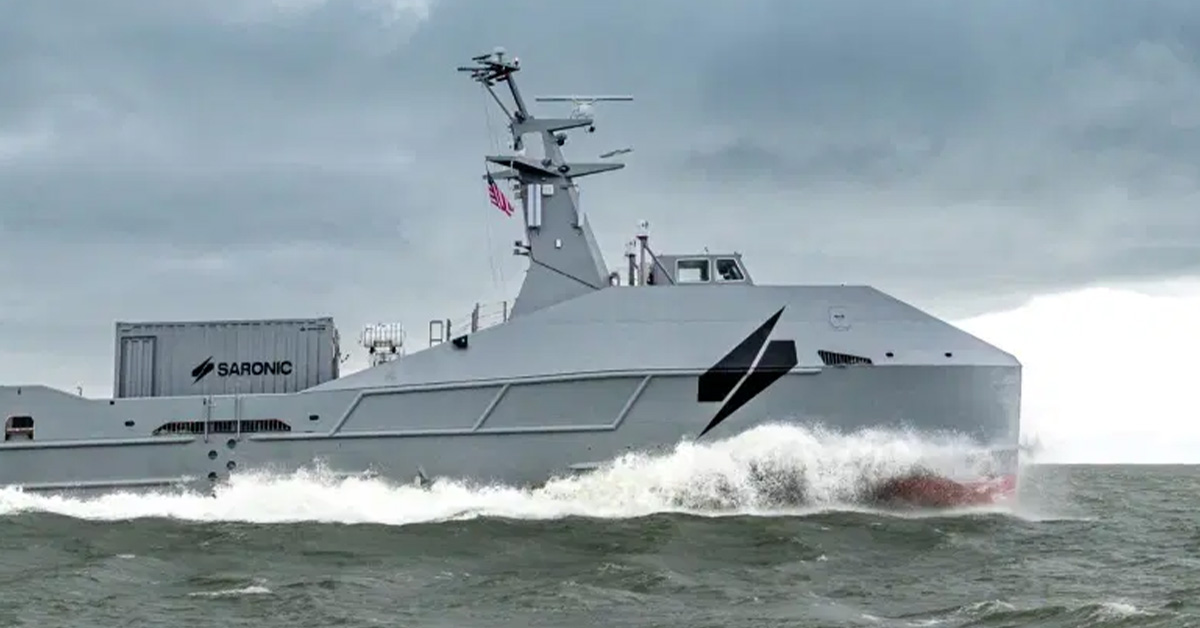
The House-passed version of the FY 2027 defense authorization bill contains specific USV provisions that would directly impact how the Navy runs MUSV going forward.
The House version of the defense authorization bill requires the Navy to ensure that USVs are capable of autonomous operation during periods when communications capabilities are denied, degraded, intermittent or limited, and during periods in which positioning, navigation and timing capabilities are degraded or unavailable.
The House version also requires the Navy to not accept or take delivery of a USV before it certifies that both the USN and Marine Corps have developed both concepts of operations and employment for at least one of the following combat functions:
- Anti-submarine warfare
- Maritime strike
- Logistics
- Electronic warfare
- Command and control
- Intelligence
- Surveillance
- Reconnaissance
- Targeting
The version of the defense authorization bill introduced in the Senate did not include either provision. The legislation has stalled in the Senate and may not be passed until after midterm elections in early November. Defense authorization bills from both chambers would have to be reconciled before eventually being signed into law.
5. Losing Bidders File Suit
A pair of companies that missed out on being selected for MUSV prototyping have filed litigation against the Navy, with one requesting courts stop the service’s progress on the program. Blue Water Autonomy and Saildrone filed lawsuits, claiming that their proposals qualified for Navy requirements for the marketplace, according to Breaking Defense.
Neither Blue Water Autonomy’s Liberty MUSV design nor Saildrone’s Spectre MUSV were tapped to advance to the at-sea prototype testing phase that is predicted to conclude in October. The two companies also allege that the Navy did not follow its own guidance as described in the request for proposals and eliminated both companies based on “conclusions” that don’t align with the solicitation.
Submissions for the MUSV marketplace were to meet several key requirements, such as carrying at least two 40- foot shipping containers and traveling 2,500 nautical miles at 25 knots in sea state 4 conditions, while outfitted with a 25- metric- ton load on the payload deck.