
 Jane Edwards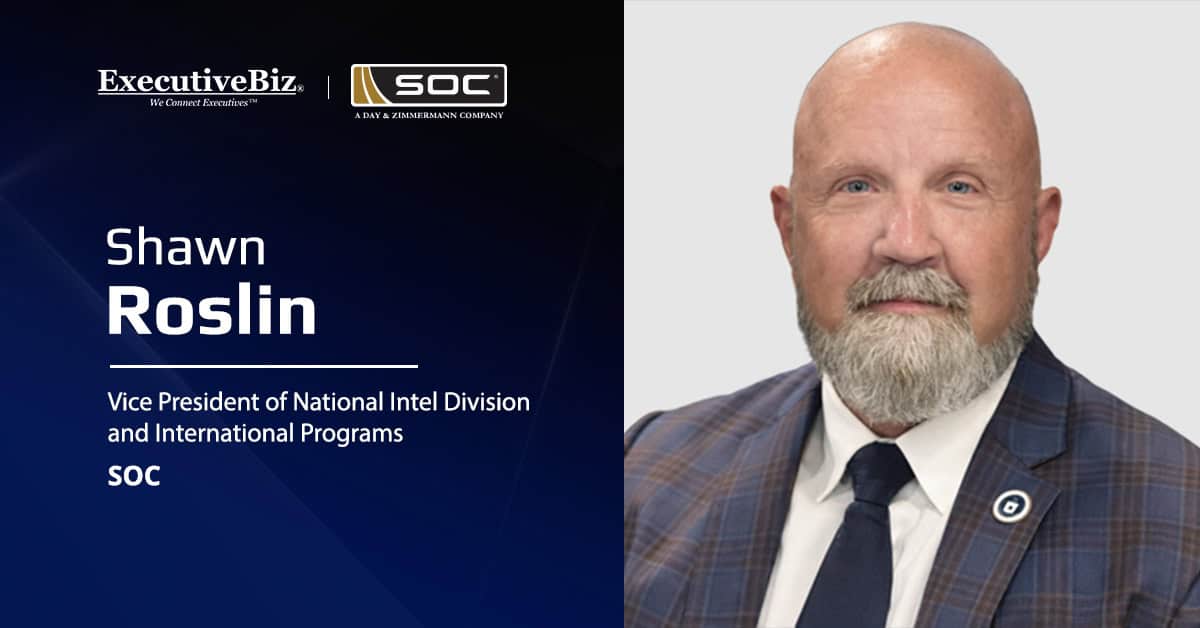
- SOC VP Shawn Roslin has called for a multilayered response to the deepfake threat
- The response spans detection technology, policy guardrails and public education
- The 2026 Homeland Security Summit will explore AI, cyber defense and more
Shawn Roslin, vice president of national intelligence division and international programs at Day & Zimmermann subsidiary SOC, said governments, industry and the public should work together to address the threat posed by deepfakes in the age of artificial intelligence.
“Failure to address this challenge risks ceding a critical domain of modern conflict—one where perception shapes reality, and reality itself can be engineered,” Roslin wrote in a July 13 article published on SOC’s website.

As deepfake technology grows more convincing, government and industry leaders continue to weigh how AI, cyber defense and operational readiness intersect across the homeland security mission. The 2026 Homeland Security Summit on Nov. 12 will bring together experts to tackle these very questions. Save your seat now to hear directly from the leaders shaping that response.
In a recent article, Roslin discussed that AI-generated deepfakes are becoming an increasingly significant national security concern, pointing to the technology’s growing use in fabricating realistic audio, video and images capable of swaying public opinion, spreading falsehoods and eroding trust in institutions. He noted that what began as a novelty has since matured into a tool for fraud, information warfare and strategic deception.
What Steps Are Needed to Address the Deepfake Threat?
According to Roslin, addressing the deepfake threat requires a multilayered response. He stated the response should include technological investment in detection and authentication systems. He noted the response should also include government policy frameworks to regulate misuse without stifling innovation. He explained the response should include public education to improve media literacy and resilience.
What Legislation Addresses the Deepfake Threat?
Roslin explained that federal efforts so far have clustered around three problems: non-consensual intimate imagery, election-related disinformation and AI-manipulated content that threatens national security. He noted the TAKE IT DOWN Act, signed into law this year, addresses the first of those by targeting non-consensual imagery generated through AI.
Beyond that law, Roslin identified several bills still moving through Congress. He pointed to the NO FAKES Act, which would give individuals legal protection over their voice and likeness against unauthorized AI replicas. He also cited the DEEPFAKES Accountability Act and the Deepfake Report Act, the latter aimed squarely at tracking foreign-linked threats.
On measures already in force, Roslin noted the Deepfake Report Act of 2019/2021 directs the secretary of homeland security to report annually on how deepfakes are being used against elections and national security. According to Roslin, defense and intelligence agencies are funding detection technology aimed at foreign disinformation campaigns, while separate proposals would tighten evidentiary standards — including Federal Rule of Evidence 901 — for AI-generated material introduced in court.
Roslin also stressed that none of this works in isolation. He said intelligence agencies, social media platforms and news organizations need shared, real-time coordination to catch and respond to deepfake threats before they spread.