
 Jamie Bennet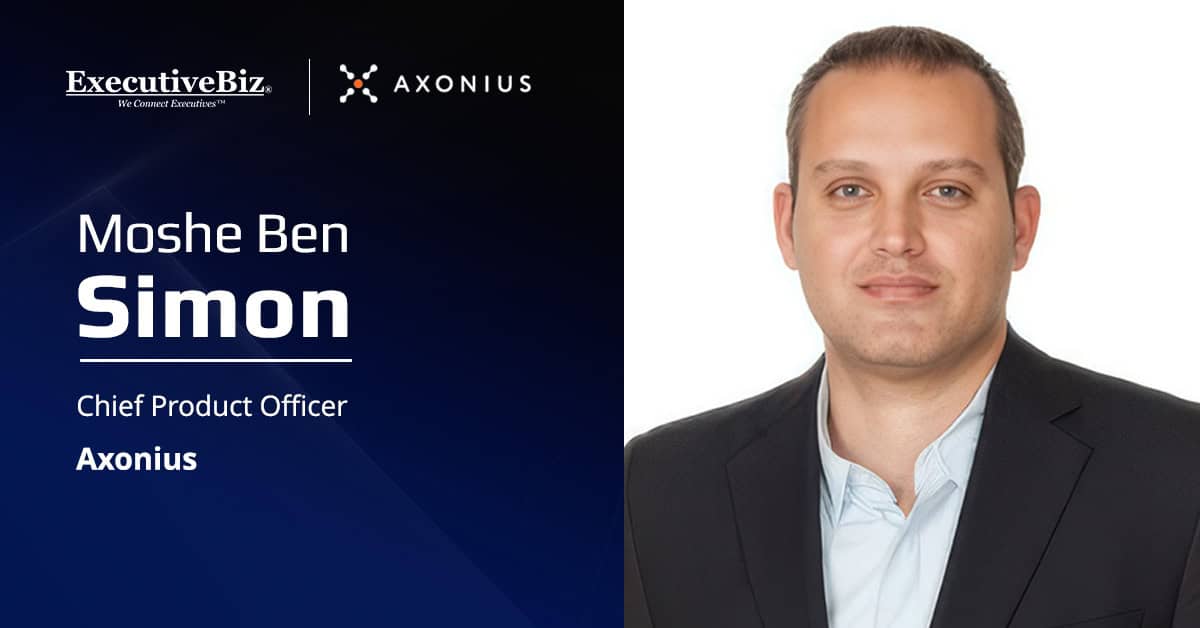
- Former Fortinet Product Management Vice President Moshe Ben Simon is assuming the role of chief product officer at Axonius
- Simon will oversee the continuous development of the Axonius Asset Cloud
- Simon is the co-founder of TrapX Security, acquired by CommVault in 2022
Axonius announced Tuesday that it has onboarded Moshe Ben Simon, vice president of product management at Fortinet, to be its chief product officer.
Simon will lead the development strategy for all products, including the Axonius Asset Cloud, from the company’s Tel Aviv, Israel, office. “Moshe understands what security and IT teams are actually trying to accomplish with asset intelligence and CTEM,” Axonius CEO Joe Diamond said.
“He shares our conviction that the Axonius Asset Cloud should be the foundation of every cyber program and IT stack in the world,” Diamond continued.
What Is Moshe Ben Simon’s Career Background?
Simon studied at Braude College of Engineering, Karmiel, Israel, from 1997 to 1999. He went on to serve in the Israeli Air Force for four years. He spent almost two years as a senior information security consultant. He also led the security consultant department at Ness Technologies and was CEO for five years at Injection Security.
One of Simon’s major achievements was to co-found TrapX Security, a firm specializing in cyber deception technology, in January 2012. TrapX developed DeceptionGrid, a system that enables zero-day malware detection, capture and analysis, and is used by some of the top 2,000 companies in the world. TrapX was acquired by CommVault in 2022.
As product management VP, Simon oversaw Fortinet’s security operations business, which covers products such as FortiNDR Cloud, FortiDeceptor, FortiAuthenticator and FortiDevSec. He had been working at Fortinet for six years before being hired by Axonius.
What is Axonius?
Axonius is a cybersecurity startup firm known for its asset intelligence platform focused on SecOps and exposure management. The Axonius Asset Cloud connects and reconciles conflicting information from more than 1,400 systems within an organization into a single source of truth. It also ensures that asset groups and risk owners comply with service level agreements and implements resolutions ranging from patching software to pushing security and AI configurations.