

 Elodie Collins
- An FBI official described LA28 as “the largest national security special event” in US history
- Protecting LA28 requires defending dispersed venues against various threats
- Join DHS, CBP, TSA, T-Mobile, MANTECH and Exiger leaders in the LA28 panel at the 2026 Homeland Security Summit, happening tomorrow, Nov. 10
The 2028 Olympic and Paralympic Games in Los Angeles are expected to draw millions of spectators and athletes from across the globe. The sheer scale of the event creates a high-stakes security challenge, requiring agencies to protect large crowds and high-profile diplomatic targets across dozens of dispersed venues nationwide.
Patrick Grandy, assistant director in charge at the FBI Los Angeles Office, told ABC7 that the “Olympics will be the largest national security special event in the history of this country.”
Voviette Morgan, senior vice president of safety and security of the Los Angeles Olympic Games Organizing Committee, compared the expected scale of the event to “hosting seven Super Bowls per day for 16 consecutive days,” KSL reported.

Leaders from the Department of Homeland Security, U.S. Customs and Border Protection, Transportation Security Administration, T-Mobile, MANTECH and Exiger will discuss what it takes to secure the Olympics at the Potomac Officers Club’s 2026 Homeland Security Summit, happening tomorrow, Nov. 10, at the Ritz-Carlton, Tysons Corner in Virginia. The Our Soil, Our Rules: Public-Private Collaboration on Security in Lead-Up to LA28 panel will provide an update on ongoing preparations for the Olympics and discuss the role of the private sector in securing the event. Get your tickets here!
What Are the Security Challenges at LA28?
1. System Integration Gaps
Coordination across dozens of organizations, including federal agencies and local law enforcement, is critical to securing LA28. However, Ryan Riccucci, senior adviser for law enforcement and technology integration at U.S. Customs and Border Protection, said integrating the hundreds of disparate systems used by different agencies poses a security challenge, MeriTalk reported.
“At national security events, you get dozens of agencies, hundreds maybe of different systems with multiple missions covering the air, the ground, even mail, packages, shipping, all the routes in, and higher-level airspace all at once, and you want an integrated common operating picture,” he said at the Red Hat Government Symposium. “That takes a specific software stack in the middle, and data orchestration to process, make sense of, and connect the data.”
Riccucci has called for greater precision in government contracting requirements to ensure integration and interoperability.
2. Drone Threats
Unauthorized drone use at event venues is one of the biggest threats to the Olympics. During the FIFA World Cup, authorities seized more than 700 drones across 11 host cities.
A report published by the nonprofit Center for Internet Security warned that drones are creating new risks that traditional security models are not designed to address. UAS, the report noted, can bypass fences and checkpoints. The common tools authorities use, such as cameras and radio frequency sensors, may also struggle and create false positives in densely populated environments like event venues, according to the report.
John Cohen, executive director of CIS’ strategic programs office, told StateScoop bad actors may use drones equipped with emerging and advanced technologies, such as artificial intelligence-powered navigation systems, to smuggle contraband and carry out disruptive and lethal attacks.
A White House fact sheet issued in 2025 said UAS can be weaponized to smuggle illicit substances, surveil law enforcement and endanger the public.
3. Communications Challenges
During mega-events, radio frequency management is necessary to ensure a smooth broadcast and to maintain public safety and security.
However, James Cole, director of telecoms engineering for the LA28 Olympic and Paralympic Games, noted in an International Wireless Communications Expo report that spectrum interference is inevitable. What organizers can do is minimize its impact.
T‑Mobile for Business, as the official telecommunications services provider for LA28, said it will deploy its 5G Advanced Network Solutions at competition and non-competition venues within and beyond Southern California. The company will also provide push-to-talk services to connect more than 15,000 staff members. Meanwhile, key personnel will have access to voice lines through SuperMobile, which offers network slicing and satellite coverage, the company added.
Chris Casey, research and development director at T-Mobile, is joining the Our Soil, Our Rules: Public-Private Collaboration on Security in Lead-Up to LA28 panel at the 2026 Homeland Security Summit. Casey is expected to discuss how T-Mobile is working with government agencies to ensure access to communications at the Olympics. Sign up today to join the conversation!
4. Cyber-Physical Threats to Critical Infrastructure
Cyberthreats are expected to ramp up heading into the Olympics. During the 2024 Paris Olympic Games, French cybersecurity agency ANSSI reported more than 140 cyberattacks.
Critical infrastructure will be among the primary targets in Los Angeles. Even without a direct strike on an event venue, attacks on critical infrastructure could have cascading effects and impact the games, warned Jennifer Daskal, a partner at Venable, in an op-ed published in the Daily Journal.
The Department of Energy is already preparing for possible cyberattacks on critical infrastructure. DOE, the Idaho National Laboratory and the Los Angeles Department of Water and Power conducted a series of training sessions, called the CyberStrike program, to ensure energy security ahead of the Olympics.
The program provided live instruction and hands-on exercises to enhance the ability of infrastructure owners and operators to mitigate and respond to cyberthreats to operational technology, the American Public Power Association revealed. During training, participants faced a simulated cyber incident, showing them what a sophisticated cyberattack looks like.
Physical attacks may happen, too, as seen during the Paris Olympics. On the morning of the opening ceremony, fires were discovered at three critical rail nodes. The attacks, which authorities characterized as sabotage, halted high-speed train services and affected 800,000 people, Gulf News reported.
5. Insider Threat & Accreditation Screening
An event on the scale of the Olympics would require numerous workers and volunteers to ensure smooth operations, and personnel vetting is imperative to mitigating insider threat.
France’s Interior Ministry conducted “about a million” administrative investigations into staff members and rejected around 5,000 security accreditation requests for volunteers for the 2024 Paris Games, CNN reported. Some of the threats identified include espionage, radicalism, and ultra-right and ultra-left ideologies.
Similar vetting measures were required for the London 2012 Olympics, where the United Kingdom Home Office conducted immigration, criminal record and security checks. Ultimately, more than 380,000 officials, athletes, workers and members of the press needed to be accredited to enter venues.
Who Will Be on the Securing LA28 Panel?
The Our Soil, Our Rules: Public-Private Collaboration on Security in Lead-Up to LA28 panel at tomorrow’s 2026 Homeland Security Summit provides an opportunity for DHS leaders and industry innovators to discuss advanced technologies needed to ensure the security and success of the 2028 Olympic and Paralympic Games in Los Angeles.
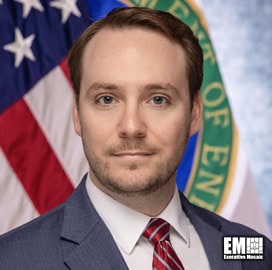
Tim Kocher
Deputy Assistant Secretary for Critical Infrastructure
Department of Homeland Security
Kocher is a cybersecurity expert who has experience leading federal efforts to strengthen the security and resilience of the nation’s critical infrastructure.
He currently serves as deputy assistant secretary for critical infrastructure at the Office of Cyber, Infrastructure, Risk and Resilience, or CIRR, at DHS. CIRR plays a critical role in identifying, evaluating and mitigating threats to critical infrastructure.
Before joining CIRR, Kocher served as deputy director of the Department of Energy’s Office of Cybersecurity, Energy Security and Emergency Response, or CESER. In the role, he oversaw department efforts to strengthen the security and resilience of the nation’s energy infrastructure against physical and cyberthreats.
He also held the role of special adviser at DOE earlier in his career, according to his LinkedIn profile.
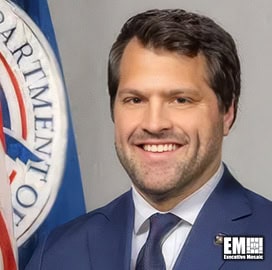
Adam Stahl
Senior Official Performing the Duties of the Deputy Administrator
Transportation Security Administration
Stahl has more than a decade of experience in the public and private sectors.
In his current role, he acts on behalf of TSA Administrator David P. Cummins on matters related to transportation security.
He was appointed chief of staff of the TSA in 2025 to provide counsel on policy, planning and public affairs. He is also in charge of engagement with members of Congress and serves as TSA’s liaison to the presidential administration and other agencies.
His government career includes service as deputy chief of staff in the Department of Homeland Security’s Office of Strategy, Policy and Programs and a stint in Customs and Border Protection’s Office of Trade Relations in 2021.
Emilia Bakopoulos
Deputy Executive Director for Admissibility and Passenger Programs at the Office of Field Operations
U.S. Customs and Border Protection
Bakopoulos helps lead the Admissibility and Passenger Programs, or APP, under CBP’s Office of Field Operations. APP manages policies and programs related to the admission of travelers to the United States, including the Trusted Traveler Programs, the Immigration Advisory Program, the Electronic System for Travel Authorization and the Advanced Passenger Information Systems, Federal News Network reported.
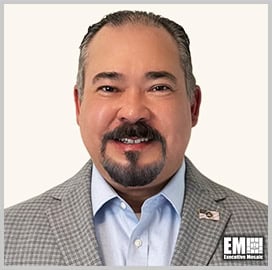
Johnnie Sharp
Technical Executive Director
MANTECH
Sharp is a former FBI senior leader who joined MANTECH as technical executive director in 2025. During his 26-year career at the FBI, he held roles spanning counterterrorism, counterintelligence, criminal investigations, and cyber and IT leadership.
In his most recent role at the FBI, he was assistant director of the IT Infrastructure Division, where he led a 1,207-person workforce responsible for the development, operations and maintenance of the agency’s data centers, enterprise networks and communications platforms. He also led the FBI Birmingham Division as special agent in charge, overseeing FBI field operations for the 31 counties comprising the Northern District of Alabama.
Earlier in his career, he served as a police officer in Knoxville, Tennessee.
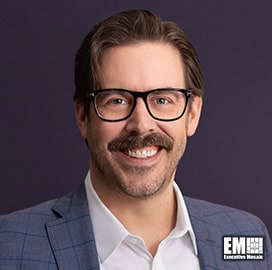
Jeremy Blaney
Senior Vice President of Customer Success
Exiger
Blaney is an Air Force veteran who has held leadership roles at global enterprises and high-growth technology startups. As senior vice president of customer success at Exiger, he oversees customer success and engagement with defense, intelligence and civilian agencies and the defense industrial base.
He previously served as customer success lead for Salesforce’s defense and national business before joining Exiger. His private sector career also includes positions at decision intelligence software company Sisu, Tableau Software and Bank of America.
During his time in the Air Force, he served as an enlisted airman supporting logistics operations and later as an intelligence officer who flew combat missions aboard the MC-12 in Afghanistan.
Chris Casey (Moderator)
Research & Development Director
T-Mobile
Tomorrow’s 2026 Homeland Security Summit will also feature panels on other DHS priorities, such as drone and counter-drone capabilities, AI in investigative intelligence, federated data, and edge technologies deployment for border control. Gain visibility into current and future DHS initiatives! Get your tickets today—they’re almost sold out!